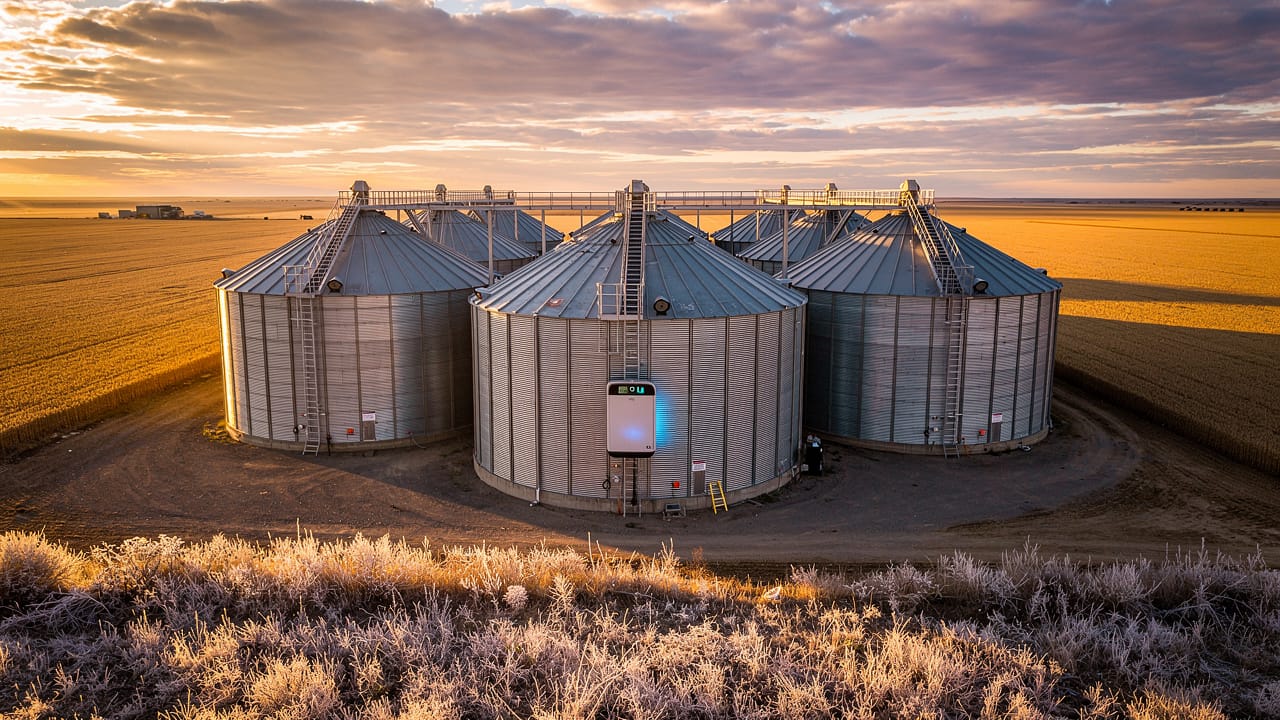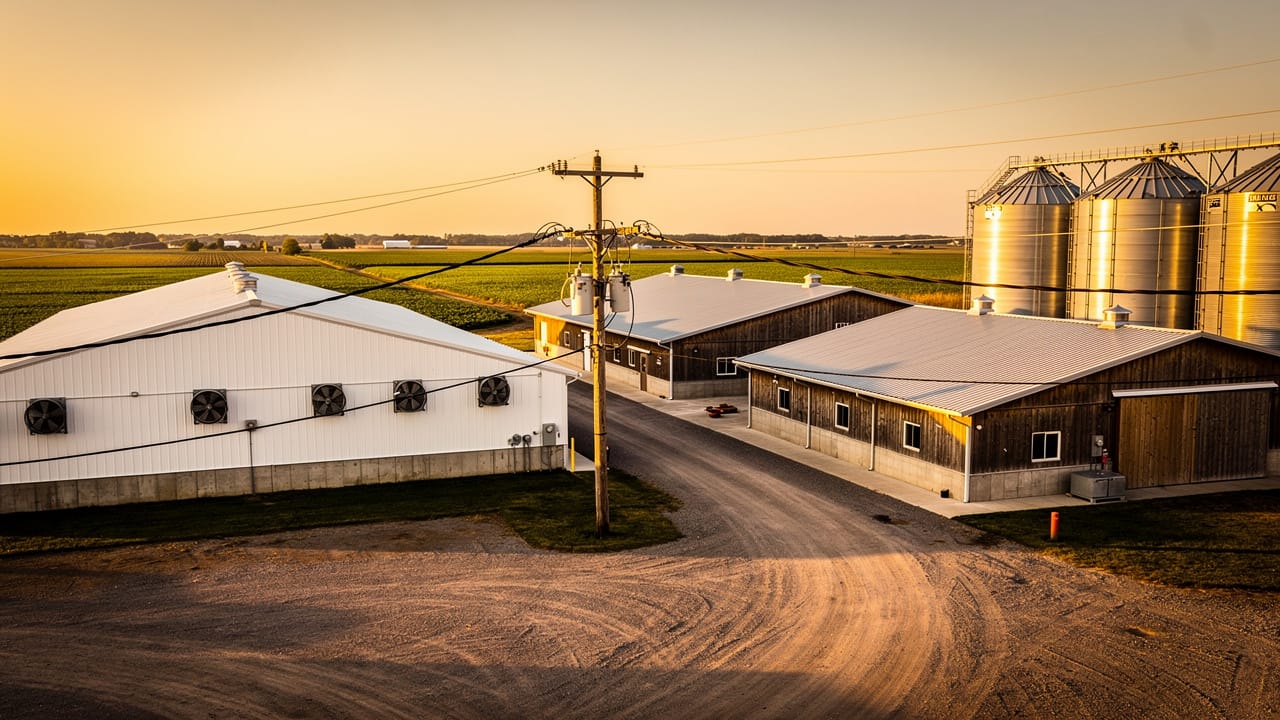
A power failure in a remote hog or poultry barn does not just turn the lights off. It stops ventilation, heaters, waterers, and controls all at once. In that moment, powering remote farm structures is the line between normal production and a serious animal welfare and financial crisis.
Across Alberta and the rest of Canada, barns, grain bins, irrigation pump sites, and workshops often sit kilometres from the nearest utility line. Extending the grid can cost tens of thousands of dollars per kilometre before a single motor turns. At the same time, modern farms run heavy loads, sensitive electronics, and round‑the‑clock automation that demand clean, dependable power.
The good news in 2026 is that there are more reliable off‑grid farm power options than ever. Solar power for remote farms, wind power for rural farms, battery storage for off‑grid farms, and generators can be combined into strong, dependable systems. The hard part is choosing the right mix for each site and installing it safely and to code. This guide walks through real‑world choices for powering remote farm structures, compares grid extension with off‑grid and hybrid systems, and explains why professional design from a specialist such as Cove Electrical matters for long‑term performance.
Key Takeaways
Busy operators may not read every line, so here are the main points for powering remote farm structures:
-
Extending the grid to far‑off barns or pump sites often costs more than a complete off‑grid or hybrid system. For many remote buildings, solar, batteries, and a generator lower lifetime cost and give better control over risk.
-
For most Canadian sites, the strongest off‑grid setup is a farm solar panel system with lithium batteries and an automatic backup generator. This covers daily loads while protecting barns, grain systems, and irrigation from outages and poor rural power quality.
-
Accurate load calculation, Canadian Electrical Code compliance, and professional installation from an agricultural electrician such as Cove Electrical are essential to protect equipment, keep insurance valid, and keep people and livestock safe.
Why Powering Remote Farm Structures Is More Complex Than It Looks
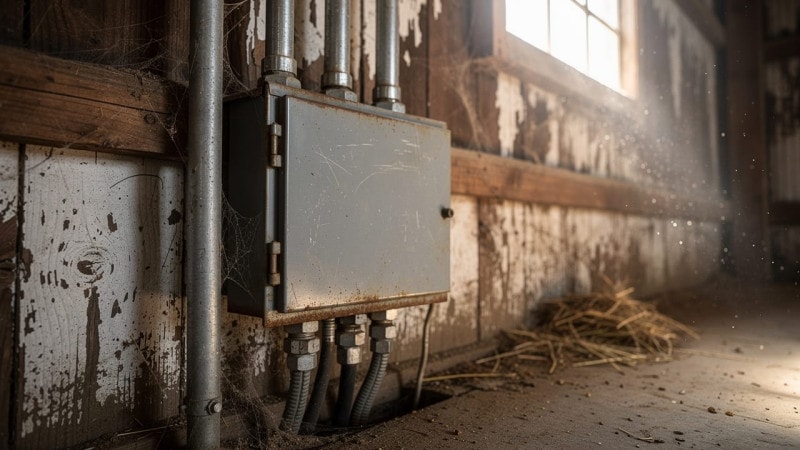
On paper, powering remote farm structures can sound simple: run a wire, set a pole, add a panel, and plug in a fan. In practice, farms sit far from substations, spread equipment over large distances, and depend on that power every hour of the day. That mix makes rural farm electricity options very different from power in town.
Distance from the grid is the first hurdle. Many barns, grain sites, and irrigation points sit several kilometres from the nearest connection. Utility extensions in those cases can run from twenty‑five thousand to more than one hundred thousand dollars per kilometre, especially with rough terrain or wet ground. Even after the line arrives, any long underground run between your yard and a remote structure must be sized carefully or you risk serious voltage drop.
Voltage drop on long feeders is more than an annoyance. Motors on aeration fans, well pumps, and conveyors can overheat and fail early if they try to start on low voltage. Control systems and PLCs can reset or lock up, which is dangerous in livestock barns and grain handling systems. Correct wire size, correct breaker settings, and proper grounding all matter for every remote property power supply.
Modern agriculture also mixes very different types of electrical loads under one roof. That makes powering remote farm structures much more demanding than adding a light and a plug:
-
High‑demand equipment such as grain dryers, large irrigation pumps, and welders pull significant current. Each motor also draws a surge when it starts, so any off‑grid power systems for rural areas must be sized for that brief but heavy hit.
-
Sensitive electronics such as controls, sensors, cameras, and internet gear need clean, stable voltage. Poor power quality can corrupt data, stop automatic feeding, and trigger nuisance alarms that waste labour time.
-
Many systems now run twenty‑four hours a day. Livestock ventilation, heating, and waterers cannot stop without serious risk, and bin monitoring or security lighting may also need constant power.
On top of this, Canadian farms face extreme cold, humidity, corrosive gases, and physical damage from livestock and machinery. Agricultural electrical gear has to be chosen and installed to live in that environment from day one.
As one Alberta producer put it, “Barns don’t care that it’s Sunday night or ‑30°C — the power has to work, all the time.”
Grid Extension Vs. Off-Grid Power: Choosing The Right Strategy
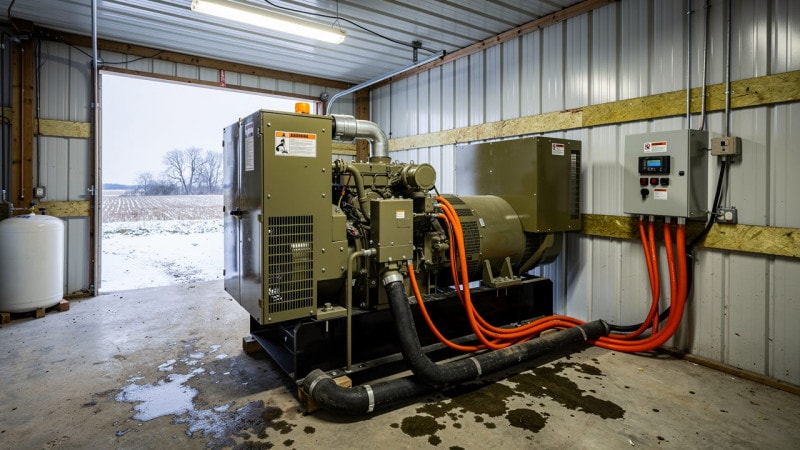
When you look at powering remote farm structures, the first decision is whether to bring the utility grid to the site or build an independent system. Each path has real trade‑offs in cost, timing, and reliability.
Grid extension still makes sense for some sites. Very large, continuous loads, such as full‑scale grain drying plants or automated dairy barns, can justify the long‑term cost of a new line. Once the utility builds the feeder and sets the transformer, you gain access to a steady supply of power. Overhead lines can be cheaper, but many farms prefer underground trenching to protect conductors from equipment, livestock, weather, and ice. The limits are the up‑front bill, the long approval and build timeline, and monthly power charges that can rise over time.
Off‑grid power systems are often the better choice when a building sits more than a few hundred metres from existing lines. An off‑grid farm power setup puts generation and storage right on site and removes dependence on utility schedules. The up‑front cost can be similar to a short grid extension but is usually far lower than a multi‑kilometre build. Solar power for remote farms and wind power for rural farms also avoid fuel costs once installed, although batteries and inverters will need replacement after many years.
Many operators choose a hybrid approach when some parts of the yard are already on the grid. A whole‑farm backup generator with an automatic transfer switch can protect barns, coolers, well pumps, and controls whenever the utility line fails. The transfer switch senses an outage, starts the generator, and shifts selected loads over without anyone running outside in the middle of a winter storm.
Key factors in this decision include:
-
Distance to the nearest connection point
-
Peak and daily load requirements
-
The value of around‑the‑clock uptime
-
Available capital and fuel costs
-
How reliable the existing rural line is in your area
“The cheapest kilowatt is the one you don’t have to haul in over three kilometres of pasture,” notes a Cove Electrical project manager. “That’s where smart off‑grid design can pay off very quickly.”
The Best Off-Grid Power Options For Remote Farm Structures In 2026
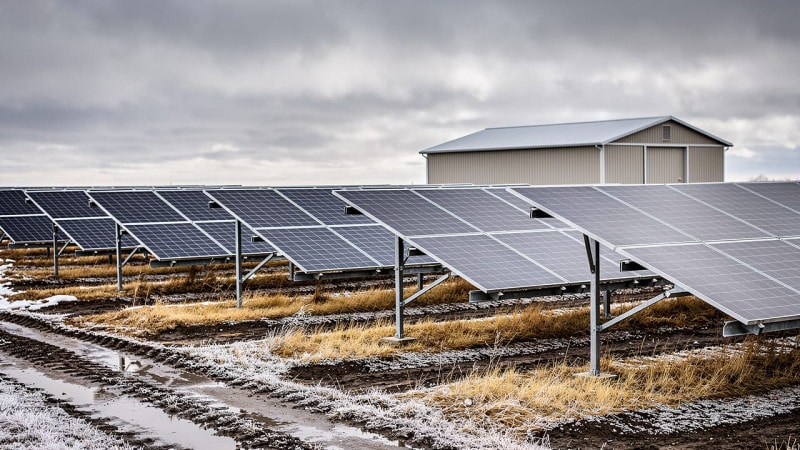
As of this year, off‑grid energy for agriculture has moved well beyond small panels on fencer chargers. The best options now blend renewables, battery storage, and generators into integrated systems that cover both daily use and unusual conditions. For most sites, powering remote farm structures off grid starts with solar and builds out from there.
-
Solar photovoltaic systems sit at the heart of many agricultural solar energy systems. Ground‑mounted or roof‑mounted arrays feed MPPT charge controllers that push power into lithium iron phosphate batteries. These batteries give long life, deep discharge, and low maintenance compared with traditional lead‑acid banks. A pure sine wave inverter then provides 120 or 240 volts for lights, small motors, and controls across barns, shops, and pump houses.
-
Wind power for rural farms works well on open prairie and ridge sites. A correctly sited turbine can produce power through the night and during cloudy winter days, when solar output is weakest. When combined with battery storage for off‑grid farms, wind can shrink the needed solar array and cut generator run time. A proper wind study and attention to setback rules are important before committing to a tower.
-
Generators remain essential for both off‑grid barn electricity and backup on grid‑tied yards. Diesel units suit heavy, steady loads such as larger grain systems, while propane units fit intermittent backup use where fuel sits for long periods. Modern sets can auto‑start when batteries reach a low state of charge or when a large motor such as an irrigation pump starts, which keeps staff out of the weather.
-
The most reliable plan for powering outbuildings off grid is a hybrid system that links solar, batteries, and a generator under one controller. Solar carries daily base loads, the battery bank bridges night and short weather events, and the generator covers extended storms or unusual high‑demand work. This mix supports farm energy independence while keeping fuel use and maintenance hours in check, and it can be expanded later as more equipment or buildings come online.
With careful design, these systems provide portable power for farm buildings, remote camera sites, gates, and bins just as comfortably as they serve large, permanent structures.
How To Plan, Size, And Professionally Install Your Farm Power System
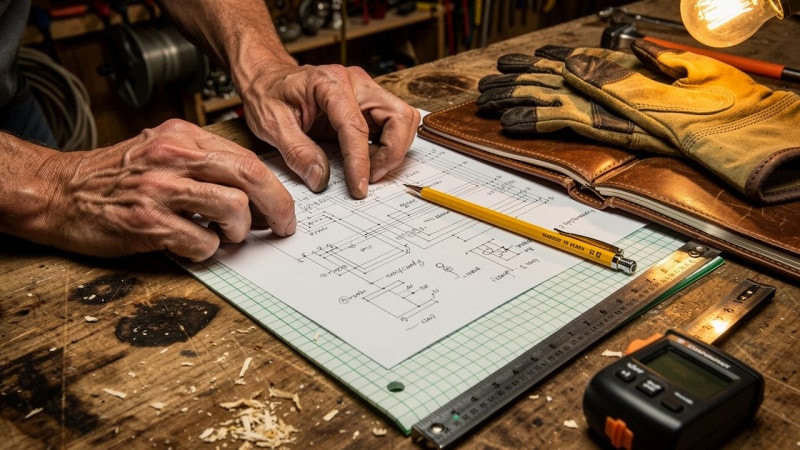
Good equipment cannot fix a poor plan. Before buying panels, a generator for a remote farm, or any other gear, you need clear numbers for what the system must support. That planning step is the foundation of safe and reliable powering of remote farm structures.
Start with a detailed load calculation:
-
List every device that will connect to the system: lights, fans, heaters, pumps, welders, controls, and electronics.
-
Note the wattage and how many hours each item runs on a typical day.
-
From there, estimate the highest kW draw at any one time and the total daily kWh use, then add about twenty to twenty‑five percent for future growth and heavier‑than‑expected days.
“If you don’t start with good load numbers, every decision after that is just a guess,” says the Cove Electrical team. “We begin every design with a notebook and a calculator, not a catalogue.”
Farm operations change, so planning ahead matters — research on the role of modern agricultural technologies confirms that upgrading power infrastructure directly improves productivity and land use efficiency. You may add grain bins, expand a barn, or bring in new electric augers and automation over the next decade. A well‑planned remote property power supply leaves room in panels, inverter capacity, and generator sizing for those steps instead of forcing a complete rebuild later.
Every installation also has to meet the Canadian Electrical Code. Agricultural sites have damp, corrosive, and dusty areas, along with yard runs that must be trenched to proper depth. Hazardous locations such as grain bins and some feed handling areas need Class II, Group G rated equipment. Proper grounding and bonding are not optional, especially on metal‑clad buildings and around livestock where stray voltage is a real concern.
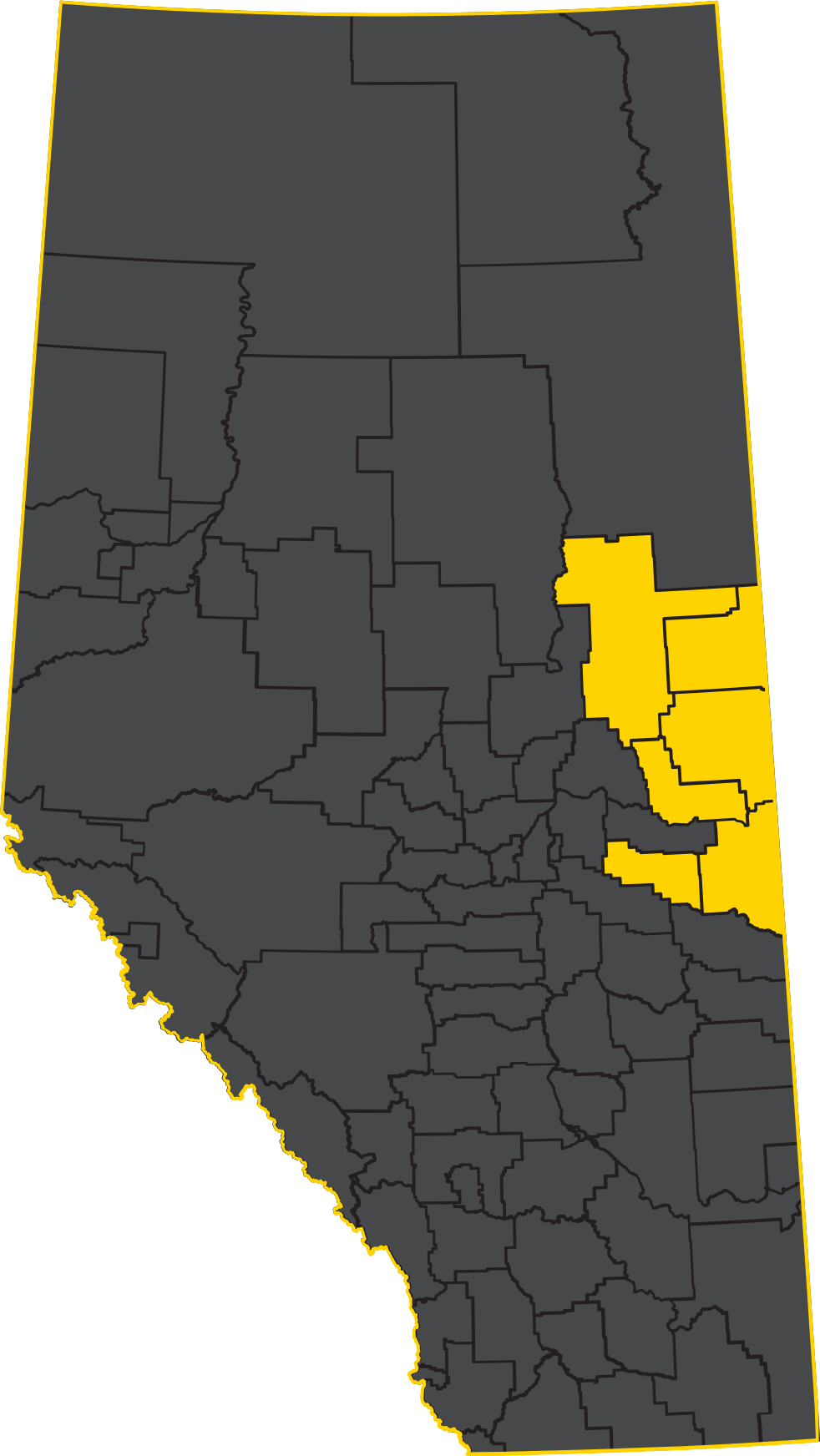
This is where a specialist such as Cove Electrical becomes a key partner. Led by an experienced electrician, Cove Electrical designs off‑grid farm power options, backup generator systems with automatic transfer switches, and advanced automation that work together as one dependable network. Their Cedar Brook Farm project near Jarvie, Alberta, combined grain monitoring, safety shutoffs, integrated scales, and whole‑yard backup power so that more than twenty grain handling shafts now run with far less unplanned downtime. That same level of planning and industrial‑grade workmanship carries through every remote farm project they handle.
Conclusion
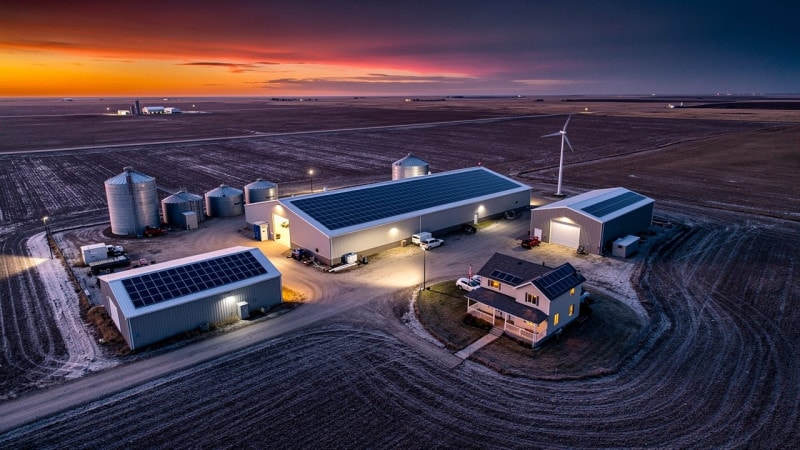
Powering remote farm structures in 2026 is not a side project or a weekend wiring job. The distance from the grid, the high value of livestock and grain, and the growth of automation all demand a planned, engineered approach. For many remote barns, bins, and pump sites, a hybrid mix of solar panels for agricultural buildings, battery storage, and a well‑sized generator offers the best balance between cost, reliability, and independence.
Getting this wrong can mean fried motors, failed inspections, unsafe conditions, and serious production losses. Working with a licensed agricultural electrician who understands the Canadian Electrical Code and real farm operations is the safest path forward. Cove Electrical focuses on operations that cannot afford downtime and designs systems that are ready for harsh weather, heavy use, and future expansion. When powering remote farm structures is on the table for your yard, reach out to Cove Electrical to discuss a design that keeps your operation running with confidence.
FAQs
What Is The Most Cost Effective Way To Power A Remote Barn Or Outbuilding In Canada?
For buildings more than a few hundred metres from existing lines, a hybrid off‑grid setup is often the best value. A solar array, battery bank, and automatic generator avoid high grid extension costs and monthly bills. Once installed, the sun provides free energy, while the generator only runs when needed. Correct sizing by a qualified electrician is vital to keep performance and cost in balance.
Do Off-Grid Farm Power Systems Need To Comply With The Canadian Electrical Code?
Yes. Every electrical system in Canada must follow the Canadian Electrical Code, whether tied to the grid or fully off grid. Agricultural buildings have extra rules for damp areas, corrosive gases, and dust‑ignition zones around grain and feed. Most provinces require permits and inspections before energizing new work. Non‑compliant wiring can fail inspection, void insurance, and raise serious safety risks for staff and livestock.
How Do I Know What Size Solar System Or Generator My Farm Structure Needs?
Start with a full equipment list for the building and record the wattage and estimated hours of use for each load. From this, calculate the highest possible kW draw at one time and the total kWh per day. These numbers guide the size of the inverter, battery bank, solar array, and generator. Add twenty to twenty‑five percent for future growth, and have an agricultural electrician such as Cove Electrical review or complete the design.