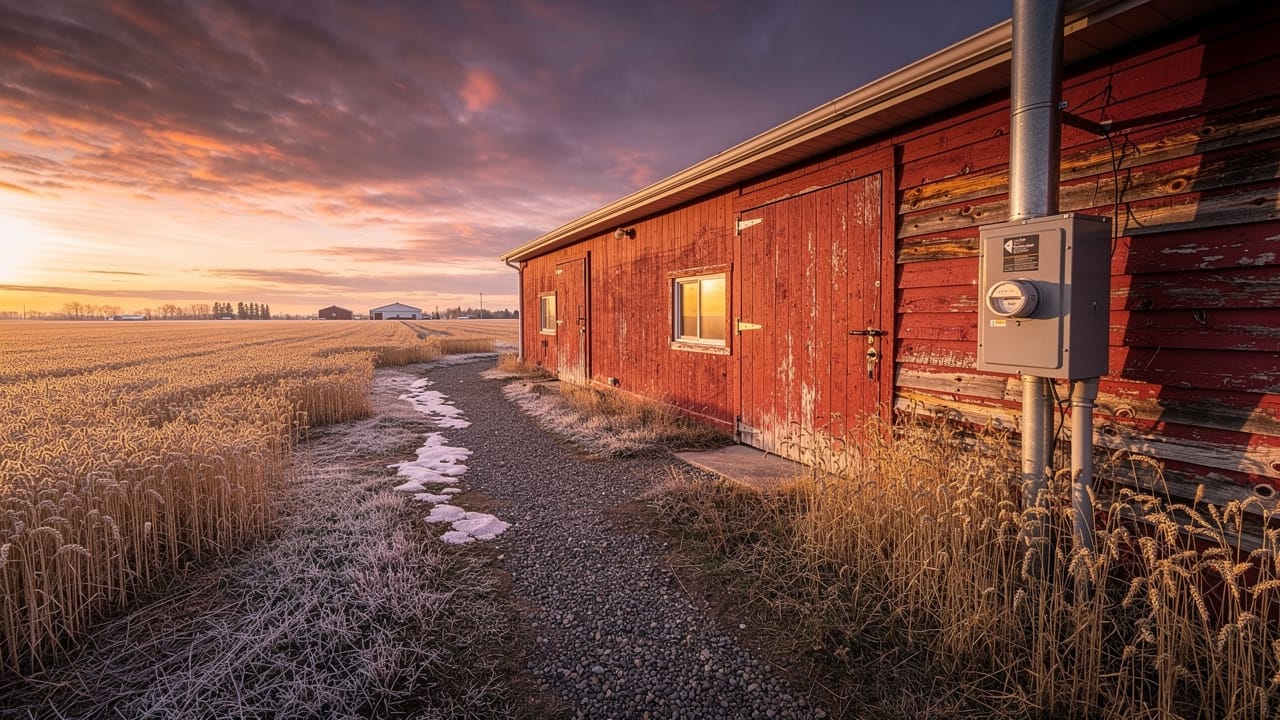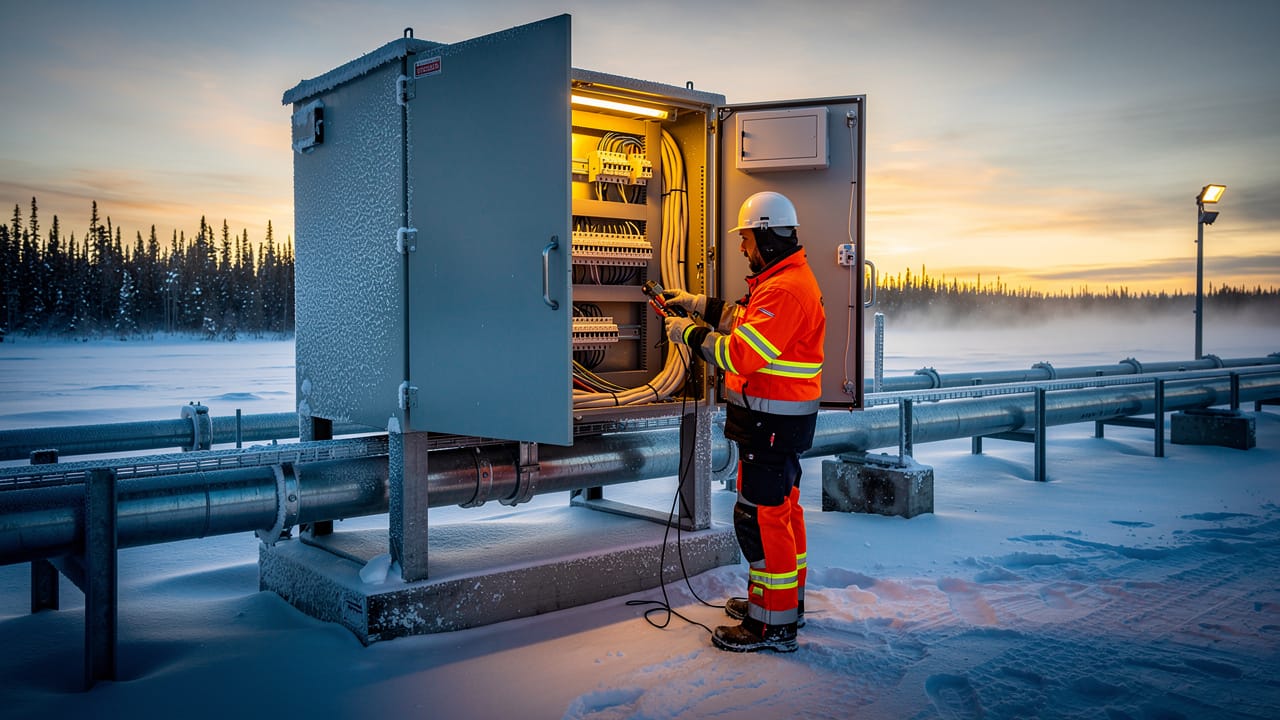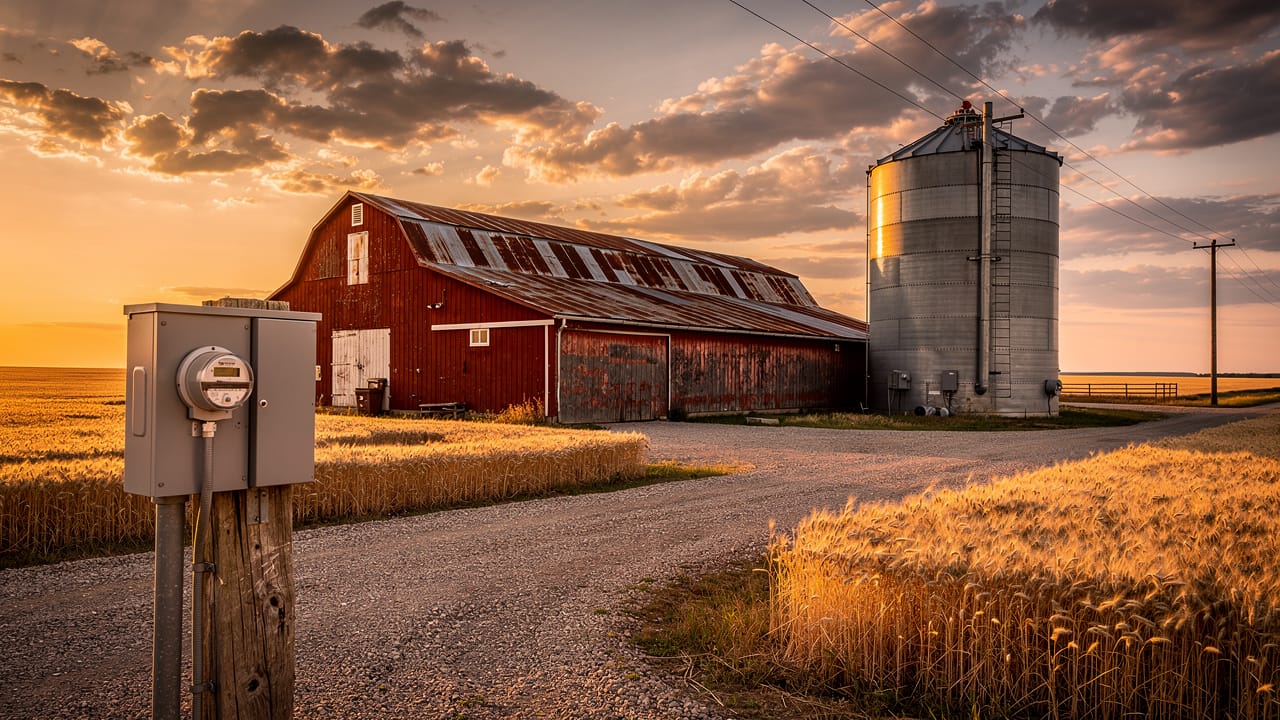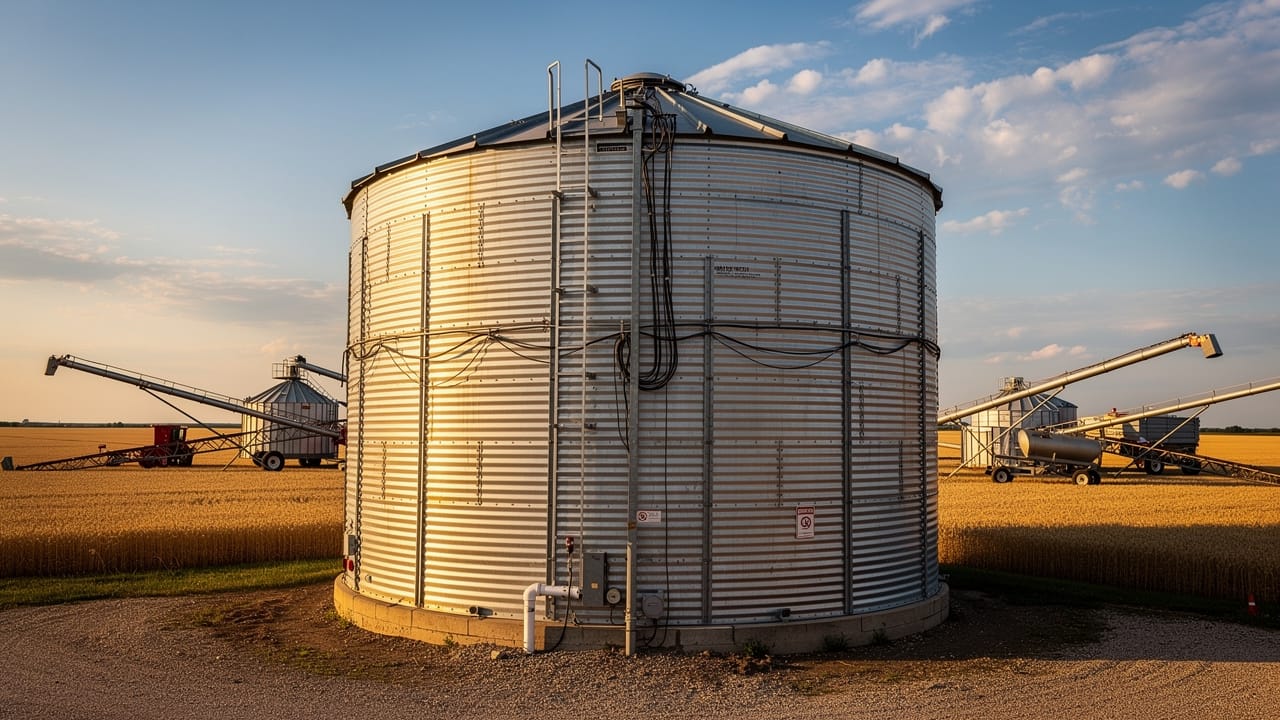
A busy dairy or grain farm can draw as much power as a small industrial shop, but it rarely looks that way on paper. Long yard runs, harsh barns, and equipment that must never stop make learning how to design farm electrical systems a very different task than wiring a house or simple shop.
Farm electrical wiring has to live with moisture, ammonia, dust, rodents, and machinery that can snap a conduit with one hit. On top of that, agricultural electrical systems must serve many zones at once: livestock barns, grain dryers, workshops, irrigation pumps, and the home. Each area has its own hazards and its own rules under the Canadian Electrical Code (CEC).
When a farm system is planned poorly, it does not just trip a breaker. It can start a fire, create stray voltage that stresses animals, and shut down feeding, milking, or ventilation at the worst possible time. This article walks through a practical, step‑by‑step way to design safe, efficient, and expandable farm power so you can talk with your electrician from a strong position. Along the way, you will see how Cove Electrical designs code‑compliant, safety‑driven systems for farms across Western Canada that cannot afford downtime.
“On a working farm, power doesn’t just need to be available; it needs to be predictable.” — Cove Electrical
Key Takeaways
-
Every serious farm project starts with a full farm load calculation and a clear site map. That keeps the main service, feeders, and panels sized for both current needs and the next phase; guessing by feel costs more later.
-
Harsh zones need the right gear for the job. Moist barns need corrosion resistant and watertight parts, while dusty grain areas need tight, dust‑rated gear. Choosing only by price leads to early failures.
-
Grounding, bonding, and GFCI protection are not extras under the Canadian Electrical Code. They are the main defence against shock, fire, and stray voltage. Regular testing and inspections keep these systems effective.
-
Backup generators with proper transfer switches keep critical loads running when the grid fails. Ventilation, water, and cooling should restart within seconds. Manual cord‑and‑plug workarounds are never safe.
-
Partnering with a licensed agricultural electrical specialist such as Cove Electrical protects people, livestock, and revenue. A specialist designs for safety, compliance, and long‑term growth rather than quick fixes.
Assessing Your Farm’s Power Requirements Before Any Wire Is Run
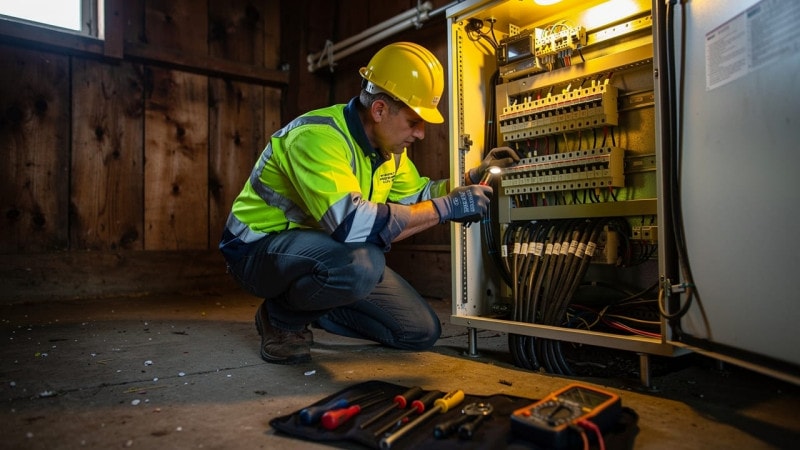
The first real step in agricultural electrical planning is a proper farm load calculation, not a trip to the hardware store. Until the total demand is clear, every choice about wire size, transformer, and panel capacity is just a guess. This early design work is where farm owners either save money over the long term or lock in years of headaches.
Start by listing every electrical load across the yard and grouping them by building or zone, such as:
-
Livestock facilities: ventilation fans, automated feeders, heat lamps or gas heaters with controls, lighting, and water pumps
-
Grain handling: dryers, augers, legs, conveyors, and aeration fans, all with motors that pull high current at start‑up
-
Workshops: welders, compressors, hoists, and power tools that may not run all day but draw heavily when they do
Irrigation pumps are often the single largest motors on the property. Long runs out to a pivot or pump house can also create voltage drop if feeders are sized too small. At this stage, note the voltage and full‑load amps from each nameplate and flag motors that might be better on three phase power instead of single phase.
Once the list is complete, your electrician applies Canadian Electrical Code demand factors to find a realistic peak. Not every load runs at full tilt at the same time, so this step turns a long list into a solid number for the main service. This is the heart of rural power planning and works far better than adding a guess for every new piece of gear.
The main service, rural service entrance, and sub‑panels should then be sized with at least twenty‑five to fifty percent headroom over that calculated demand. Leaving space in the farm electrical panel is cheaper during construction than a full upgrade later. Undersized farm power distribution shows up as dim lights, lazy motors, hot breakers, and short equipment life.
Finally, map the yard by operational zone rather than just by building. Mark:
-
High moisture areas such as milking parlours and wash bays
-
Dusty zones around grain bins and feed mills
-
Heavy‑duty zones like the shop
-
Critical uptime zones such as poultry and hog barns
This map becomes your practical rural electrical wiring guide and shapes every later decision about wiring type, enclosure rating, and backup power.
“If you can’t sketch your loads and zones on a single page, you don’t understand your electrical system yet.” — Common electrician’s proverb
Designing The Distribution System And Selecting The Right Components
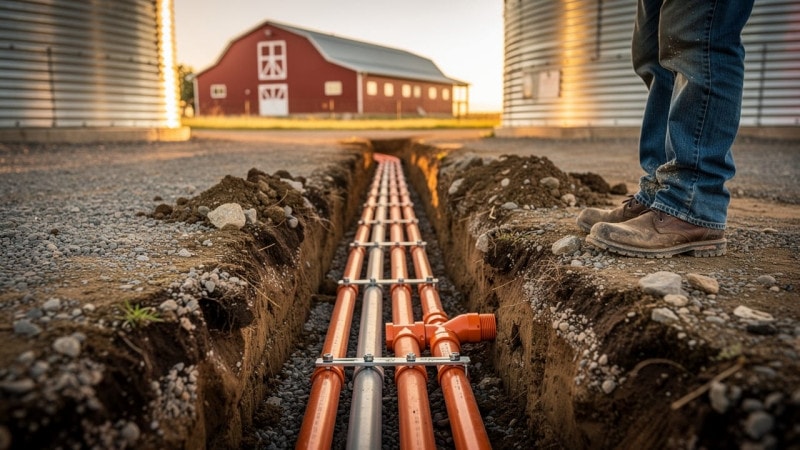
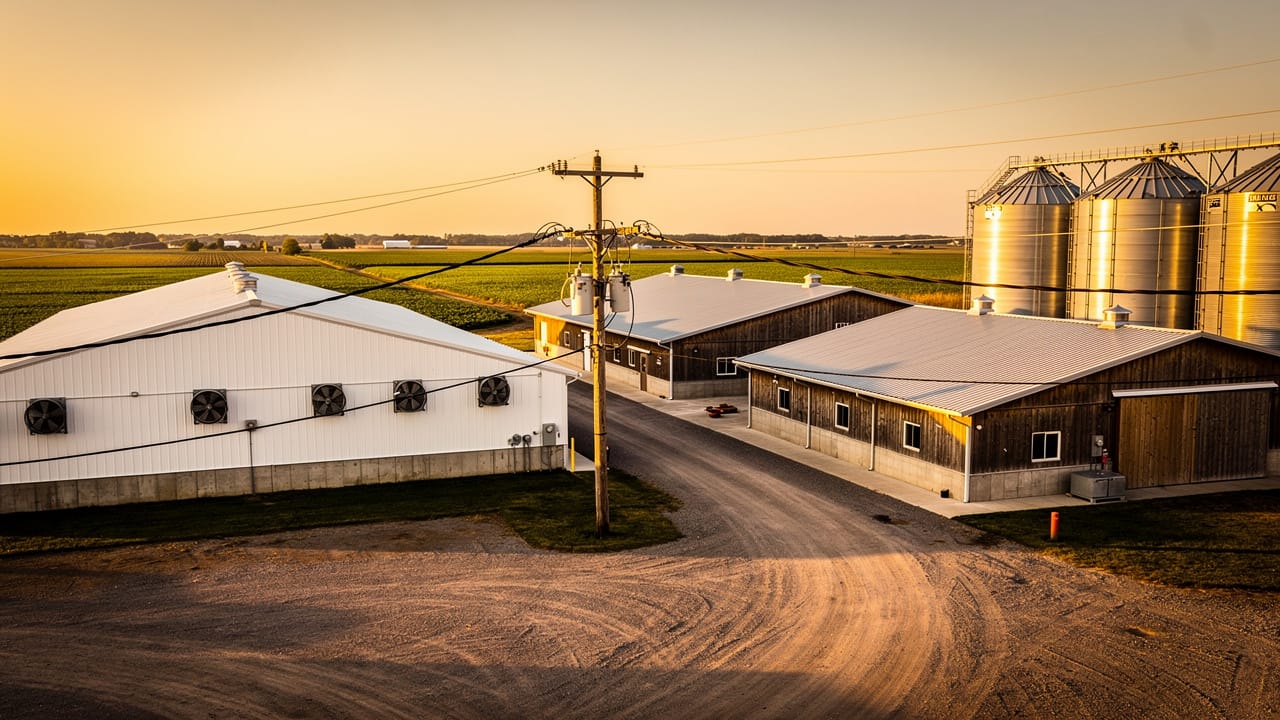
Once the total farm load and zones are clear, the next step is laying out how power will move from the utility into each building. Most operations in Western Canada work best with a central service point in the yard where the meter and main disconnect sit. From this hub, feeders run to sub‑panels in barns, grain centres, houses, and shops so each building can be isolated for maintenance or emergencies.
A key choice is overhead versus underground feeders between buildings:
-
Overhead lines
-
Lower material and installation cost
-
Easy to inspect and repair
-
Exposed to wind, ice, tree branches, and tall machinery
-
-
Underground feeders
-
Higher installation cost
-
Better protected from weather and equipment
-
Well suited to high‑traffic laneways and key barns
-
Underground feeders often use NMWU direct‑burial cable or TECK90 in conduit. Inside and between buildings, component choice is where many do‑it‑yourself jobs fall short. Standard house‑grade cable may be fine for a dry office, but it fails fast in a hog barn. Farm building wiring that travels underground or through damp soil is better served by NMWU, while TECK90 armoured cable handles corrosion and physical abuse in mechanical rooms and grain handling areas. PVC conduit is preferred in livestock spaces because it does not rust, while rigid metal conduit is reserved for spots where impact risk is extreme.
Enclosures and panels also need ratings that match their environment:
-
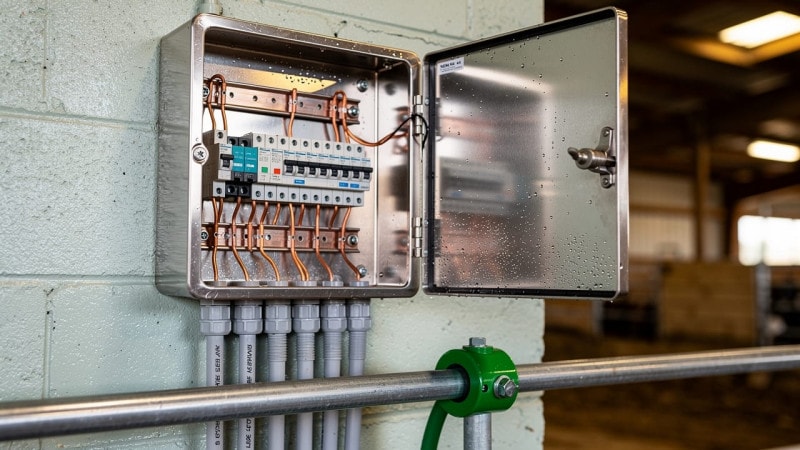
In wash‑down and livestock barns, NEMA 4X panels and junction boxes keep moisture and ammonia out and resist corrosion.
-
In grain handling buildings where dust can hang in the air, NEMA 12 dust‑tight cabinets help reduce the chance of ignition.
-
All exterior receptacles need weather‑resistant bodies and in‑use covers so cords stay protected during storms and wash‑downs.
Treat every part choice as a safety and durability decision, not a hunt for the lowest price. Cheap barn electrical wiring, livestock barn wiring, or poultry house wiring that fails in a few years costs far more once service calls, downtime, and spoiled product are counted. Cove Electrical designs agricultural electrical systems with full life cycle cost in mind so the farm keeps running while seasons and equipment change.
Building In Safety — Grounding, Bonding, And Code Compliance
Farm electrical safety depends far more on grounding, bonding, and protection devices than on any clever gadget. The Canadian Electrical Code sets a high bar here because farms mix water, metal, animals, and dust in ways that make shock and fire risk very real. Treat these parts of the design as non‑negotiable.
Proper farm electrical grounding starts with each building having its own grounding electrode, usually a copper‑coated rod driven into the earth near the service or sub‑panel. Grounding provides a low‑resistance path back to the source when a fault occurs, which forces the breaker to trip instead of leaving a metal frame energized. It also gives lightning a safer way down during storms, which matters on open prairie sites with tall bins and antennas.
Bonding is just as important. By bonding stabling, water lines, structural steel, and conductive floors together, the system keeps all of those parts at the same electrical potential. That is the main defence against stray voltage, where animals feel a tingle between, for example, a water bowl and a damp floor. Even small voltage differences can change behaviour, reduce water intake, and lower milk production, so bond connections and ground conductors deserve regular inspection.
Several protection devices then ride on top of good grounding and bonding:
-
GFCI protection shuts off a circuit as soon as it senses a small leak of current to ground. The CEC requires GFCIs on receptacles in barns, wash bays, milking parlours, and outdoors. They should be tested on a regular schedule with their test buttons.
-
Surge protection at the main service and at sub‑panels feeding automation gear, VFDs, and controls helps absorb spikes from lightning or utility events. Without this layer, a single storm can wipe out drives, panels, and computers.
-
Correct breaker sizing protects wiring from overheating. A breaker that is larger than the wire rating may never trip under overload, turning hidden wiring into a slow‑moving fire risk.
Agricultural wiring requirements in Canada are based on the Canadian Electrical Code (CEC), not the U.S. NEC you may see in online discussions of agricultural buildings. Section 22 of the CEC focuses on wet, corrosive locations, which covers much of a modern barn. Provincial inspectors enforce these rules, so working with a licensed electrician like Cove Electrical who understands farm work is the surest way to pass inspection and protect people and animals.
“Codes are written in ink because someone, somewhere, got hurt in blood.” — Saying often repeated in safety training
Backup Power, Automation, And Planning For Long-Term Reliability
When the power fails on a farm, the clock starts right away on animal welfare and product loss. Ventilation in a hog or poultry barn can become life‑or‑death in minutes if fans stop. Milking, milk cooling, grain drying, and even simple water supply can shut down, and every minute of outage chips away at revenue and equipment health.
Planning a farm generator installation starts with the same discipline as the main service, but the focus shifts to critical loads only. Work with your electrician to mark which circuits really must stay on during an outage, such as:
-
Ventilation fans and controls
-
Well pumps and water systems
-
Milk coolers and wash‑down systems
-
Essential lighting and alarms
-
Heat for young or sensitive animals
This list shapes the generator size and often leads to a dedicated critical load panel so the set is not oversized just to cover every plug.
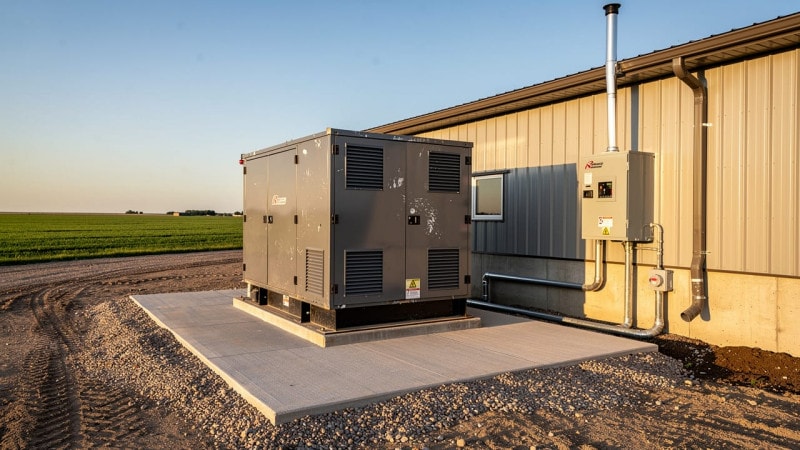
A transfer switch is a must for any permanent generator. It disconnects the farm from the grid before connecting the generator, which prevents dangerous back‑feed on utility lines. For many operations, an automatic transfer switch is the right choice. It senses loss of power, starts the generator, and switches the critical loads over without waiting for someone to drive to the yard in the dark.
Modern farms also depend on automation that quietly runs fans, pumps, grain legs, and feeding systems through PLCs and other controllers. These systems need clean, stable power and thoughtfully designed circuits so a small fault in one area does not shut everything down. When you add renewable energy, farm solar power system design must work with this plan rather than sit as an afterthought, especially if batteries are added for limited backup.
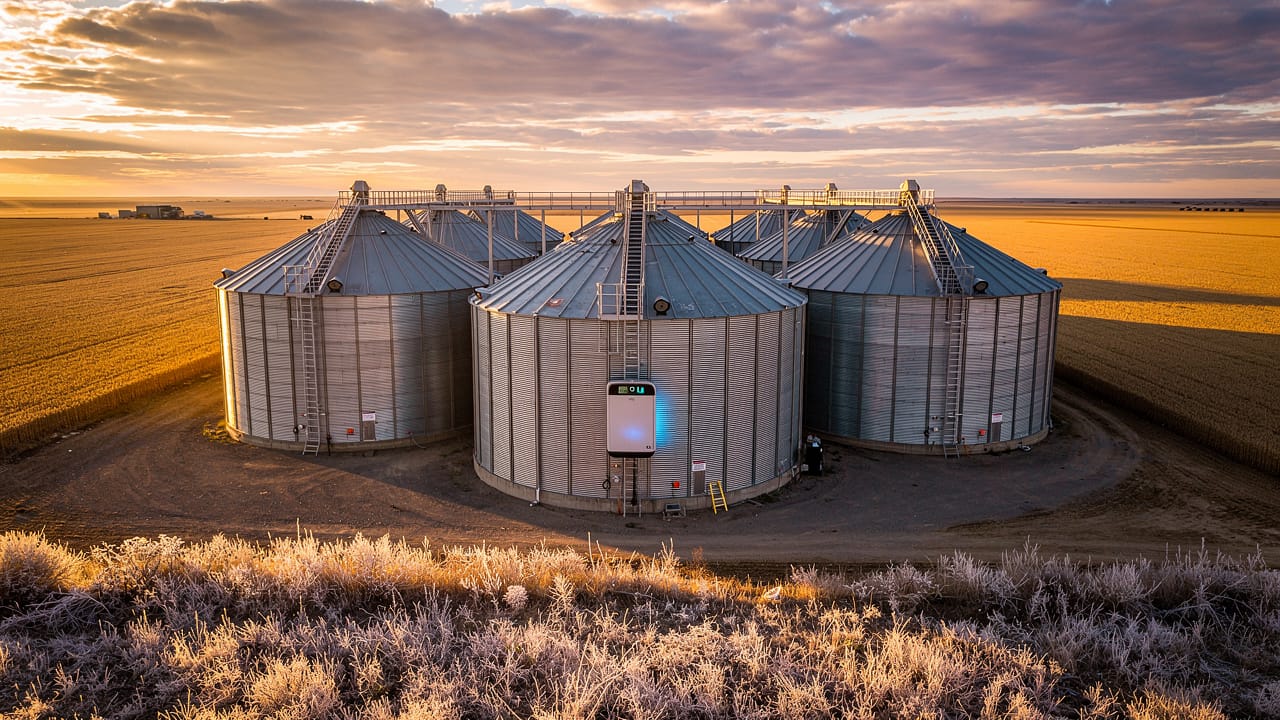
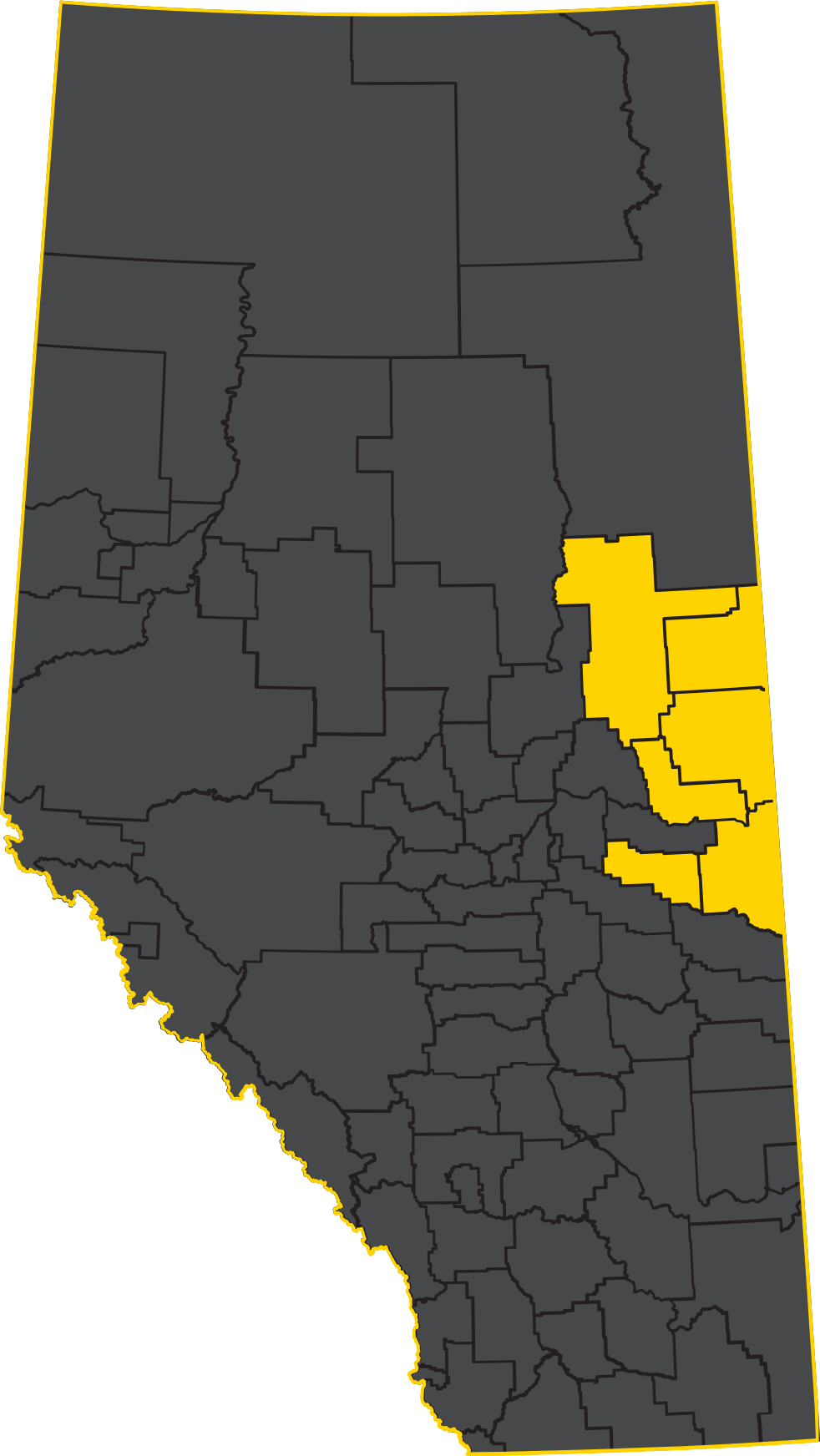
Cove Electrical focuses on long‑term reliability at this stage. At Cedar Brook Farm in Jarvie, Alberta, Cove Electrical engineered and installed a grain handling and backup power system that tied PLC controls, temperature and shaft monitoring, high‑bin level safety, yard‑wide standby power, and farm electrical panels into one coherent design. The result was less unplanned downtime, early warning on mechanical issues, and confidence that a power cut would not put crops or livestock at risk.
Conclusion
Designing farm electrical systems that are safe and efficient is less about gadgets and more about clear planning and strong basics. Accurate load calculations, thoughtful farm building wiring layouts, environment‑ready components, and disciplined grounding and bonding all work together with backup power and automation so the farm keeps running.
Cutting corners during design only shifts the bill into the future through safety incidents, inspection failures, and rushed retrofit work during busy seasons. Cove Electrical brings extensive electrical experience, deep agricultural experience, and full‑scope design and installation services across Western Canada. For farms, industrial sites, or remote operations that cannot afford downtime, that kind of partner is worth serious consideration. To discuss your own farm electrical wiring plans or upgrades, reach out to Cove Electrical and start planning a system that supports your operation for the long haul.
FAQs
What Size Electrical Service Does A Farm Need
Service size comes from a proper farm load calculation that adds all connected loads and then applies Canadian Electrical Code demand factors for agricultural electrical systems. Many mid‑sized farms operate well on a 200‑ to 400‑amp main service. Large grain centres or intensive livestock sites may need more capacity. It is wise to plan with extra room for future buildings and automation.
What Electrical Code Applies To Farm Buildings In Canada
All farm electrical work in Canada must follow the Canadian Electrical Code, which provinces adopt and enforce with their own rules. Section 22 deals with wet and corrosive areas common in barns and parlours. Authorities such as STANDATA in Alberta or ESA in Ontario oversee permits and inspections. A licensed electrician familiar with farm work keeps your project aligned with these requirements.
How Do I Prevent Stray Voltage In A Livestock Barn
The best defence against stray voltage is strong grounding and equipotential bonding that tie all metalwork to the electrical system ground. Stalls, gating, water lines, and structural steel should be bonded so animals do not touch items at different potentials. Regular inspection finds damaged wiring and loose connections before they cause trouble. Work with an agricultural specialist such as Cove Electrical, since stray voltage problems often trace back to poor or aging wiring.
Do I Need A Backup Generator For My Farm
Any farm where loss of ventilation, water, or cooling can harm animals or product should treat backup power as essential, not optional. Poultry and hog barns are especially sensitive, while dairy, grain drying, and irrigation also carry high risk when power fails. A properly sized standby generator with an automatic transfer switch brings key circuits back within seconds. That keeps people off icy roads and keeps the farm in control during outages.