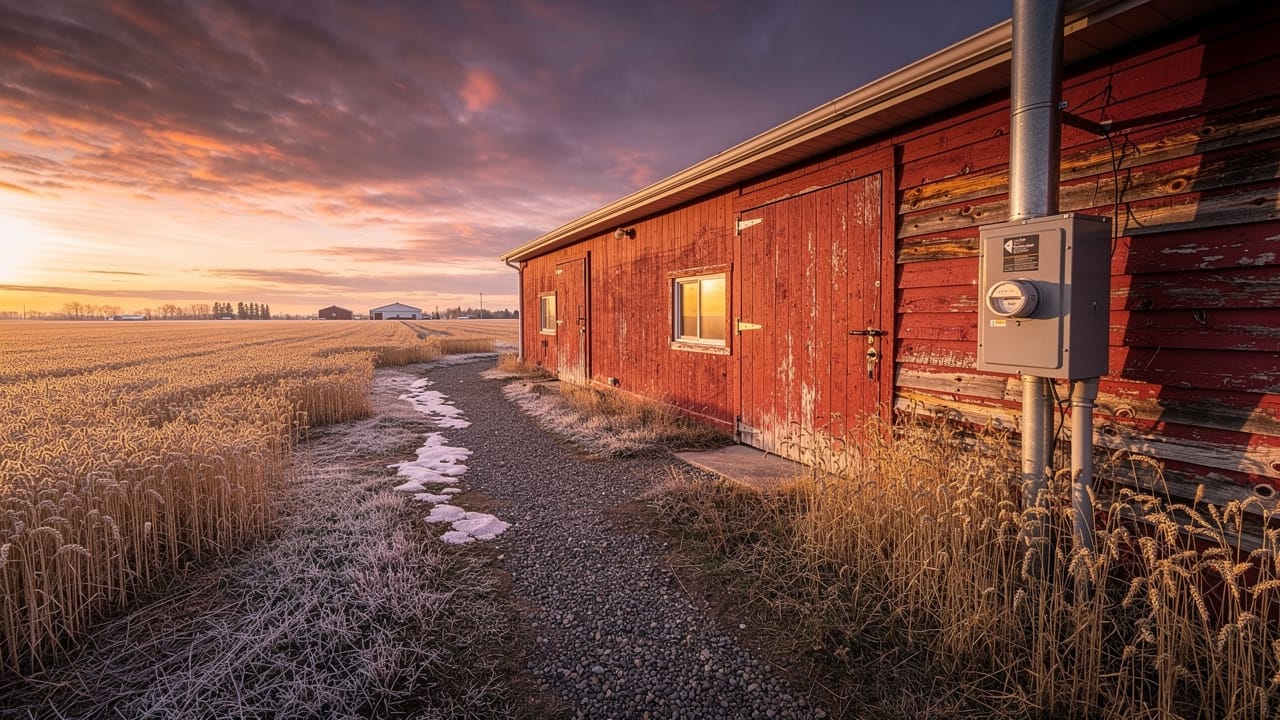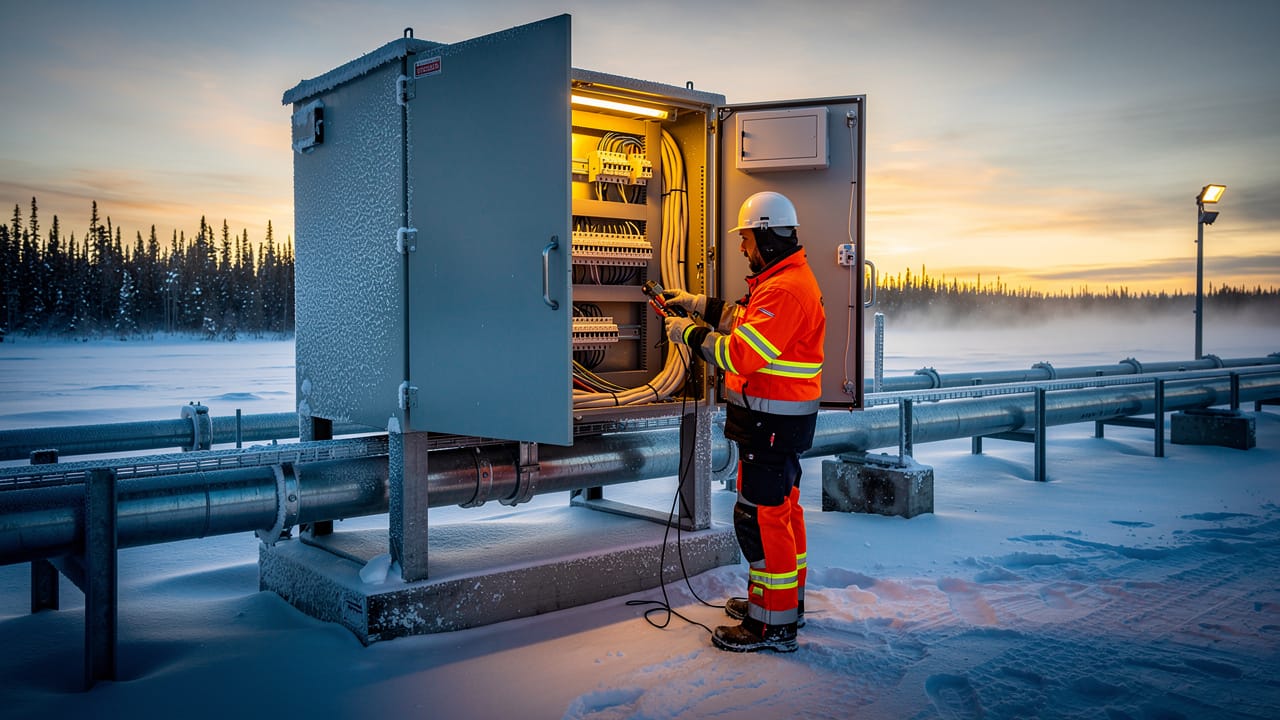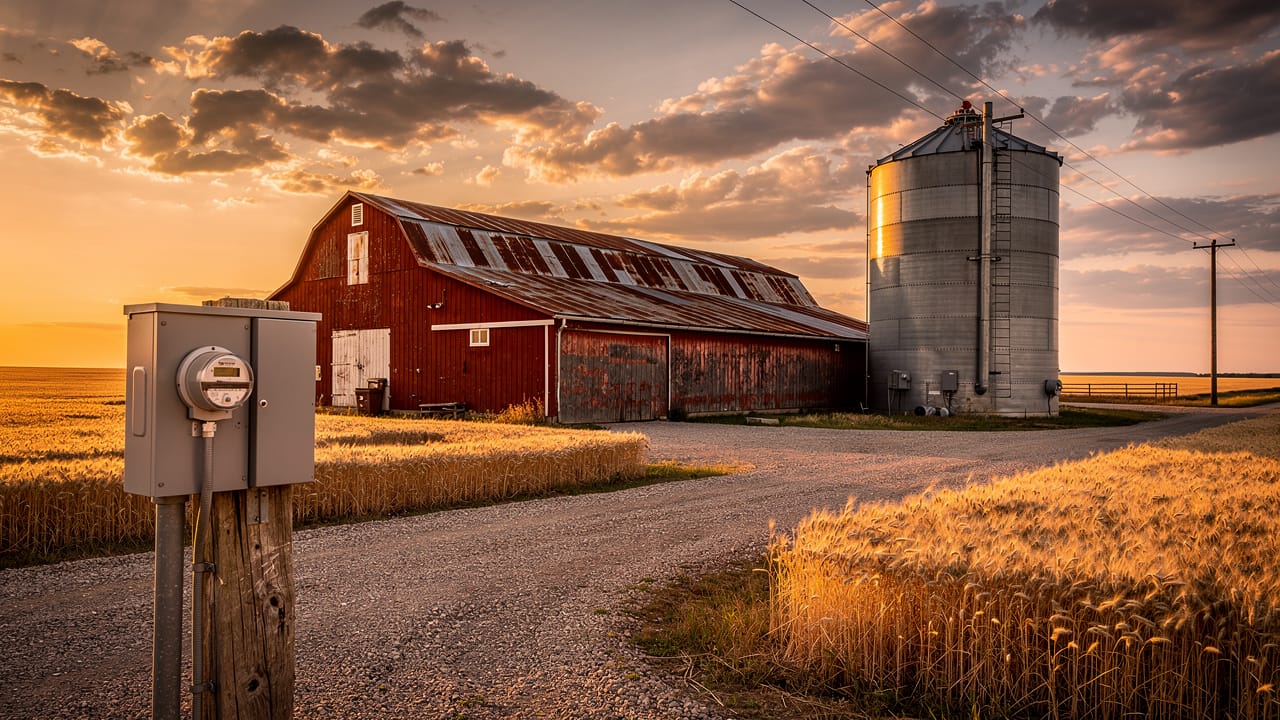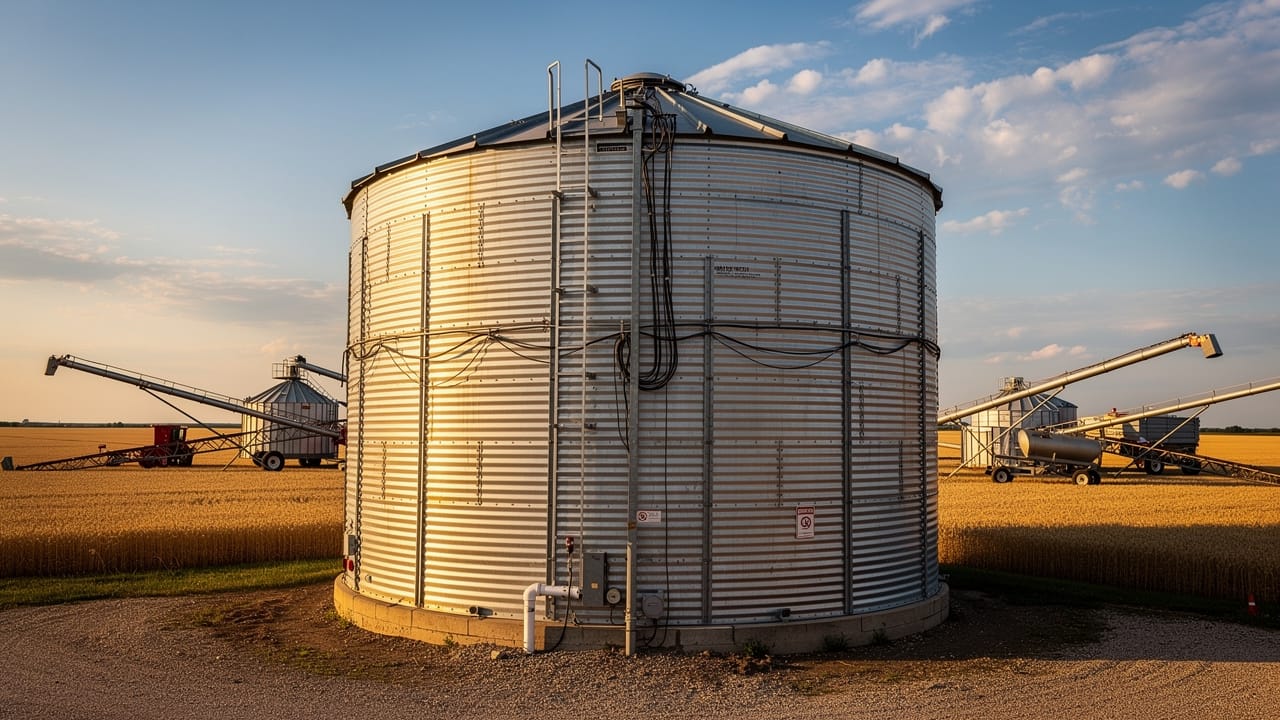
When people ask what are common electrical issues on farms, the full answer often feels uncomfortable. The list is long, and every item on it carries real risk for animals, staff, and equipment. Power on a working farm in rural Alberta is not a convenience; it keeps barns warm, water flowing, grain moving, and automation running.
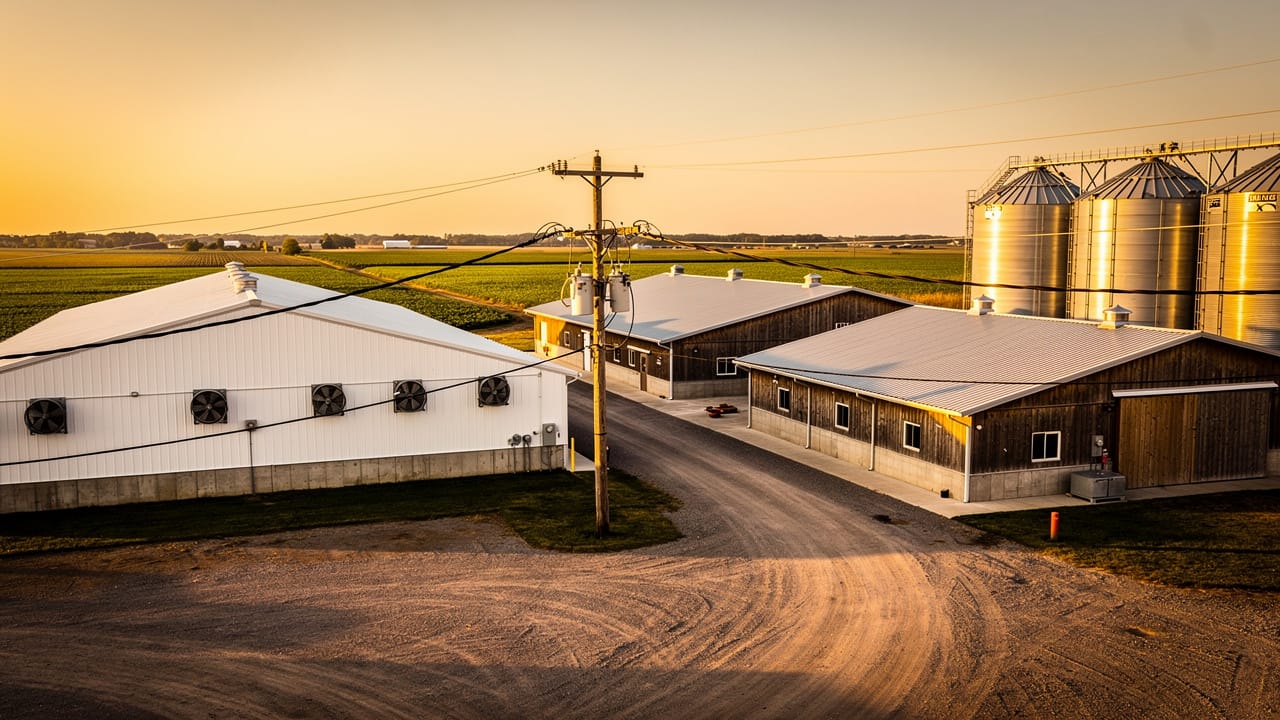
Farm sites are much harder on electrical gear than a house or office. Moisture hangs in the air, ammonia eats away at metal, grain dust settles on every surface, and large motors start and stop all day. Add long wiring runs between buildings, old panels, and the odd DIY change over the years, and it becomes clear why farm electrical problems are so common.
Those problems are not minor. An overloaded circuit can trigger a barn fire. Stray voltage on farms can stress cattle enough to cut milk production. A failed fan motor can turn a livestock barn into a life safety emergency in a matter of minutes.
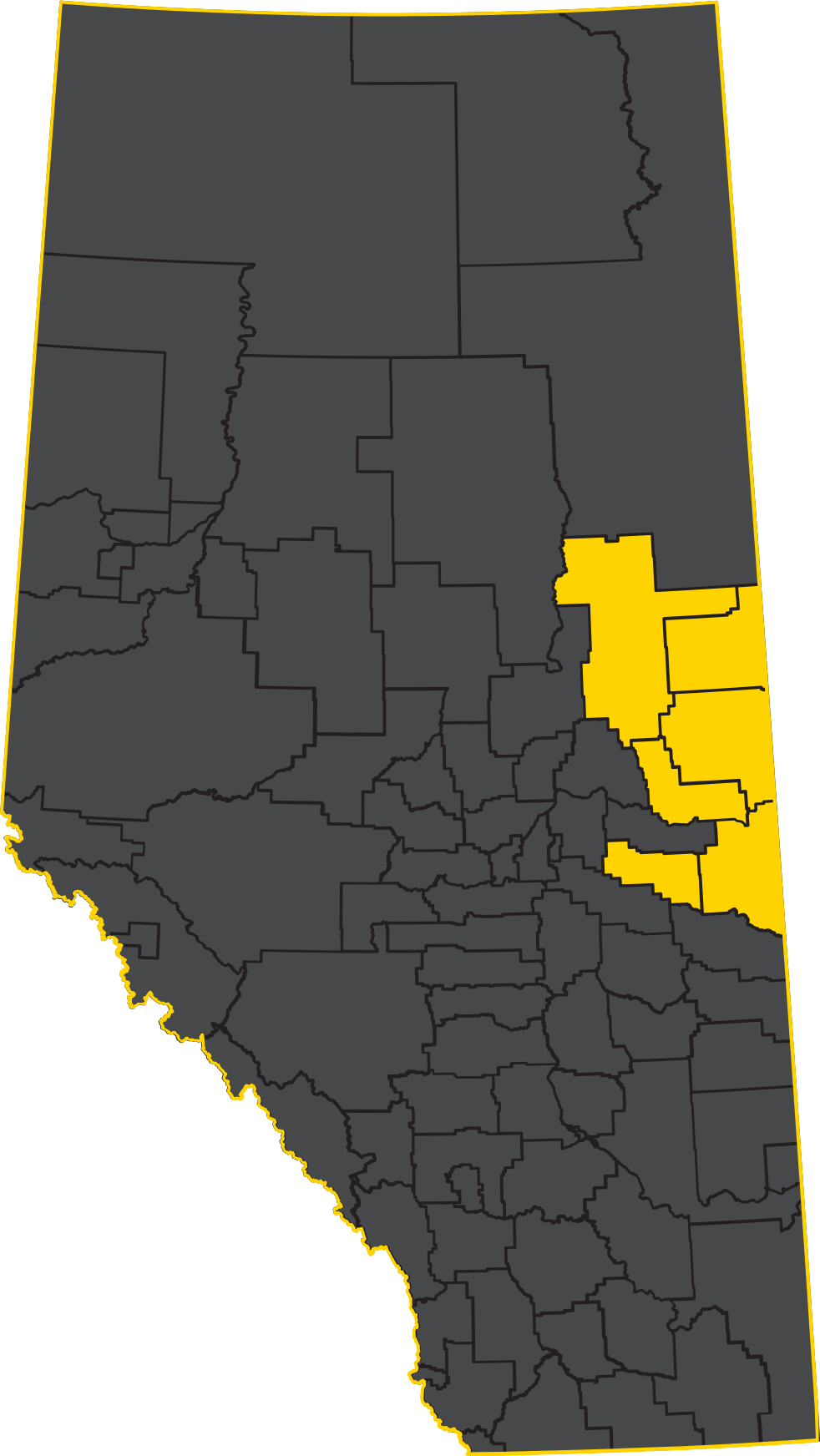
This article walks through the main risk areas that answer the question of what are common electrical issues on farms. It looks at installation errors, environmental wear, corrosion and moisture, pests, overloaded circuits, and the steps that actually lower risk. It also explains how a specialist contractor such as Cove Electrical helps farms in and around Bonnyville build safer, more reliable systems that keep operations running.
“Electricity on a farm is not optional; when it stops, everything else quickly feels the impact.” — Common saying among agricultural electricians
Key Takeaways
-
Farm electrical systems face harsh conditions. Corrosive barn air, combustible dust, and heavy motor loads make electrical hazards on farms more likely and more severe. A casual or purely residential approach to electrical work is not safe enough in this setting.
-
Most common farm wiring issues have repeat causes. Poor installation, aging equipment, corrosion, overloaded circuits, and rodent damage can each start a fire or shut down vital equipment. Together, they often combine into larger agricultural electrical faults.
-
Stray voltage on farms is widely misunderstood. Even a small voltage difference at a waterer or feed line can make animals avoid eating and drinking, affect production, and create shock risk for staff.
-
Waiting for breakers to trip is a costly strategy. Regular farm electrical inspection work, thermal imaging, and modern monitoring, combined with a qualified agricultural electrician such as Cove Electrical, gives operators early warning and long-term reliability.
Installation Errors and Undersized Infrastructure – The Root Cause of Most Farm Electrical Failures
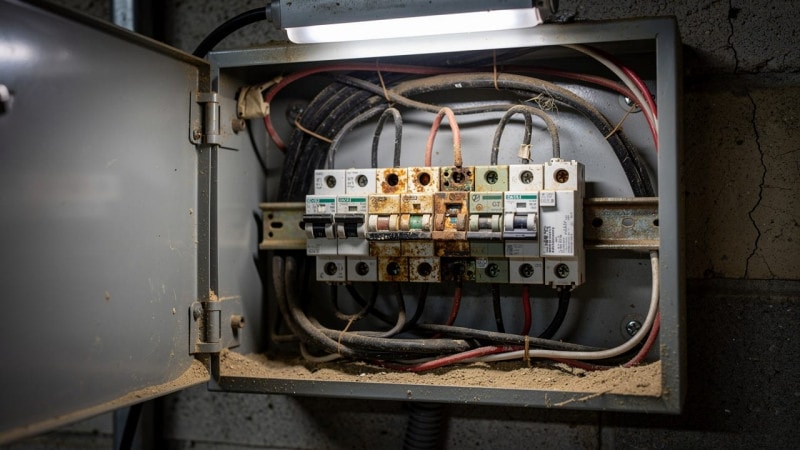
Many of the most serious farm electrical problems start on day one. When wiring, panels, and grounding are installed without proper design or without following agricultural wiring standards, the system may appear fine for years while hidden weaknesses grow. As the farm adds more load or the environment wears on the gear, those weaknesses show up as outages, damaged equipment, or fires.
Undersized or poorly rated wiring is one of the most dangerous issues. If a circuit feeding a grain dryer, ventilation fan, or feed auger carries more current than the wire is built for, that wire heats up. In barns filled with dry straw, grain dust, and wood, that heat is a serious fire risk. Residential‑grade cable or devices also break down faster in harsh agricultural settings, which leads to cracked insulation and exposed conductors.
Loose or poor connections inside panels, junction boxes, and motor starters are another major cause of agricultural electrical faults. Vibration from equipment and normal temperature changes slowly loosen screws and lugs that were not tightened or torqued correctly. A loose connection raises resistance, which raises heat, and that heat can char insulation and cause arcing.
Grounding is a safety system, not a formality. Weak or incorrect farm electrical grounding leaves metal frames, gates, and stalling structures at risk of becoming energized. This is where stray voltage on farms shows up, with animals refusing waterers or showing signs of stress. In severe cases, both livestock and people face electrical shock risk.
As farms expand, many operators add new loads to old panels. What starts as one extra fan turns into more bins, a bigger welder, or a new pump. Without a service upgrade, breakers and bus bars run near their limit day after day, which leads to overheating and nuisance trips from overloaded circuits.
Common signs of undersized or non‑compliant installation are easy to miss during a busy day but are important to watch for.
-
Breakers that trip often. Frequent trips, especially when large motors start, show a circuit near or past its safe capacity. When staff reset the same breaker again and again, they ignore a warning that the wiring and panel are under stress. This habit wears out the breaker and increases farm electrical fire risks over time.
-
Warm or discoloured devices. Outlets, switches, and panel covers that feel hot or look browned often point to high current or loose internal connections. Heat in these spots means energy is being dumped into the building materials instead of the load. In a barn, that wasted heat can easily find nearby dust or cobwebs and start a fire.
-
Flickering lights or strange sounds. Lights that flicker or dim when big equipment starts, buzzing noises from panels, or a faint burning smell from electrical rooms are all early alerts. These symptoms suggest poor connections, overloaded circuits, or failing components that need prompt farm electrical repair.
Cove Electrical is led by an experienced electrician who designs agricultural electrical systems specifically for heavy, continuous loads and long runs between buildings. For farms around Bonnyville, that means installations that meet farm building electrical code, support future expansion, and put safety and reliability ahead of quick fixes.
Environmental Degradation and Wear — How Farm Conditions Destroy Electrical Systems Over Time
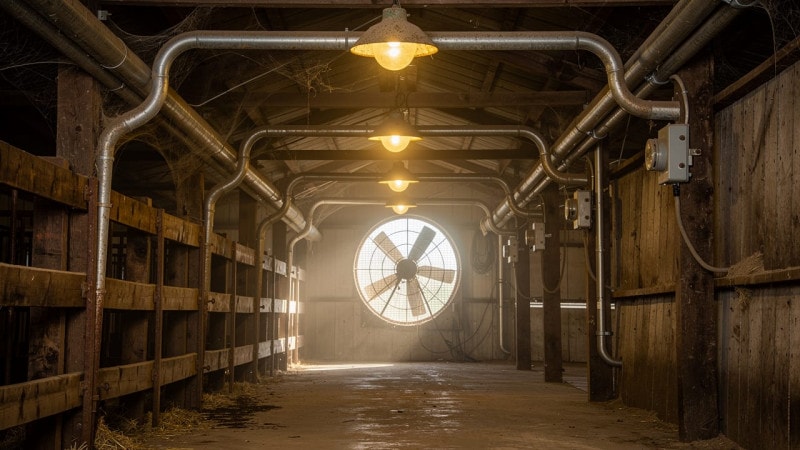
Even the best installation does not stay perfect forever. Farm environments attack electrical gear every hour of the day. Moisture, ammonia, dust, wide temperature swings, and constant mechanical stress all shorten the life of wiring, breakers, and motors. Understanding how this happens helps explain what are common electrical issues on farms that have been running for years.
Wiring insulation is the first defence against shock and short circuits. On a farm, that insulation faces sunlight on outdoor runs, soil movement on buried cables, and scuffs from equipment or animals indoors. Moisture seeps into cracks and speeds up breakdown. Once insulation is damaged, the copper underneath can arc to nearby metal, trip breakers, or energize gates and stalling.
Circuit breakers and fuses also age. Every surge from a starting motor and every slight overload stresses the internal parts. Over time they may trip too late or not at all, which leaves wiring unprotected during a fault. On the other hand, some old breakers start to trip early, creating confusing rural electrical problems that break up work days and hide deeper issues.
Motors that run grain dryers, ventilation fans, pumps, and augers suck in dust and chaff. This material builds up on motor housings and cooling fins and acts like a blanket. When motors cannot cool properly, they overheat, draw more current, and can start a fire in a dusty room. Overheating also shortens motor life, which raises maintenance costs and downtime.
Barn air, especially in hog and dairy facilities, is another silent threat to agricultural electrical safety. High humidity mixed with ammonia and other gases eats away at copper, brass, and steel. Inside panels, this shows up as green or white corrosion on terminals, bus bars, and breaker clips. Corroded connections run hotter, and corroded mechanisms may fail to operate when needed.
“Corrosion does not care how new a panel is; once barn air reaches the metal, the clock is ticking.” — Observation often shared by farm maintenance crews
Water ingress is just as serious. Damp storage sheds, unsealed conduit entries, leaky roofs, and poorly protected well or irrigation controls allow water into junction boxes and enclosures. This leads to short circuits, ground faults, and shock risk, especially around outdoor electrical safety farm equipment that staff must handle while standing on wet ground.
Vibration from tractors, fans, and other machinery travels through building structures. Over years, this loosens connections throughout the system. A single loose neutral or phase connection can cause odd voltage readings, flickering lights, or unexplained equipment failures across a whole building.
There are several warning signs that environmental degradation is at work.
-
Visible rust or corrosion. Rust or green buildup on lugs, terminals, and panel parts means the metal is breaking down. That damage increases resistance, which creates extra heat and raises the chance of electrical faults and fire in both barns and outbuildings.
-
Brown or dark discolouration. Staining around connections, breakers, or plug ends points toward overheating. This can come from loose connections, corrosion, or constant overload and should always trigger a closer farm electrical inspection.
-
Moisture or unusual heat. Moisture droplets or a damp film inside panels, a musty or burned smell around equipment, or housings that feel hotter than usual signal conditions that are wearing out the system. When staff spot these signs early, a farm electrician can replace or repair parts before they fail at a critical time.
Cove Electrical focuses on industrial‑grade components and designs that stand up to these harsh conditions. For older farms, the team plans modernization work that replaces weak points with gear built for real farm duty, extending system life and improving day‑to‑day reliability.
Rodents, Pests, and Overloaded Circuits — Compounding Hazards That Demand Attention
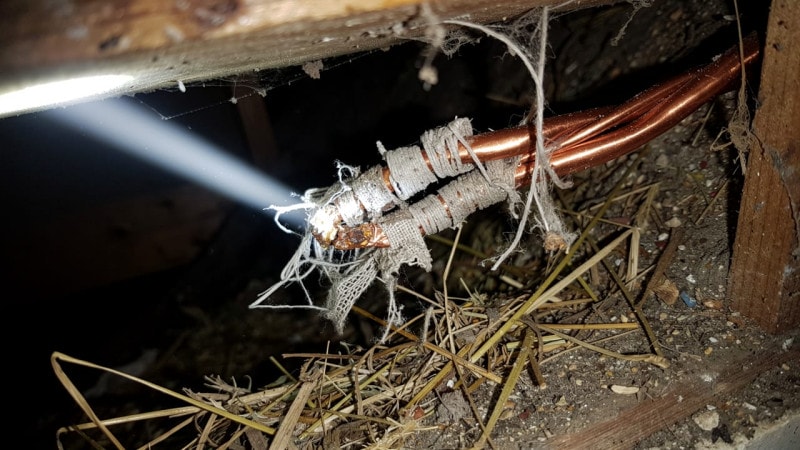
Rodents create some of the most serious yet often hidden electrical hazards on farms. Mice and rats constantly chew to keep their teeth under control, and plastic wire insulation is an easy target. When they bite through the jacket, the copper conductor underneath can touch metal or other wires, which causes arcing. That tiny arc can ignite nesting material, straw, or dust inside walls and ceilings.
Many operators discover rodent damage only after a fire, outage, or failed farm electrical repair attempt. Birds add to the risk when they build nests in or on top of light fixtures, open panels, and motor housings. Dry twigs and straw close to hot surfaces or live parts are an obvious fire risk, and nests can also block ventilation so equipment overheats.
Unsealed knockouts in panels, gaps around conduits, and damaged covers give pests a direct path into sensitive gear. These openings often appear after quick DIY changes or when covers are left off after work. Once inside, rodents not only chew wires but can also pack enclosures with debris and droppings that trap moisture and speed up corrosion.
Overloaded circuits are another common answer to what are common electrical issues on farms. Growth usually happens step by step. A farm adds a new bin or fan, then a bigger welder, then another pump. Each load seems small on its own, but together they may exceed the original panel and wiring capacity.
When circuits run above their design level day after day, wires run hot and insulation breaks down. Breakers may start to trip more often, or in some cases, weakened breakers may fail to trip at all. Both situations are dangerous, since they either shut down key systems at the wrong time or allow wiring to overheat.
Typical signs of overloaded circuits and inadequate capacity include:
-
frequent breaker trips when equipment starts
-
lights that dim or flicker across a building
-
warm extension cords or outlet faces
-
any burning smell or buzzing noise from panels
When these symptoms appear, the safest step is a professional load calculation, followed by upgrades such as larger service, new distribution panels, and dedicated feeds for high‑draw equipment.
Cove Electrical helps farms sort out these compounding hazards by sealing enclosures, using armoured cable or metal conduit in high‑risk areas, and redesigning power distribution so every major load has an appropriate, code‑compliant supply.
Proactive Maintenance, Professional Inspections & Backup Power — The Framework for Farm Electrical Safety
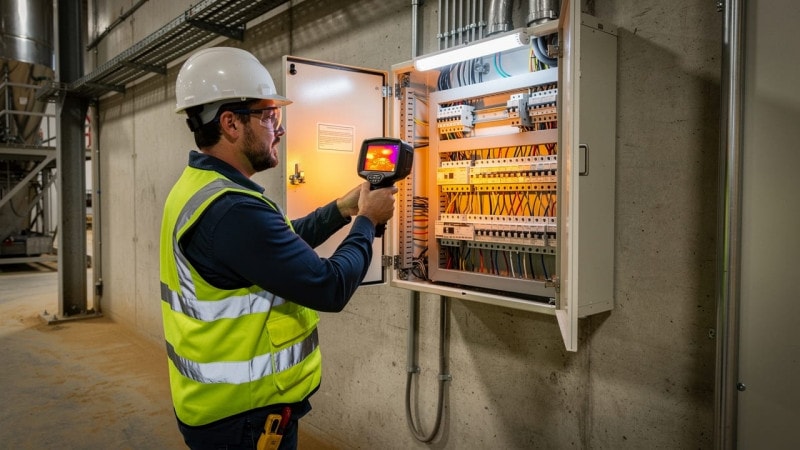
Knowing what are common electrical issues on farms is useful only if it leads to action. A safe and reliable electrical system depends on a plan that looks ahead instead of reacting to failures. That plan combines regular inspections, smart maintenance, monitoring, and backup power.
Professional farm electrical inspection work by electricians who understand agricultural wiring standards is one of the best tools available. During an inspection, a qualified technician checks panels, wiring, motors, and controls for early signs of trouble, such as corrosion, overheating, loose terminations, and overloaded circuits. Problems are fixed while they are still small, before they turn into a shutdown or fire.
Thermal imaging adds another layer. An infrared camera shows hot spots on breakers, lugs, and motor housings that look normal to the eye. Those hot spots often point to loose connections or overloading and provide a clear target list for maintenance. Systematic cleaning of panels, fan motors, and electrical rooms also matters, since dust and chaff both hide problems and feed fires.
“Electrical failures are rarely random; they leave heat, noise, or smell long before they fail outright.” — Principle often shared in industrial maintenance training
Farm staff play a direct role in agricultural electrical safety when they know what to watch for. Training should cover early warning signs such as flickering lights, warm outlets, tripping breakers, buzzing or humming from panels, any burning smell, or a tingling feeling from metal equipment. When staff report these signs right away, repairs can be scheduled before a failure happens.
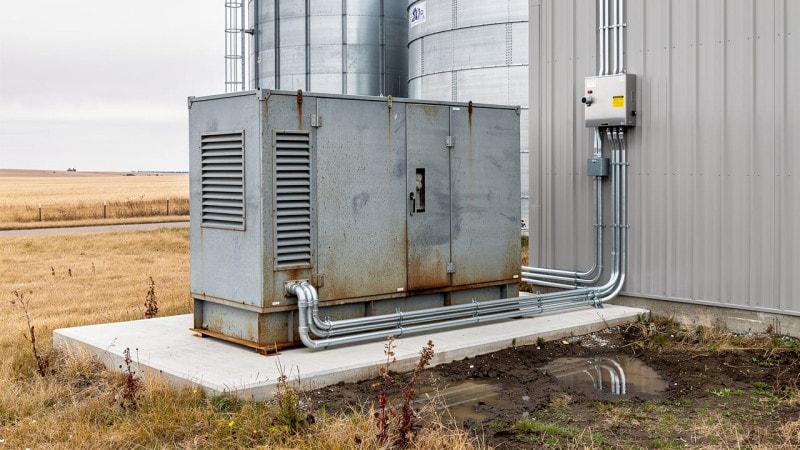
Backup generator systems are another key part of farm electrical system maintenance. Power outages during winter cold snaps, summer storms, or grid faults can quickly put animals, crops, and equipment at risk. A properly sized and installed generator, combined with a safe manual or automatic transfer switch, keeps critical loads such as barn ventilation, water systems, and grain handling running.
Cove Electrical designs and installs generator systems for entire yards or for selected critical circuits. The team handles capacity sizing, placement, transfer gear, system integration, and testing so that when the grid fails, the generator starts and carries the planned loads without drama.
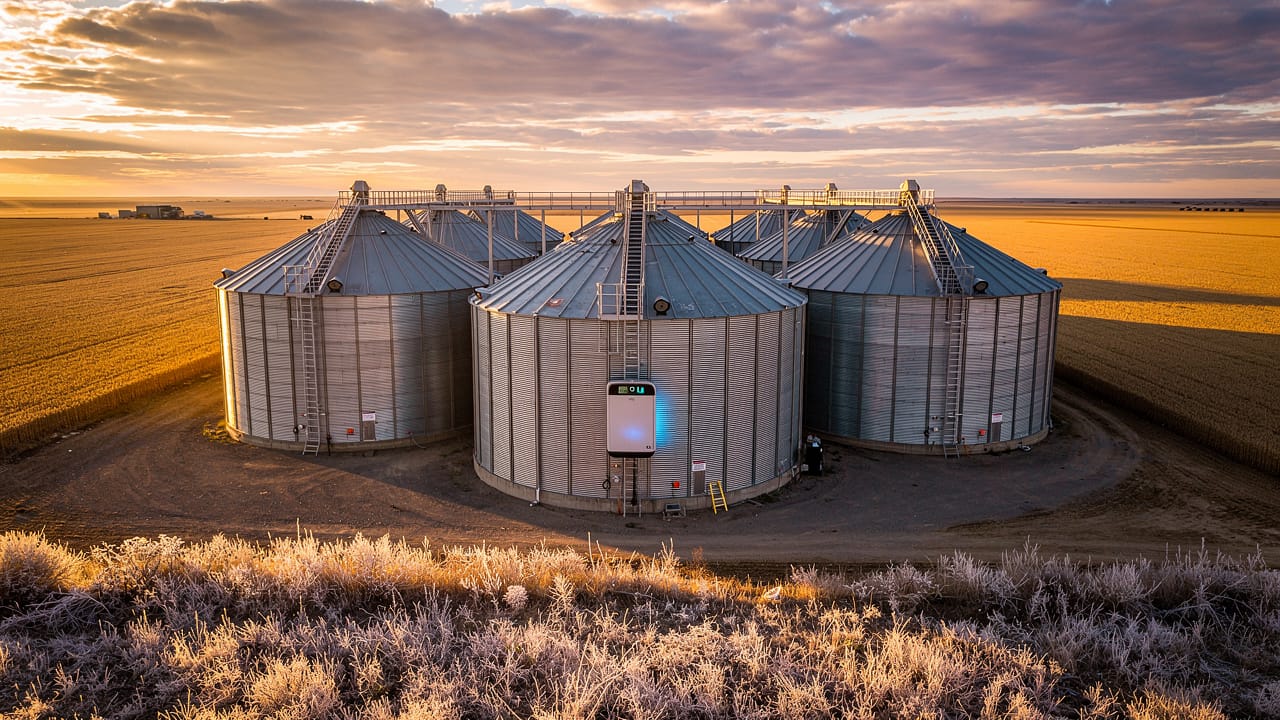
Beyond backup power, Cove Electrical also delivers integrated monitoring for grain systems and automation. At Cedar Brook Farm near Jarvie, Alberta, the company modernized the grain handling electrical system with grain temperature monitoring, high bin level shutoffs, shaft monitoring, and full backup generation. That combination gives the operator real-time awareness and strong protection against both mechanical failures and electrical faults.
For day‑to‑day operations, a simple best practices checklist helps keep barn electrical safety front of mind.
-
Schedule professional electrical inspections. Do this on a regular basis so hidden issues do not build up for years. Annual checks work well for many farms, and high‑intensity sites or older systems may benefit from more frequent visits.
-
Keep panels closed and clear. Keep panel covers closed, latches secure, and the area around electrical gear clean and clear. Panels that stay sealed are far better protected from dust, moisture, and rodents, which lowers both failure rates and fire risk.
-
Use licensed agricultural electricians. For every new installation, change, or repair, work that follows farm building electrical code the first time is far less likely to cause trouble later and usually costs less over the long term.
-
Plan and test backup generator capacity. Focus on the loads that must never fail, such as barn climate control, water wells, and control systems. Testing the generator under load on a set schedule helps confirm that it will perform when the grid goes down.
-
Integrate monitoring where it helps. Grain temperature, bin levels, or key motor status are common examples. Early alerts from these systems give operators time to respond before electrical or mechanical problems turn into expensive outages.
For farms in Bonnyville and surrounding rural communities, Cove Electrical acts as a long-term electrical partner, focused on keeping power safe, stable, and ready for whatever the next season brings.
Conclusion
Farm operators who look closely at what are common electrical issues on farms tend to see the same pattern. Installation errors and undersized infrastructure sit at the foundation. Environmental wear and corrosion weaken equipment year after year. Rodents and pests silently damage wiring. Overloaded circuits push panels and cables past their limit.
A wait‑and‑see approach in this setting is risky. Electrical hazards on farms threaten livestock welfare, staff safety, stored grain, and expensive equipment, and they often strike at the worst possible time. Early detection, code‑compliant installation, planned upgrades, and disciplined maintenance are the only reliable way to keep power systems ready.
Farm electrical systems are not just bigger versions of house wiring. They need designs that respect long runs, heavy motor loads, corrosive air, and the high cost of downtime. That work belongs with specialists who understand agricultural and industrial power.
For agricultural operators across rural Alberta, Cove Electrical fills that role. From inspections and farm electrical repair to system modernization, automation, and backup generator projects, the team focuses on safe, code‑compliant work that keeps operations running. The best time to address electrical risk is before the next outage or near‑miss, not after it.
FAQs
What Is Stray Voltage And How Does It Affect Livestock?
Stray voltage is a small, unwanted electrical potential that appears on metal objects such as gates, waterers, or stalling due to poor grounding or wiring faults. On farms, even one or two volts can make cattle hesitant to drink or eat and can raise stress levels. In more serious cases, stray voltage on farms can lead to electrical shock for both animals and staff and must be corrected quickly.
How Often Should A Farm Electrical System Be Professionally Inspected?
Most active farms benefit from at least one full farm electrical inspection every year. Older installations, operations that have expanded quickly, and facilities that house livestock or sensitive automation may require more frequent checks. These inspections should always be completed by electricians who have direct experience with agricultural wiring and equipment.
What Are The Biggest Farm Electrical Fire Risks?
The largest farm electrical fire risks include overheated wiring from overloaded circuits, arcing at loose or corroded connections, and insulation chewed away by rodents. Corroded panels in damp livestock barns and heavy dust buildup on motors and heaters add even more danger, especially around grain handling systems with combustible dust. Regular inspection, cleaning, and timely repair can remove most of these risks before they start a fire.