Weather drives every major decision on a working farm. Planting, spraying, irrigating, and harvesting all depend on what the sky is doing over a specific field, not over a city 50 kilometres away. Relying only on regional forecasts leaves a gap between what the report says and what is actually happening where the crop is growing. A professional farm weather station closes that gap with on‑site measurements.
When a forecast misses a narrow frost band, a field of canola or specialty crops can be set back overnight. When rain totals are off by 20 millimetres between neighbouring quarters, irrigation and spray timing quickly turn into guesswork. In Western Canada, where seasons are short and weather swings fast, that guesswork turns into real risk for yield, input costs, and equipment.
A farm weather station is not a gadget. It is precision infrastructure that feeds every major operational choice with verified, field‑level data. This article walks through what a farm weather station measures, why hyperlocal data matters, how to pick and install the right system, and why reliable electrical power is the backbone of the whole setup. The focus is practical: helping Canadian operations build weather monitoring that actually works, season after season.
As many agronomists say, “You cannot manage what you do not measure — and on a farm, that starts with weather.”
Key Takeaways
A quick summary helps before digging into the details. These points show how a farm weather station supports better, safer, and more profitable decisions across the yard.
-
On‑Site Monitoring: A farm weather station sits on‑site and tracks your field conditions. Regional forecasts miss local extremes.
-
Core Sensors Working Together: Air, rain, wind, humidity, soil, and sun sensors combine to give a complete picture of crop conditions.
-
Better Input Decisions: Accurate data guides irrigation, spraying, seeding, and disease control so inputs match need and waste drops.
-
Right System For The Farm: Matching sensors, scale, and connectivity to your operation prevents data gaps that cost money.
-
Power Reliability Matters: Continuous data depends on sound power design and professional wiring; outages leave blind spots.
-
Smart Integrations: When weather data links with farm software, alerts trigger on time and manual checking shrinks.
What A Farm Weather Station Measures And Why It Matters
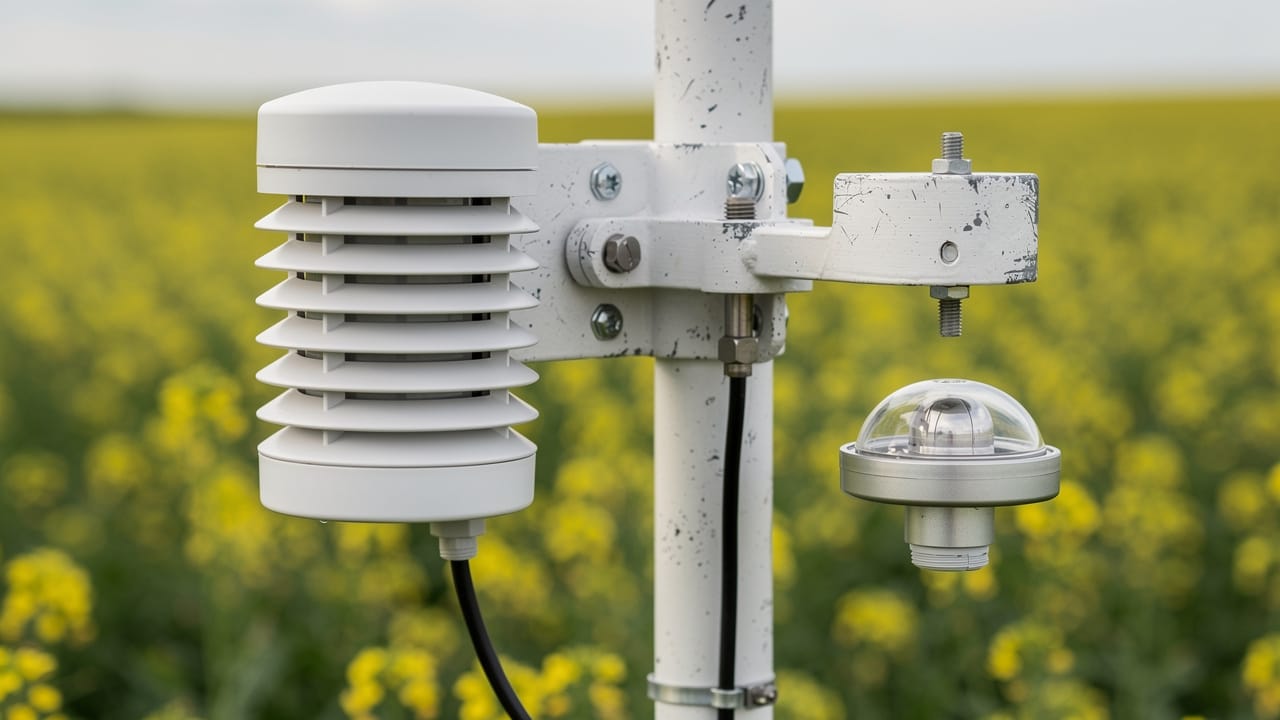
A farm weather station, sometimes called an agricultural weather station, is an on‑site set of sensors that measures the real conditions on your land. Instead of averaging data across a wide region, it records the microclimate around your crops, pastures, and infrastructure. A farm weather station turns local weather from guesswork into a steady stream of hard numbers you can act on.
Every modern farm weather station follows the same basic design:
-
A sensor suite sits on a mast or tripod and records the environment.
-
A data logger collects those readings, turns them into digital values, and stores them at set intervals.
-
Power usually comes from a small solar panel and battery so the system can sit in the middle of a field.
-
A communication unit sends data by cellular, Wi‑Fi, or radio link to a cloud platform or farm office.
-
Software turns the raw numbers into graphs, dashboards, and alerts.
The sensors on a farm weather station track the conditions that matter most for Canadian grain, oilseed, forage, and livestock operations, such as:
-
Air temperature for frost alerts and Growing Degree Days to track crop staging.
-
Relative humidity to judge fungal disease risk, especially blight and mildew.
-
Rainfall measured by a tipping‑bucket rain gauge to show how much water each field received.
-
Wind speed and direction to support safe spraying by flagging high drift risk.
-
Barometric pressure trends for a short‑term read on approaching systems.
-
Solar radiation to feed evapotranspiration calculations and refine irrigation run times.
-
Soil moisture probes at root depth to show when plants are close to stress.
-
Soil temperature to indicate when it is safe to seed.
-
Leaf wetness sensors to track how long leaves stay damp, which is vital for timing disease control.
The real strength of a farm weather station comes from this integrated dataset. When all these readings line up in one place and one timeline, you get a clear picture of how your fields are behaving in real time. That picture supports faster, more confident decisions every day of the season.
How Hyperlocal Weather Data Drives Better Farm Decisions
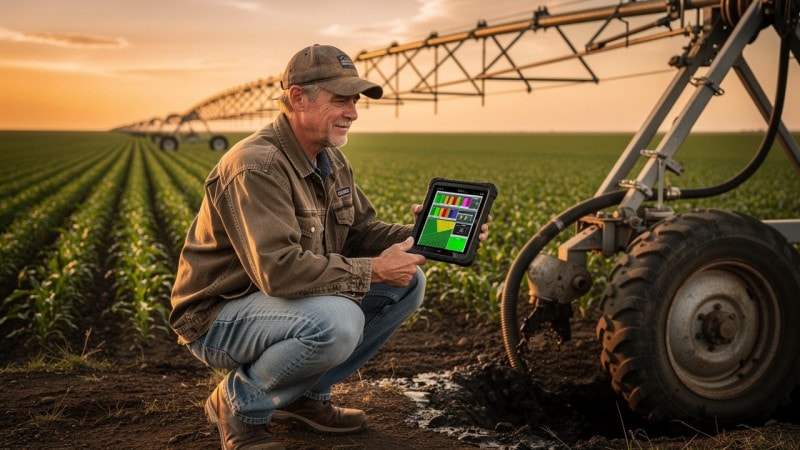
Regional forecasts are built around a few fixed stations, often near airports or towns. Between those points, the numbers are interpolated and averaged. On the ground, that can look very different. A low spot can frost while a nearby ridge stays above zero. One quarter can catch a strong shower while the next one over stays dry. A farm weather station measures what is happening where your money is actually planted.
Irrigation is one of the clearest wins from hyperlocal weather data. When a farm weather station combines rainfall totals with temperature, humidity, wind, and solar radiation, it becomes possible to track daily water loss from the soil. Add soil moisture probes at root depth, and you know exactly when the crop is starting to feel stress. Water goes on when the plants need it, not when the calendar says so, cutting both water use and pumping power.
Pest and disease management also changes with on‑farm data. Many disease models use temperature, humidity, and leaf wetness duration to flag high‑risk periods. With a farm weather station feeding those models, spray passes can be timed to match risk instead of habit. That means fewer wasted passes, better protection in high‑pressure windows, and fewer surprises.
Spraying decisions in general improve with real‑time wind and temperature readings. Instead of guessing from a forecast or a handheld meter at the yard, operators see live data from the actual sprayer area. That reduces drift, protects neighbouring crops and yards, and keeps products working as they should.
Seeding and harvest also benefit. Soil temperature from the farm weather station shows when the seedbed is ready, which helps avoid poor emergence from cold ground. During harvest, humidity and rainfall trends show when fields are dry enough to carry heavy machines without ruts or compaction. Frost and storm alerts pushed to a phone or tablet give time to start frost fans, move livestock, or shut down sensitive gear before damage occurs.
Because every reading is stored automatically, a farm weather station also builds a timestamped weather record. That record helps with crop insurance claims, audit programs, and environmental reporting. Overall, hyperlocal data shifts the whole operation from reacting after weather hits to acting ahead of it.
A common farm saying sums it up: “If you wait for the forecast to prove you wrong, you are already behind.”
Selecting And Installing The Right Farm Weather Station
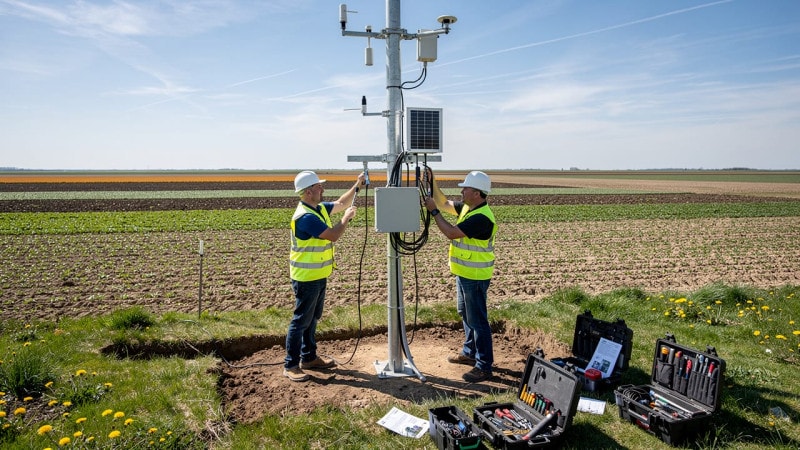
Not every farm weather station fits every operation. Picking the right system starts with looking at how your land is set up and what decisions you want to support.
Key factors to think through include:
-
Farm size and topography:
For a smaller, fairly uniform farm, one station placed in a representative field may be enough. Larger operations, or farms with hills, valleys, or different soil types, may need several sensor nodes to cover all the microclimates that affect yield and trafficability. -
Crop mix and priorities:
Grain and oilseed growers often focus on wind speed for spraying, rainfall totals, and soil moisture for dryland management. Specialty crop and horticulture producers may care more about humidity, leaf wetness, and solar radiation to refine disease control and canopy management. A modular station lets you start with core sensors and add more as needs change. -
Budget and future growth:
All‑in‑one units cost less up front and are simple to install, but they offer limited room for expansion. Modular systems cost more at the start but protect your investment by allowing extra soil probes, leaf sensors, or additional stations later. In Western Canada, durability is non‑negotiable, so look for gear built with industrial‑grade, UV‑stable materials rated for both deep cold and summer heat. -
Connectivity options:
Wi‑Fi works if the farm weather station sits within a strong signal from the house or shop, but range can be a real limit. Cellular links (4G or 5G) usually make the most sense for remote quarters, giving direct‑to‑cloud data wherever there is mobile coverage. Radio networks let several field nodes report back to a single gateway without needing a separate cellular plan on each device.
How and where you mount a farm weather station matters just as much as which one you buy. The site should be open and represent the fields you care about, set at least ten times the height of the nearest obstruction such as a shed or tree line. Mount the station over natural cover like grass, not bare soil or gravel, to avoid heat reflection that skews temperature readings. Keep temperature and humidity sensors at roughly 1.5 to 2 metres, place the anemometer around 2 to 10 metres depending on use, and hold the rain gauge level and clear of overhanging objects.
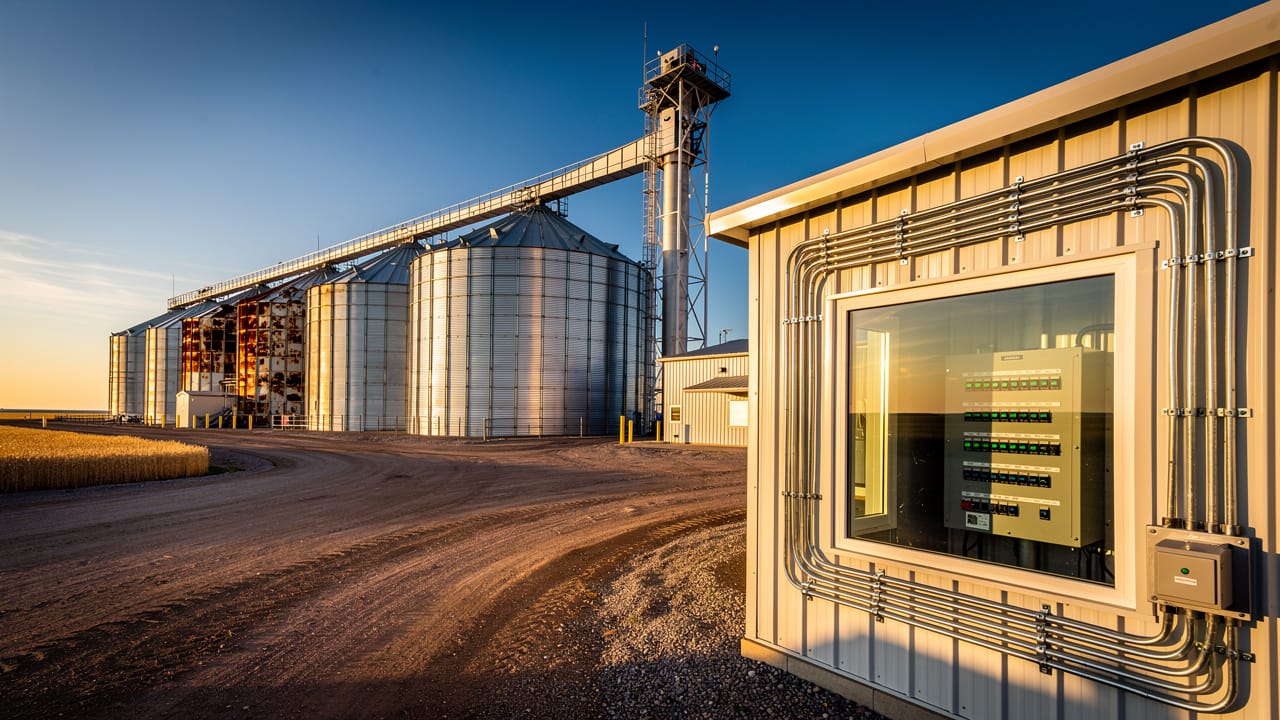
Power and electrical work are the final pieces. Standalone farm weather station units usually run on solar panels and batteries, but you still need to size the panel and storage for northern winters and cloudy stretches. Once the station ties into irrigation controllers, barn ventilation, or grain handling controls, it becomes part of the main electrical system. At that point, this is not a do‑it‑yourself project. Bringing in a professional contractor like Cove Electrical means circuits are sized correctly, grounding is done right, and the full installation meets Canadian Electrical Code requirements while leaving room for future sensors and automation.
Reliable Power Infrastructure: The Foundation For Continuous Data Collection
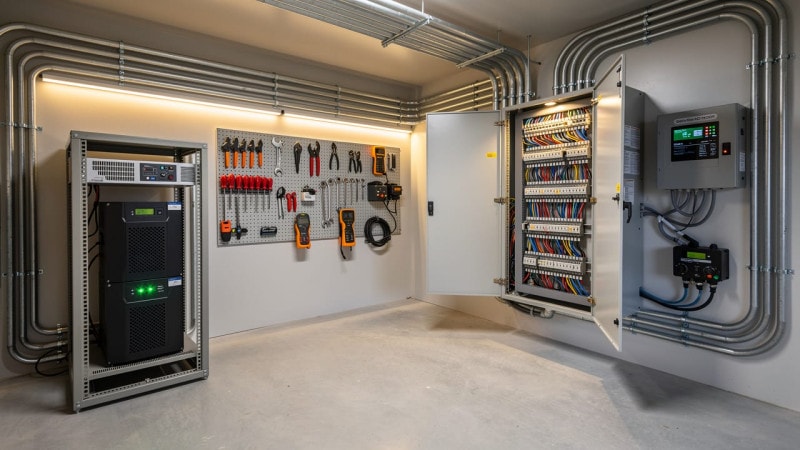
A farm weather station is only as good as its power supply. If the system goes dark during a thunderstorm, frost event, or windstorm, the gap appears right when you need data the most. Missed alerts can mean frozen crops, over‑irrigation, poor spray timing, or bad inputs to disease models. In rural Western Canada, where grid outages happen, backup power is a risk control, not a luxury.
Professional‑grade electrical infrastructure for a farm weather station starts with dedicated circuits sized for both the station and any connected automation, such as pumps or fans. Those circuits protect sensitive electronics from the electrical noise and high loads common in grain systems and livestock barns. Good design also groups related controls, communication gear, and the farm weather station hardware so maintenance and future upgrades stay straightforward.
Backup power layers add resilience:
-
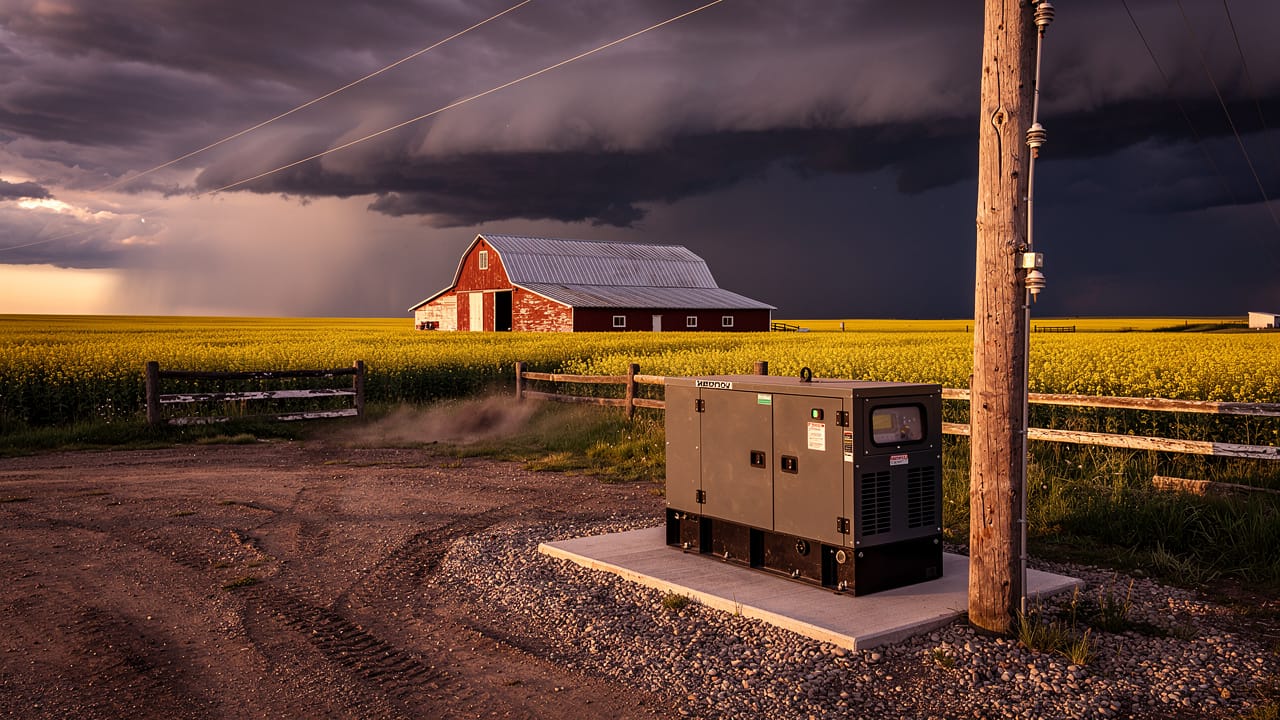
Standby generators paired with an Automatic Transfer Switch keep key loads running during an outage.
-
Uninterruptible Power Supplies bridge the gap during that switchover and shield data loggers, network hardware, and control computers from brownouts and spikes.
-
Proper grounding and surge protection, especially on exposed masts and long cable runs, reduce the chance that a nearby lightning strike will damage sensors or communications gear.
As many electricians like to remind clients, “If it is not powered, it does not count.” Weather data is no different.
Cove Electrical focuses on this full picture. The team supplies and installs professional farm weather station systems and designs the power and control infrastructure that support them. Installations follow Canadian Electrical Code, including dust‑hazard and livestock safety rules, and are led by experienced, licensed electricians. Designs also look ahead, with spare breaker space, extra conduit, and clear panel layouts that make it simple to add more sensors, automation, or communication hardware as your operation grows.
Conclusion
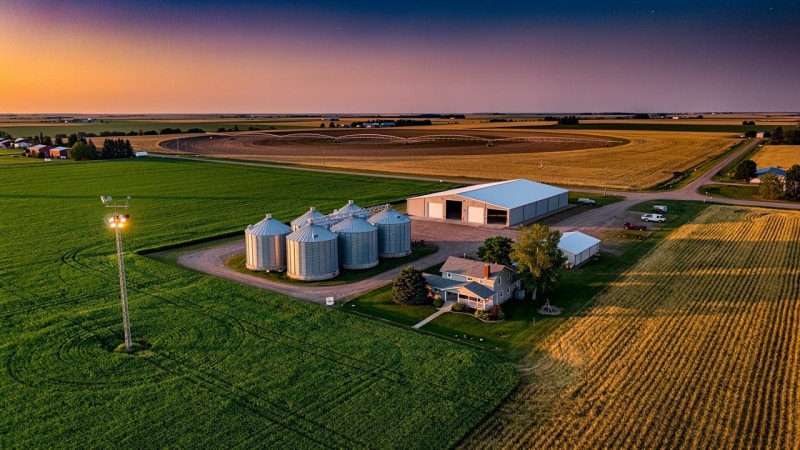
A farm weather station is precision infrastructure, not a side project. Its value depends on accurate sensors, smart placement in the field, and steady power so data does not go missing during a key weather event. When those pieces line up, every major decision on the farm gains support from real numbers instead of guesswork.
The path is straightforward. Decide which decisions you want to improve, then choose a farm weather station with sensors, scale, and connectivity that match your crops and land. Install it to accepted siting standards so the readings truly reflect field conditions. Back it up with sound electrical design and layered power so it keeps running when the grid does not.
For farms across Western Canada that cannot afford downtime, this is where Cove Electrical fits in. From supplying professional farm weather station systems to designing, wiring, and backing them up with generators and UPS units, the team builds weather and power infrastructure that works when it matters. If it is time to add reliable field‑level weather data to your operation, partnering with Cove Electrical is the next step.
FAQs
How Much Does A Farm Weather Station Cost In Canada?
Costs vary with capability. Basic all‑in‑one farm weather station units that measure temperature, humidity, wind, and rain can start in the low hundreds of dollars. Professional‑grade modular systems with soil probes, leaf sensors, and cellular connectivity usually range from about $1,500 to $5,000 or more. Electrical installation, integration with pumps or controls, and backup power add to the upfront bill but often pay back through protected yield and lower input waste.
Do I Need A Professional Electrician To Install A Farm Weather Station?
A simple solar‑powered farm weather station with no wired links can often be installed by the operator by following the manual and standard siting guidelines. The picture changes once the station ties into irrigation pumps, ventilation fans, grain handling controls, or the farm network. In those cases, a licensed electrician is needed to design circuits, handle grounding and surge protection, and meet Canadian Electrical Code rules. That approach protects both the equipment and the data stream.
What Is The Best Connectivity Option For A Farm Weather Station In Rural Alberta Or Saskatchewan?
The best link depends on where the farm weather station sits. In remote quarters, cellular service is often the most practical choice because it offers flexible placement and direct cloud upload anywhere with a mobile signal. On very large farms with many stations, radio networks that send data back to a central gateway can reduce ongoing fees. Wi‑Fi works well near the yard, but its range usually limits it to installations close to the house or shop.