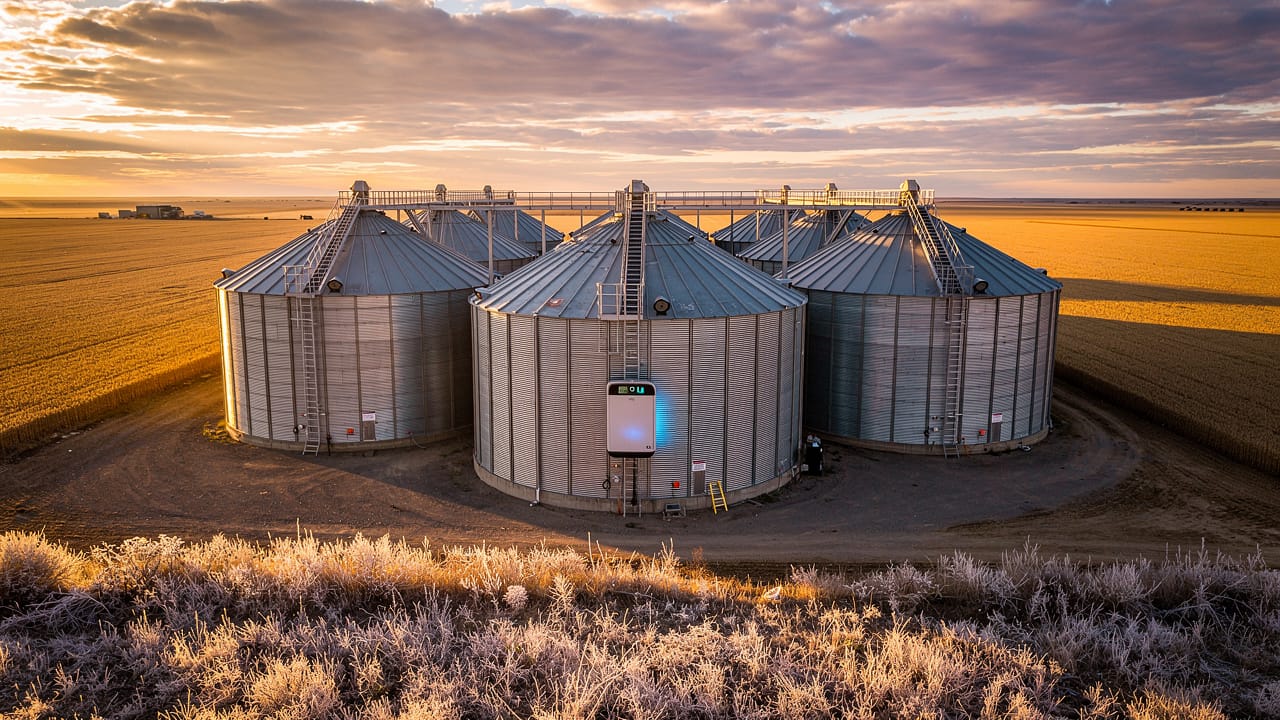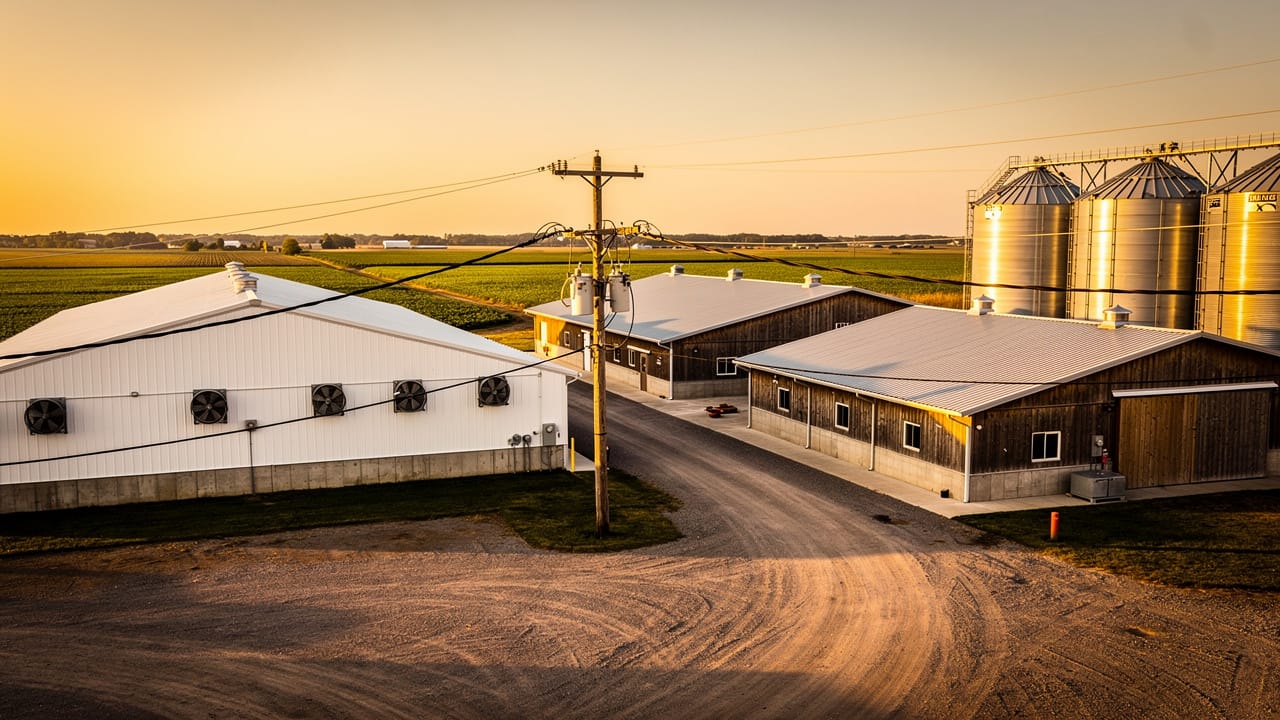
Picture a busy harvest week. Trucks are lined up, bins are nearly full, fans and conveyors are running flat out, and one overloaded breaker stops everything. When grain is moving and time is tight, weak electrical infrastructure shows up fast. That is where electrical automation for grain handling stops being a nice-to-have and starts feeling essential.
Many Canadian farms have added bins, legs, and dryers over the years, while the original wiring and controls stayed almost the same. The result is tripped breakers, manual workarounds, safety concerns, and avoidable spoilage. Downtime during harvest or drying does not just cause stress; it cuts into yield, damages grain, and leaves money on the table.
Electrical automation for grain handling replaces patchwork wiring and manual switches with a planned system that runs the yard as one unit. PLCs, VFDs, sensors, MCCs, backup generators, and monitoring all work together so grain moves safely, efficiently, and with less labour. In this article, you will see what that system actually looks like, what it delivers in real numbers, and how safety and code rules shape every design.
Cove Electrical focuses on this exact work for farms and grain bin operations in Alberta. The following sections walk through the core components, operational gains, safety requirements, backup power, and what a professional implementation with Cove Electrical looks like from start to finish.
Key Takeaways
Before going deeper, here are the main points for quick scanning.
-
Modern grain yards benefit from electrical automation for grain handling, not scattered upgrades. One weak panel or motor feed can shut the whole system down. An integrated design keeps equipment, wiring, and control working together.
-
PLCs, VFDs, MCCs, and real-time monitoring turn grain handling into a predictable process. They protect motors, reduce energy use, and give clear feedback when something is wrong. Good programming also makes the system easier for operators to run.
-
Safety and reliability are non-negotiable in grain dust areas. Hazardous location gear, grounding, and proper shutdown logic protect people, grain, and equipment. Backup power and room for future growth round out a system built to last.
What Electrical Automation for Grain Handling Actually Involves
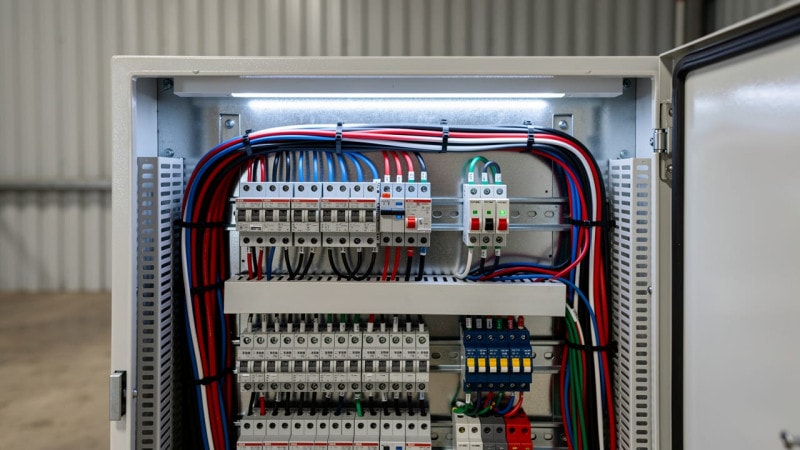
Electrical automation for grain handling is not a single box on the wall. It is an integrated network of power, control, and monitoring that treats the entire site as one system. When it is planned correctly, every conveyor, leg, fan, and gate starts and stops in the right order, with protection features watching in the background.
At the centre sits the PLC panel. This industrial controller runs the operating plan for the yard. It checks inputs from bin level switches, shaft monitors, temperature sensors, and safety devices, then drives outputs for motors, gates, and alarms. Cove Electrical engineers and programs these PLC panels with clear labelling and tidy layouts so farm staff can see what each terminal and breaker does without guessing. The HMI screens use plain language and simple graphics so operators do not have to remember code numbers.
Motor Control Centres (MCCs) group starters, overloads, VFDs, and protection devices into one place. Instead of hunting through several buildings for starters, you have a central hub where motors can be isolated for maintenance and faults are simple to track. When larger dryers, legs, or pumps are involved, Cove Electrical also plans three-phase power upgrades so motors start smoothly, draw less current, and last longer.
Variable Frequency Drives (VFDs) add another layer of control. On fans, conveyors, and pumps, VFDs provide soft starts and let the motor run only as fast as needed. That cuts down on belt and gearbox wear and trims energy use, especially on long-running aeration fans. Cove Electrical designs VFD installations with proper line reactors, filters, and cooling so harmonics and heat do not create hidden trouble in the system.
Monitoring and safety hardware tie everything together. Shaft speed and bearing temperature sensors watch over critical rotating parts. Grain and oilseed temperature probes track what is happening deep inside bins. High bin level switches and overhead bin scales link back into the PLC so filling stops before an overfill or overload happens. All of this forms a single electrical automation for grain handling system that can grow as the operation grows.
“The more you can see from one screen, the less time you spend chasing problems around the yard.”
—Common saying among grain operators
The Real Operational Benefits of Grain Automation
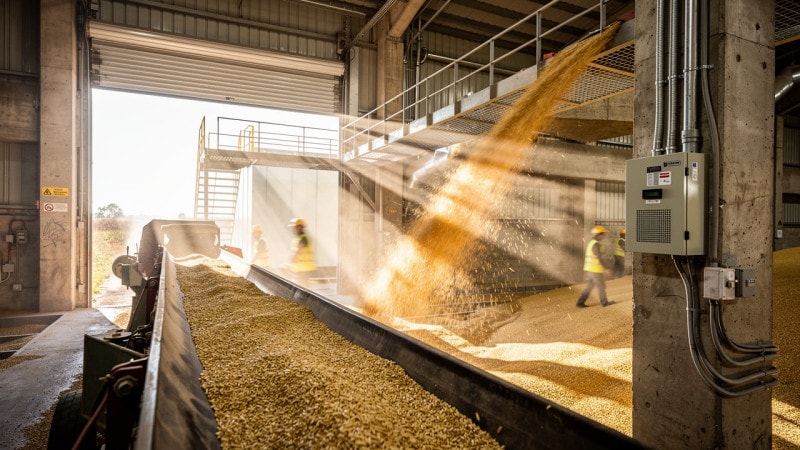
The real test of electrical automation for grain handling is not how neat the panel looks. It is how the system performs when trucks are stacked at the driveway and the weather is closing in. A well-designed setup turns rushed harvest days into repeatable, safer routines.
Key operational gains include:
-
Higher throughput and less dead time. With pre-programmed routes, you select a source and destination on the HMI, and the PLC starts each piece of equipment in the correct order. Legs, conveyors, and gates line up before grain flows. One operator can manage receiving, transfer, and load-out that used to tie up several people walking back and forth between switches.
-
Earlier problem detection. Monitoring features give early warning before problems become disasters. Shaft speed and bearing sensors pick up slippage or heat long before a belt fails or a fire risk builds. Grain temperature cables highlight hot spots so you can deal with them while they are still small. Instead of reacting to plugs and damage, you have time to plan maintenance and protect grain value.
-
Lower labour demand. With electrical automation for grain handling, staff spend less time climbing bins, checking levels, or hunting for which motor tripped. The PLC and HMI present live information in one place, and clear alarms point to the exact area that needs attention. That frees people to focus on loading, logistics, and grain quality, not basic control tasks.
-
Reduced energy use. VFDs keep motors from running flat out when the load is light. Aeration fans can ramp to match air conditions instead of running full speed around the clock. Over a season, those changes show up in lower power bills and less wear on electrical gear.
-
Room for future growth. Cove Electrical sizes raceways with spare space, leaves extra conduit and I/O slots, and lays out MCCs with future buckets in mind. That planning gives your electrical automation for grain handling room to grow as more bins, dryers, or legs come online.
“Automation doesn’t replace people; it frees them up to do higher-value work.”
—Common principle in industrial engineering
Safety Systems and Compliance in Grain Handling Electrical Work
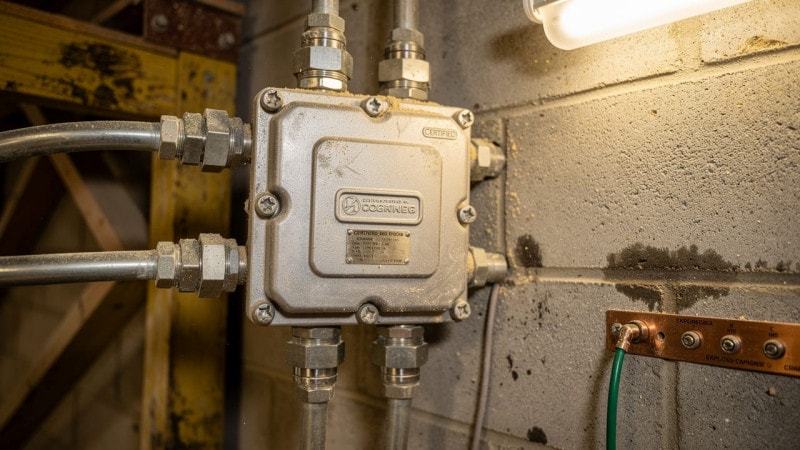
Grain dust is a real explosion risk. That is why many grain handling areas fall under hazardous location rules in the Canadian Electrical Code. Any serious electrical automation for grain handling project must start with safety and code compliance, not add them at the end.
In dusty zones, equipment needs the right ratings. Motors, junction boxes, sensors, and lighting around legs, conveyors, and bins often require dust-tight or explosion-proof enclosures. Conduits must be sealed so dust cannot move through them and reach ignition sources. Cove Electrical has hands-on experience applying these Class II rules in Alberta grain sites, so gear is selected and installed to match the actual hazard.
Grounding and bonding are just as important. Moving grain builds static charge on metal spouts, bins, and equipment frames. If that charge has nowhere to go, one tiny spark can set off a dust cloud. Proper bonding ties all metal parts into a common grid, and solid grounding sends fault and static current safely into the earth. Cove Electrical treats this as a core part of every design, not an afterthought during installation.
Control logic also plays a safety role. High bin level switches connect into the PLC so filling conveyors stop before a bin is overstressed or spills grain. Emergency stop buttons, hardwired to cut power, are placed where workers can reach them fast. When pressed, they override normal PLC logic so equipment shuts down in a controlled way and cannot restart until the fault is cleared.
Interlocking between pieces of equipment protects both grain and machinery. If a downstream conveyor or leg stops, all upstream machines feeding it receive a stop command in sequence. That prevents piles of grain building in chutes or plugging boots. The same logic applies to dryers, cleaners, and transfer systems, giving the whole electrical automation for grain handling setup a safety net.
By focusing on code compliance and practical field safety, Cove Electrical delivers systems that hold up to inspections and real-world conditions. The result is lower fire risk, safer work areas, and electrical gear that stands up in harsh, dusty environments.
“Safety isn’t expensive; it’s priceless.”
—Widely used safety motto in industry
Backup Power and Redundancy Protecting Against the Cost of Outages
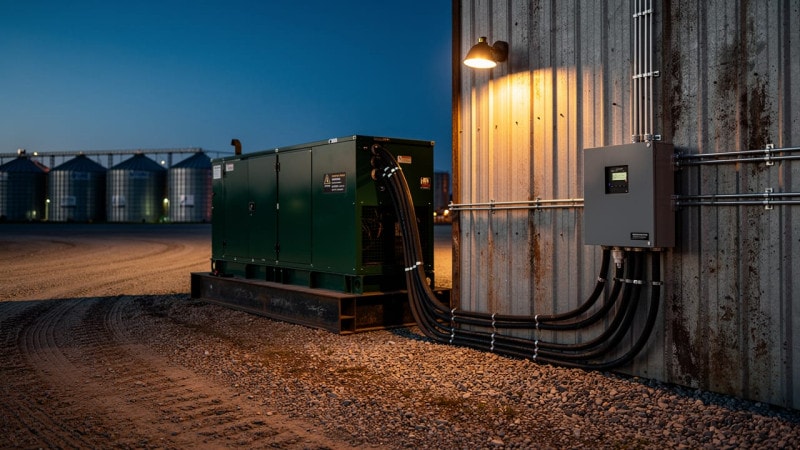
A power cut during harvest or while a dryer is full is more than an inconvenience. Grain can heat, trucks sit loaded, and careful start-up sequences are lost. For any site that depends on electrical automation for grain handling, backup power is part of the core design, not a side project.
Cove Electrical designs whole-yard backup systems that keep critical gear running when the utility goes dark. Standby generators sized for the load feed through Automatic Transfer Switches (ATS), which detect loss of supply and switch the site to generator power. That swap happens without operators running across the yard in the dark to move cables or throw big manual switches.
Control gear also needs clean, constant power. PLCs, HMIs, and control computers tie the system together, so even a short drop can leave them in a fault state. Uninterruptible Power Supplies (UPS) bridge the gap between the power cut and generator start-up. They keep the control brain live, save data, and prevent half-finished sequences from leaving grain mid-transfer.
A sound backup strategy usually includes:
-
A generator sized for the true running and starting load of key motors.
-
An ATS installed and wired to follow local code and utility requirements.
-
UPS units on PLCs, HMIs, and network equipment that coordinate the system.
Redundancy is a strategy, not a luxury. For operations where one lost drying night can damage a season’s work, backup power belongs in the same conversation as bin size and dryer capacity. Cove Electrical includes generator, ATS, and UPS planning inside the wider electrical automation for grain handling design so your system stays usable when the grid does not.
“Hope for the best, plan for the worst.”
—Old planning proverb that fits harvest season well
What a Professional Grain Automation Implementation Looks Like
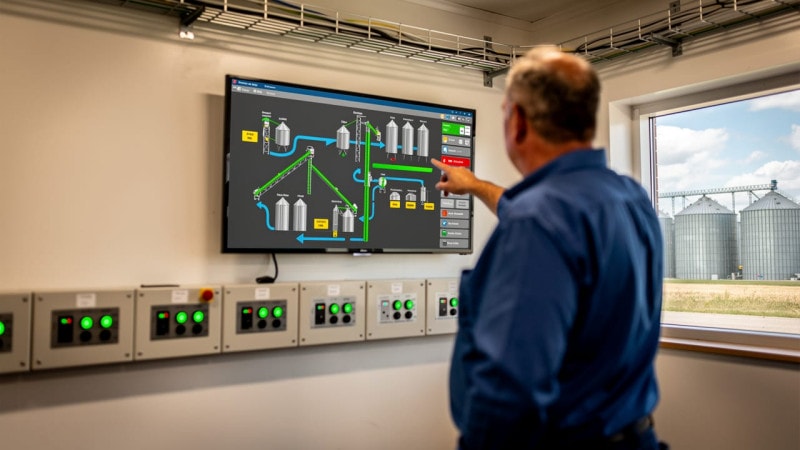
When you decide to move toward full electrical automation for grain handling, the process should feel structured, not experimental. A good project starts long before anyone pulls wire and continues long after the first load runs through.
Cove Electrical begins with a detailed assessment of your current infrastructure, gear, and goals. That includes service size, panel condition, motor loads, bin layout, and how you want the site to run during peak season. From there, the team develops schematics, panel layouts, and component lists that match both Canadian Electrical Code requirements and your throughput targets.
Next comes PLC programming and control design. Cove Electrical writes logic that reflects how your site actually works, with clear naming on each input, output, and alarm. Control panels arrive with neat wiring and labels that match drawings, so your staff can trace circuits and handle basic troubleshooting without guesswork. HMI screens are set up around common tasks such as receiving, drying, transfer, and load-out.
Installation and commissioning tie the design to the real world. Certified electricians handle conduit, terminations, MCC setup, and VFD wiring, then test every motor, sensor, and safety device under real load. During start-up, sequences are tuned, and operators learn how to use the HMI and respond to alarms. Documentation and drawings are left on site so future work and maintenance stay organized.
A project at Cedar Brook Farm near Jarvie, Alberta, shows what this approach delivers. Cove Electrical provided PLC control, monitoring for more than twenty shafts, grain temperature tracking, bin scale links, high-level shutoffs, and a whole-yard generator system. The farm moved from stretched, outdated wiring to a planned electrical automation for grain handling system that supports current volume and future growth.
Conclusion
Grain operations that lean on aging panels, scattered starters, and manual switches accept more risk than they need to. Missed loads, slow transfer, and safety concerns all grow as the site expands.
A well-planned electrical automation for grain handling system brings order to that chaos. PLCs, VFDs, MCCs, monitoring, safety controls, and backup power work together so the yard runs harder with less stress and fewer surprises. The difference comes from thoughtful design, careful installation, and consistent support over the long term.
Cove Electrical focuses on that kind of work for farms and grain operators across Alberta. If you are ready to modernize your grain handling electrical and automation, reach out to discuss a system built for your operation and your growth plans.
FAQs
What Is Electrical Automation for Grain Handling?
Electrical and agricultural automation for grain handling is the integration of PLCs, VFDs, sensors, MCCs, and monitoring into one control system. Instead of running each motor by hand, the PLC starts and stops equipment in a safe sequence. The system also watches bin levels, grain temperature, and hazards. It can manage receiving, transfer, drying, aeration, and storage from a single interface.
How Does a PLC Improve Safety in a Grain Facility?
A PLC enforces start and stop sequences so equipment never runs in unsafe combinations. If a downstream conveyor or leg stops, the PLC shuts down all upstream machines feeding it. It also reads hazard monitors for bearing temperature, belt alignment, and shaft speed, then triggers controlled shutdowns before damage occurs. Emergency stops tie into the PLC so a button press always forces a safe stop.
Why Is Backup Power Critical for Grain Handling Operations?
During active drying or transfer, a sudden outage can cause spoilage, missed hauling slots, and hard restarts on heavy equipment. Whole-yard backup systems with generators and Automatic Transfer Switches keep motors and controls powered during grid failures. UPS units protect PLCs and computers through the changeover window, preventing data loss and frozen control states. The operation keeps moving while others sit idle.
Can an Existing Grain Facility Be Upgraded Without Replacing All Equipment?
Yes, most sites can move into electrical automation for grain handling step by step. Cove Electrical often starts with PLC and MCC upgrades tied into existing legs, conveyors, and fans. Monitoring, VFDs, and backup power can be added in phases as budgets allow. Designs include spare conduit, panel space, and I/O capacity so each new stage fits cleanly without tearing out past work.