Stored grain often holds more dollar value than all the trucks and augers sitting beside it. One hidden hotspot or wet pocket inside a bin can chew through that value long before anyone smells mould or sees crusting. Wireless grain bin monitoring keeps a constant watch on that grain, so trouble shows up on a screen instead of in the sample bucket.
Manual checks ask a lot. Someone climbs ladders, pulls cables, reads probes, and hopes that nothing bad has happened between visits. On Western Canadian farms, where a warm Chinook can follow a deep freeze within days, that gap is where spoilage, mould, and insects get a head start. It’s hard on people, risky in icy conditions, and still leaves long stretches of time when nobody knows what is happening inside the bin.
Wireless grain bin monitoring swaps guesswork for live data and clear alerts. Sensors track temperature and moisture day and night, and the system sends a warning the moment readings move out of the safe range. In this article, you’ll see what these systems include, how the data gets to a phone, which advanced features protect grain even further, why power reliability and proper electrical work matter, and how Cove Electrical designs and installs complete, year-round monitoring for Western Canadian operations.
Key Takeaways
-
Wireless grain bin monitoring tracks temperature and moisture in real time, so developing hotspots, mould, and insect activity show up early instead of after damage spreads. This early warning turns a hidden problem into a straightforward management task instead of a major loss.
-
A complete monitoring setup ties sensor cables, remote boards, a central gateway, and cloud-connected software together, so every bin’s condition appears on a phone or computer at any time. Live alerts fire when readings cross set limits, giving operators a chance to act before spoilage gains ground.
-
Power reliability and proper electrical installation are just as important as the sensors themselves, especially for remote bins and high-voltage fan controls. Cove Electrical brings agricultural electrical experience, automation expertise, and ongoing support to deliver full wireless monitoring systems that protect Western Canadian grain storage year-round.
What Is Wireless Grain Bin Monitoring and Why Does It Matter?
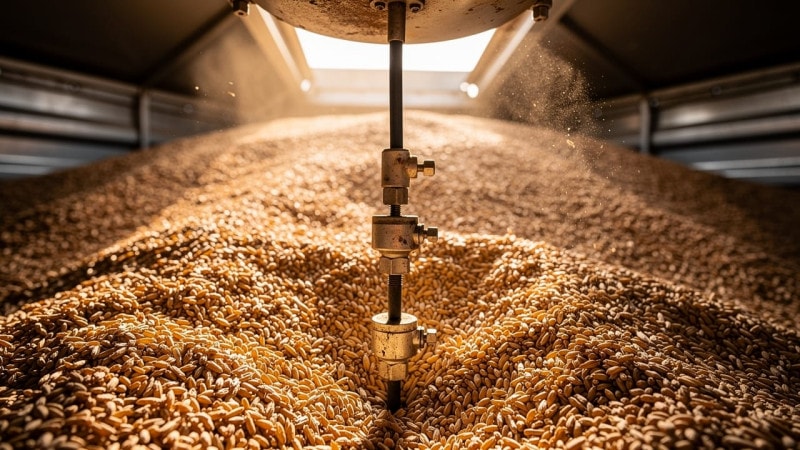
Wireless grain bin monitoring uses sensor cables, small wireless boards, and cloud-based software to watch grain conditions around the clock. Cables hang inside the bin and measure temperature and, in many cases, moisture at several depths. Those readings travel wirelessly to a central gateway, then over the internet to an app or web dashboard where they appear in clear graphs and colour-coded views.
Without this kind of system, storage relies on occasional checks and gut feel. Excess moisture, temperature swings, and poor air movement can create hotspots deep inside a bin. Mould and insects thrive in those warm, damp pockets. By the time smell, visible crust, or caking shows up at the surface, many tonnes of wheat, canola, barley, or oats can already be damaged.
Management thinker Peter Drucker often said, “You can’t manage what you don’t measure.” Grain stored for months or even years fits that rule perfectly.
The financial hit is direct. A single 10,000‑bushel bin of canola or wheat can represent tens of thousands of dollars in value. If that grain spoils, the operation may face dockage, feed-only pricing, or complete loss, plus the cost and time to move out problem loads. Downtime during busy seasons adds even more cost.
Western Canadian storage risk does not end when the last truck leaves the field. Winter temperature swings, spring condensation inside bin roofs, and summer heat all shift conditions inside the grain mass. Wireless grain bin monitoring keeps eyes on those changes every month of the year, so operators maintain safe moisture and temperature targets for each crop instead of hoping a bin stays “good enough” until haul-out.
Key Components of a Wireless Grain Bin Monitoring System
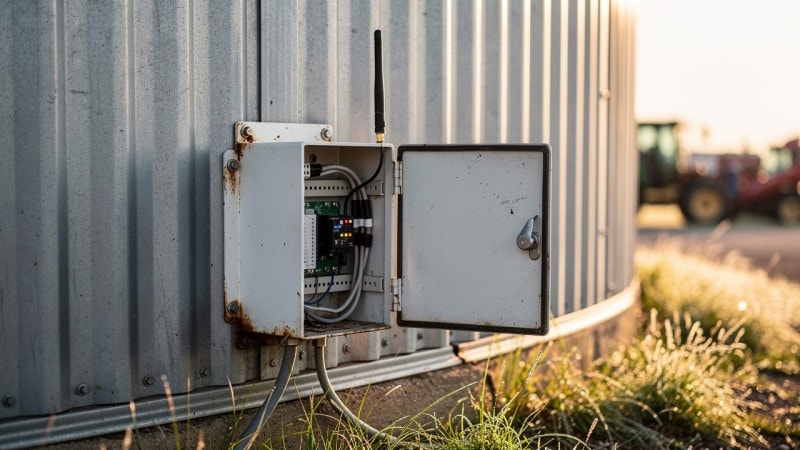
A dependable wireless grain bin monitoring system has a few main parts that work together as one. Each part handles a clear job, from sensing conditions inside the bin to getting that information to the operator’s phone.
-
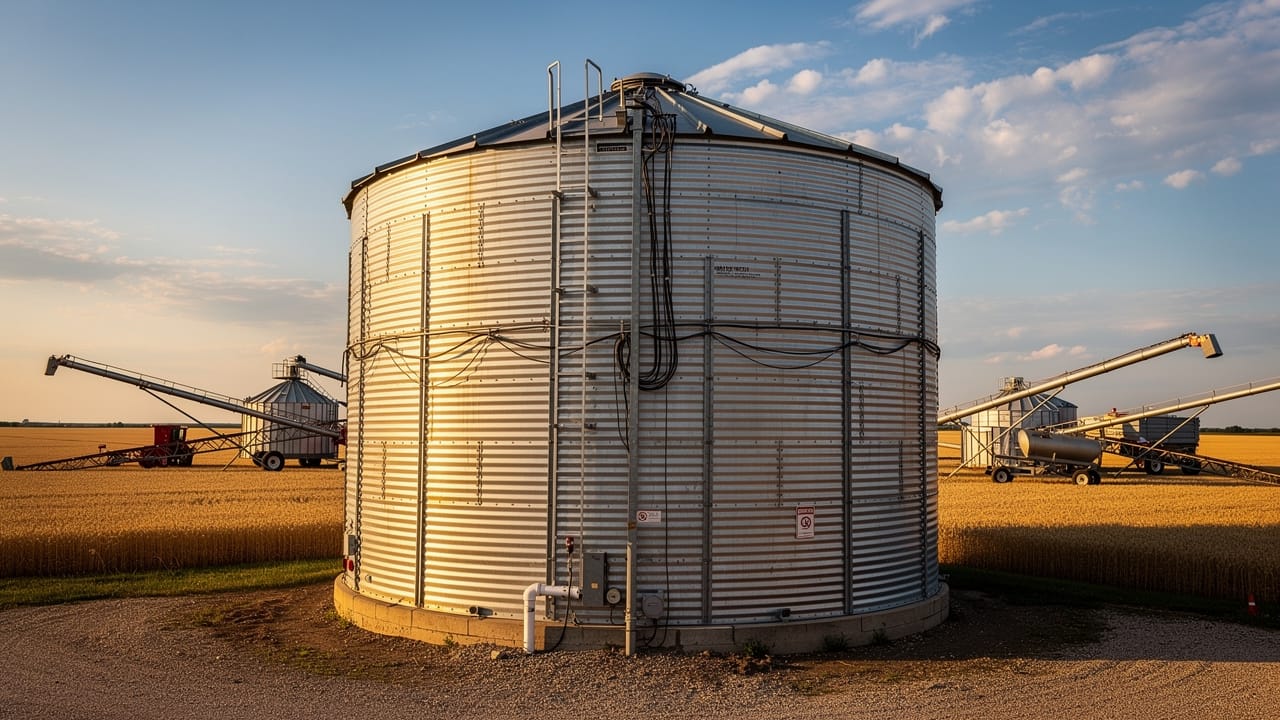
Temperature and moisture sensor cables hang vertically from the bin roof, with sensors spaced at several levels through the grain. They build a full picture of conditions, not just at the top layer. Many newer systems can connect to existing cables from older manual-read setups, which helps reduce upgrade costs.
-
Remote boards (sensor nodes) mount near each bin and connect directly to the cables. They collect raw temperature and moisture readings from every sensor along the cable. The boards then send this data wirelessly to a central gateway, even across large, dusty farmyards.
-
The central gateway (main board) receives data from all remote boards on the site. It organizes and stores readings, then prepares them for shipment to a secure server. The gateway is the bridge between bin hardware in the yard and the online software.
-
Connectivity hardware inside the gateway uses Wi‑Fi or LTE cellular service to send data to the cloud. Wi‑Fi works well for bins near a shop or house network. LTE suits remote yards or far bins, which is common on spread-out Western Canadian operations.
How Data Travels From Bin to Smartphone
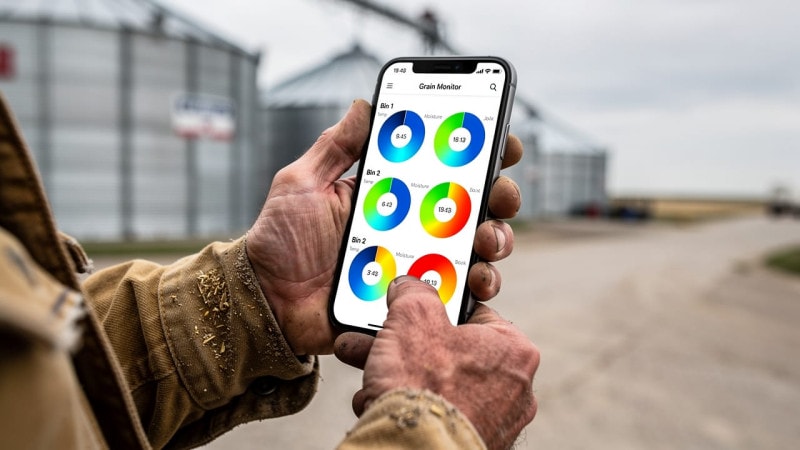
The data path in wireless grain bin monitoring follows a simple chain from sensor to screen. At a high level, it works like this:
-
Sensing: Cables inside the bin measure temperature and moisture at set intervals, building a detailed profile through the grain column.
-
Local collection: The remote board at the bin gathers these readings from every cable and packages them for wireless transmission.
-
Site gateway: The central gateway receives data from all remote boards and sends it to a secure cloud server over Wi‑Fi or LTE, based on what the site uses.
-
Display and alerts: The monitoring platform turns those readings into graphs, trend lines, and colour-coded bin views in a mobile app or web portal that works on phones, tablets, and computers.
Operators set custom safe ranges for each bin and crop. If any reading crosses those limits or changes too fast, the system sends a push notification, text, or email. Historical graphs, moisture trends, and colour-coded bin images help spot slow-building issues and show whether fan runs have done their job. Grain storage moves from guesswork and spot checks to steady, data-based control.
Advanced Features That Maximize Grain Protection
Modern wireless grain bin monitoring goes far beyond simple temperature charts. Add-on features turn the system into a full grain management tool that saves time, protects bins, and supports better marketing decisions.
Remote fan control links the monitoring system directly to aeration fans. When a cable shows rising temperature or a moisture concern, the operator can start or stop the fan from a phone or computer instead of driving to the yard. Fans can also run during the best outside air conditions, not just when someone happens to be nearby. This control helps avoid over-drying, cuts wasted run time, and keeps grain closer to ideal sale weight.
Grain level sensors add live inventory data for each bin. Instead of climbing ladders or guessing from truck counts, an operator sees approximate levels on a screen. This reduces fall risk, helps prevent overfills that can damage roofs or unload equipment, and gives better numbers for sales planning, contract delivery, and cash flow forecasts.
Solar power options keep wireless grain bin monitoring online at remote bins that lack easy access to grid power. A small solar panel and 12‑volt rechargeable battery set supply steady power for the remote board and, in some setups, associated controls. The panel charges during daylight, and the battery covers night and low-sun days. That makes full-farm monitoring practical, not just for bins that sit near buildings and outlets.
As one Prairie grain manager put it, “Grain doesn’t spoil overnight; it spoils slowly while nobody is watching.” These advanced features are all about watching every bin, all the time.
Installation, Power Reliability, and Electrical Considerations
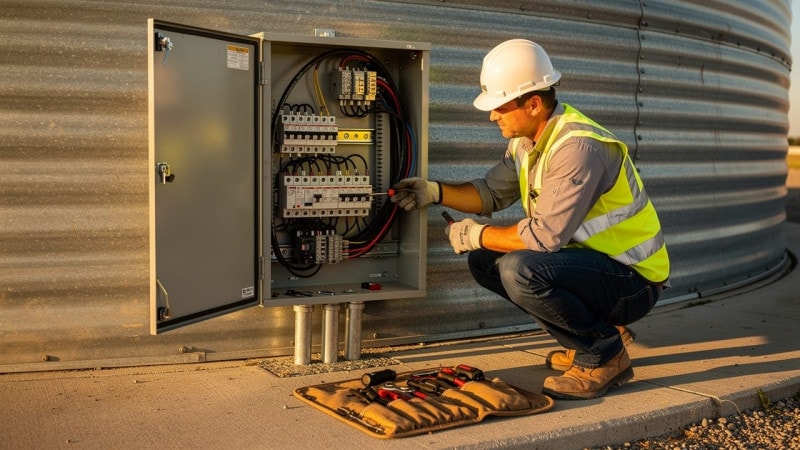
Most wireless grain bin monitoring hardware is built for practical farm installation. Wireless links between boards remove the need for long runs of data cable across the yard, and many systems connect directly to existing in-bin sensor cables. This keeps labour and disruption low, especially during busy seasons.
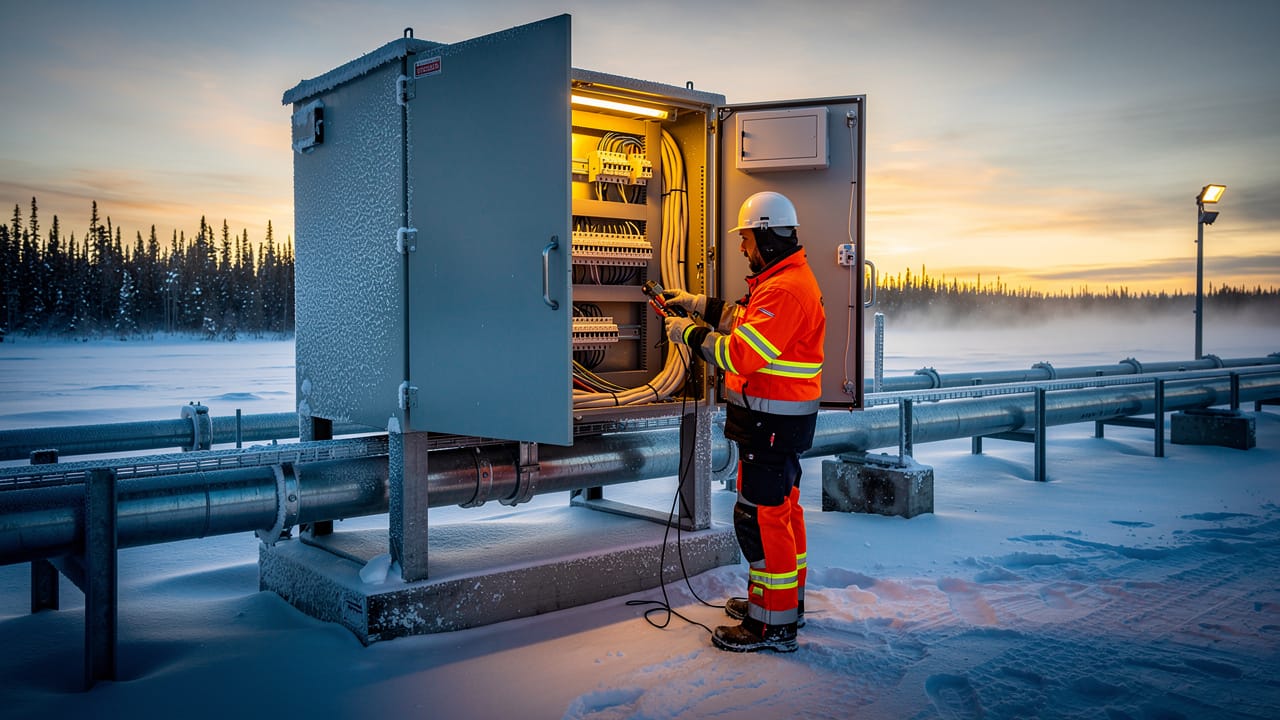
However, some parts of a project call for professional electrical work. Remote fan control ties into high-voltage aeration circuits that move serious current. Those connections must follow the Canadian Electrical Code, match motor ratings, and include proper overload and short-circuit protection. Poor wiring in a dusty grain site can cause fire, motor failure, or shock risk for anyone working near the bin.
Farm yards are tough on electrical gear. Dust, moisture, wash-downs, and winter temperature swings attack enclosures and conduits. Properly rated enclosures, such as NEMA 4X where needed, along with rigid PVC or metal conduit and correct sealing, protect boards and wiring from corrosion and damage. That protection helps the monitoring system run for years instead of failing just when it is needed most.
Many farm electricians share the same warning: “Dust, moisture, and vibration will find every weak point in a wiring job.” Good design and installation are the best defence.
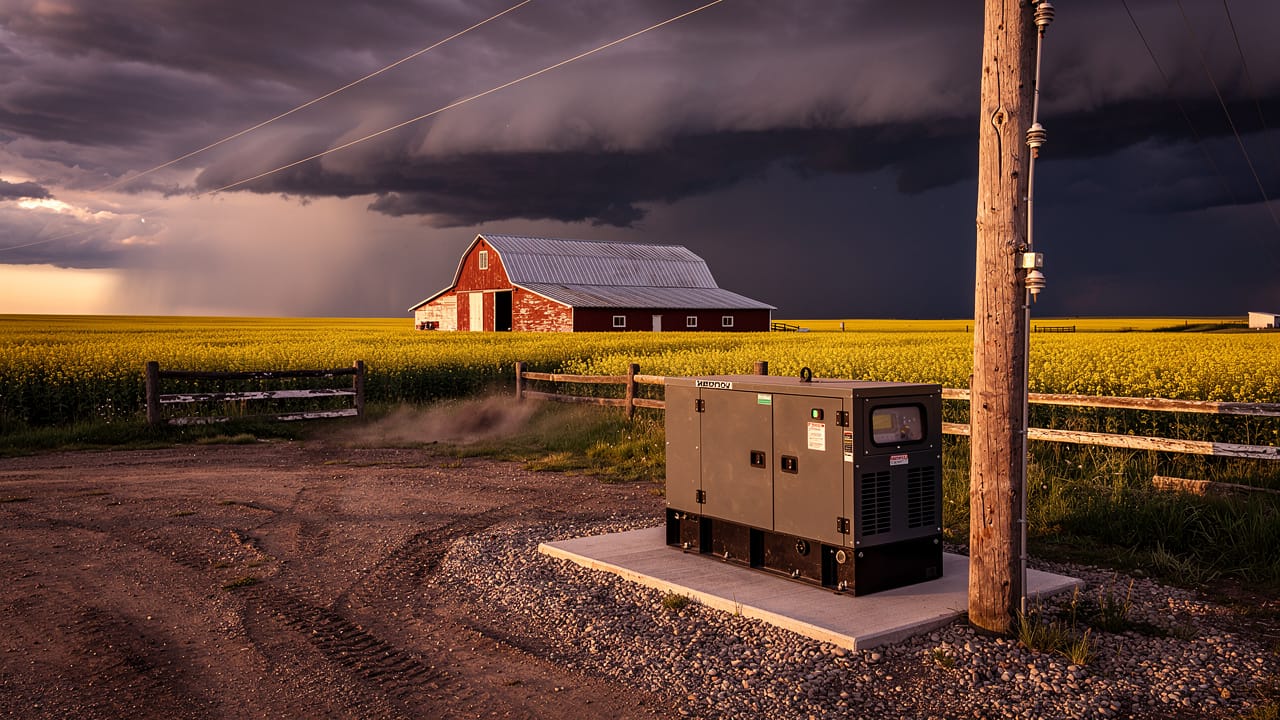
Power reliability matters as much as sensor accuracy. If the gateway or fan controls lose power during a storm, alerts stop and bins go unwatched. Grid-tied systems benefit from backup generators, Automatic Transfer Switches, and, in some cases, small UPS units to bridge shorter outages. Remote bins often pair wireless monitoring with well-designed solar power packages that include a charge controller and deep-cycle battery. A certified electrical contractor with agricultural experience makes sure each of these pieces works together safely and reliably.
How Cove Electrical Delivers End-To-End Grain Monitoring Systems

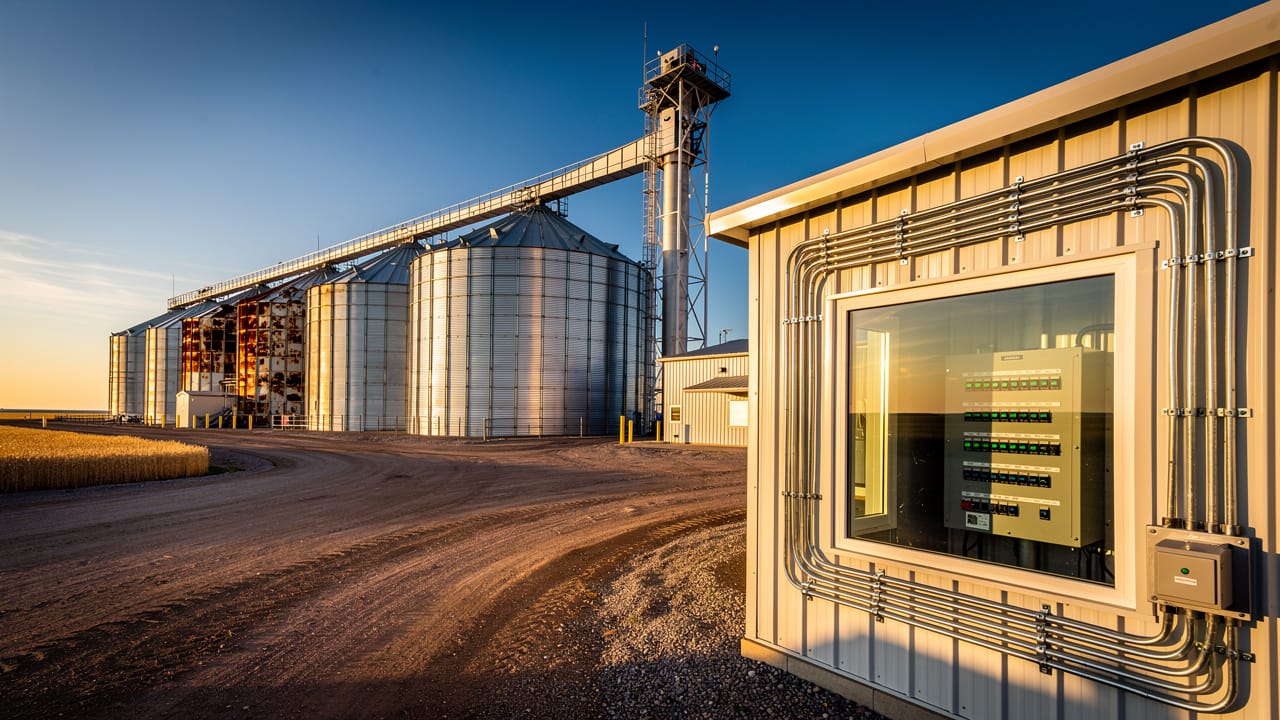
Cove Electrical focuses on operations that cannot accept downtime, and that includes grain handling across Western Canada. Through the True Ag Automation Division, the team designs and installs electrical automation, IoT-based monitoring, and control systems built specifically around grain storage and movement.
Cove Electrical works with proven agtech partners such as Adaptive Agriculture for wireless grain bin monitoring. That mix pairs reliable monitoring hardware with deep electrical and automation knowledge. The result is a system that not only measures grain conditions, but also ties into fans, alarms, backup power, and other yard equipment in a clean, code-compliant way.
A typical True Ag Automation grain project can include:
-
Grain and oilseed temperature monitoring tied to wireless bin sensors.
-
High bin level shutoffs to protect legs, conveyors, and overhead bins.
-
Overhead bin scale integration for better truck loading and inventory tracking.
-
Shaft monitoring on dozens of conveyors and augers, alerting staff if a drive fails.
-
HMI touchscreens and real-time data analytics for clear views of grain movement and storage.
-
Whole-yard generator systems to keep key equipment and monitoring live through outages, often paired with professional weather station integration to guide drying and crop protection decisions.
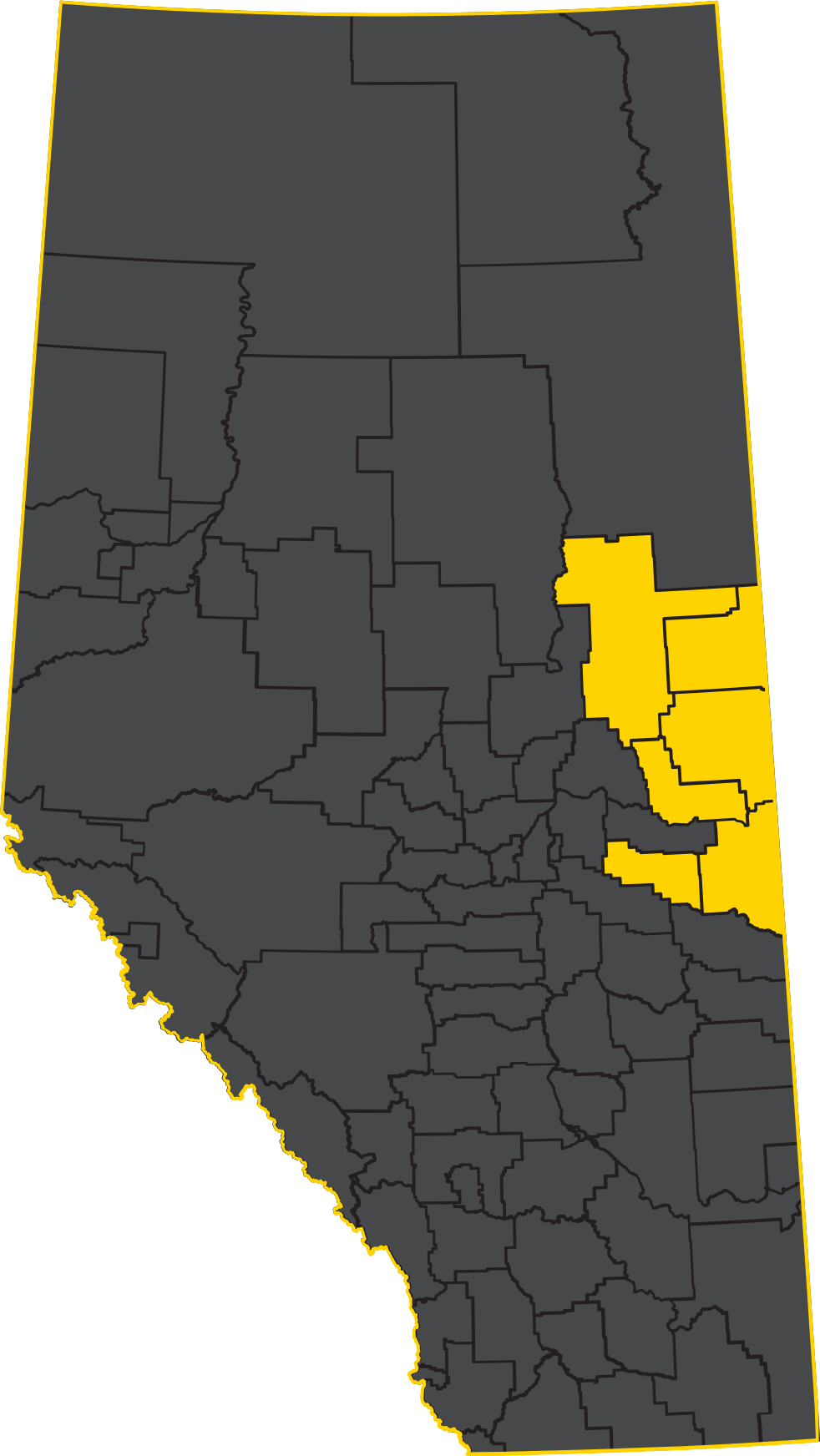
The Cedar Brook Farm project near Jarvie, Alberta, shows this approach in practice. Cove Electrical delivered engineering, PLC programming, temperature monitoring integration, high bin level protection, monitoring for more than twenty grain handling shafts, and a full backup power system. The farm gained modern electrical infrastructure, higher operating efficiency, and greater confidence that its grain handling and storage would keep working through growth and tough seasons. After commissioning, Cove Electrical stays involved with maintenance and upgrades, so the system continues to match the farm’s needs.
Conclusion
Wireless grain bin monitoring has become a core risk management tool for serious grain storage operations. Continuous temperature and moisture data, paired with remote alerts, fan control, and level sensing, protect grain quality, reduce labour, and support better timing on grain sales.
The value of this technology depends on sound electrical design, clean power, and safe installation, especially when high-voltage fans, generators, and solar systems are involved. For Western Canadian farms that want monitoring to work every day of the year, cutting corners on electrical work is not an option.
Cove Electrical’s True Ag Automation Division brings practical farm experience, master electrician oversight, and proven automation skills to every project. For operators ready to upgrade bins from manual checks to always-on monitoring, a call to Cove Electrical is the first step toward a safer, more reliable grain storage system.
On many farms, the rule of thumb is simple: “If the grain is worth storing, it’s worth monitoring.”
FAQs
How does wireless grain bin monitoring work?
Sensor cables hang inside the bin and read temperature and moisture at several depths. Remote boards mounted near the bin collect those readings and send them wirelessly to a central gateway. The gateway transfers the data to a secure cloud server through Wi‑Fi or LTE. An app or web portal shows the results in graphs and bin views, and alerts go to a phone when readings move outside set limits.
Can wireless monitoring systems connect to existing sensor cables already installed in my bins?
Many modern wireless grain bin monitoring systems work with common temperature and moisture cables already found in older bins. The new remote boards connect to those cables and read their sensors without replacement. This approach keeps more of the original investment in place and lowers both hardware cost and installation time during an upgrade.
Do I need an electrician to install a wireless grain bin monitoring system?
Mounting sensor cables and remote boards may feel similar to other on-farm projects, but fan control and power work are different. Tying remote control units into aeration fan circuits involves high voltage and must match the Canadian Electrical Code. Solar power packages also need correct panel sizing, charge control, and battery wiring. A certified electrical contractor with agricultural experience, such as Cove Electrical, provides safe, code-compliant installation that performs reliably for years.
What connectivity options are available for grain bins located far from the farm office?
Wi‑Fi works well for bins that sit inside the range of a shop or house router. For remote yards or far-away bins, gateways with LTE cellular modems use the same networks as smartphones to send data back to the app. When those sites also use solar power kits for the boards and controls, full-farm wireless grain bin monitoring becomes realistic even where no grid power or Wi‑Fi exists.