A modern dairy parlour or grain site no longer runs on a few fans and lights. Robotic milkers, precision feeding, smart ventilation, sensor networks, and PLCs all depend on one thing that often gets less attention than the equipment itself – a stable, clean power supply. Anyone asking how to keep power stable for farm automation is really asking how to protect the entire operation.
On many Alberta farms, the weakest link is not the automation, it is the electrical backbone behind it. Long rural lines, heavy snow, ice, wind, and grid voltage swings hit at the same time as higher automation energy requirements. A short outage or brownout can stall robotic milkers, shut down ventilation, or stop grain handling midway through a cycle. That means stressed animals, spoiled product, and lost production hours that never come back.
Common weak spots often include:
-
aging main services and breaker panels
-
long runs of undersized yard wiring
-
poor grounding and bonding between buildings
-
no clear plan for backup power when the grid fails
This guide walks through five practical pillars that give reliable power for smart farming. It starts with a clear load assessment, then covers infrastructure upgrades, backup power, power quality protection, and the role of a specialised agricultural electrical contractor. By the end, it is clear how these parts fit together so an operator can move from hoping the power holds to knowing the system supports automation around the clock.
Key Takeaways
-
A farm that depends on automation needs more than extra outlets. It needs a full load audit that lists every motor, heater, sensor, and controller, separates steady draw from motor-start current, and ranks loads by how critical they are. This clear picture guides every later decision about capacity and backup.
-
Old panels, small wire, poor grounding, and overhead yard feeds do not mix well with today’s automated systems. Stronger panels, correctly sized copper conductors, and solid bonding and grounding create a safer base. When power flows properly across the yard, generators, UPS units, and solar all work better and last longer.
-
Generators and Uninterruptible Power Supply units work best as a team. The generator carries long outages and heavy loads, while UPS units cover sensitive electronics during the seconds between grid loss and generator pickup. When a specialist such as Cove Electrical designs these layers as one system, critical automation stays online even during rough weather.
Assess Your Farm’s Power Requirements Before Adding Automation
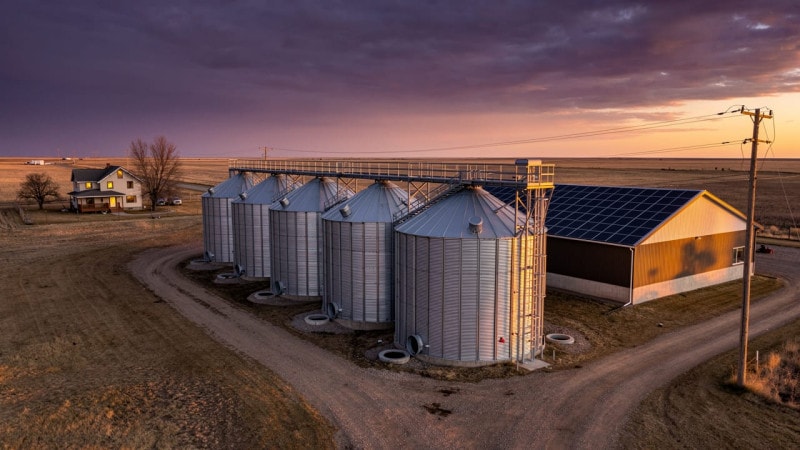
Before another robotic unit or smart controller arrives, it pays to know exactly what the farm already draws — and what it will draw after upgrades. Automation raises farm power requirements through constant loads from drives, controls, pumps, and fans that often run together instead of in short bursts, a challenge well documented in precision farming with smart sensors research.
A proper load calculation audit lists every device that uses power, from barn lights and block heaters to grain dryers, ventilation, robotic systems, and the power supply for irrigation systems. For each item, the electrician records:
-
running amps or kilowatts
-
whether it has a motor that surges at start
-
where it sits on the yard and which panel feeds it
Motor inrush can be three to five times the running draw, which is why lights may dim when an auger starts even though the average load seems fine.
Once the list is complete, the next step is to group loads by how vital they are to safety and production:
-
Tier one loads are the ones an operator never wants to lose, such as ventilation in livestock barns, well pumps, robotic milkers, refrigeration, and key monitoring equipment.
-
Tier two loads still matter to productivity, such as automated feeding, main lighting, and many irrigation pumps, yet they can pause for a short time.
-
Tier three loads include office plugs, some shop tools, or yard lighting that can switch off during an outage without serious harm.
Planning stops being guesswork when this data sits on paper or on a clear spreadsheet.
“What gets measured gets managed.”
— Peter Drucker
The main service, sub-panels, and any future generator for farm automation systems can then be sized for peak demand, not just average days. A specialist such as Cove Electrical can also factor in planned growth, like another bin row or extra barn, so the agricultural automation power supply installed now still fits the farm five or ten years from now.
Upgrade Your Core Electrical Infrastructure For Modern Loads
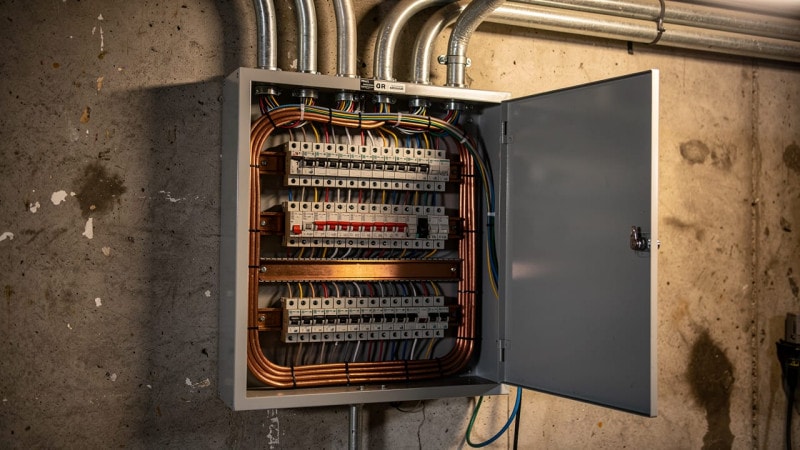
Many Canadian farms still rely on electrical systems that went in when loads were far lighter. Once automation arrives, that older gear starts to show stress quickly. Common warning signs include:
-
breakers that trip for no clear reason
-
lights that flicker when big motors start
-
outlets and cords that feel warm
-
panels that buzz or hum when equipment starts
These issues often point to undersized panels, small wire, or poor terminations. A modern automated site usually needs at least a 200 amp breaker panel, and many large grain or livestock sites now use 400 amp or higher capacity. A panel with room for extra breakers also makes later expansion far simpler, since new automation can tie into spare spaces without a full rebuild.
Wiring is another common limit on stable power in rural farming. Long wire runs across a yard with small conductors create voltage drop, especially during motor start. Upgrading to correctly sized copper conductors cuts that drop so motors start faster and controls see steady voltage. A solid grounding and bonding system ties all panels and major metal equipment to proper ground rods, which protects people, livestock, and electronics if faults or lightning show up.
On many Alberta sites it also makes sense to run underground feeds between buildings instead of overhead lines. Underground cable avoids wind, ice, falling limbs, and contact with tall equipment, which reduces the number of nuisance outages. When trenches are open, it is often sensible to add spare conduit for future circuits at the same time. Cove Electrical often combines these upgrades into full farm power management systems that meet Canadian Electrical Code rules and match real farm conditions instead of office conditions.
“The cheapest time to add capacity is while the ground is already open.”
— Lesson from many Cove Electrical farm projects
Implement a Multi-Layered Backup Power Strategy
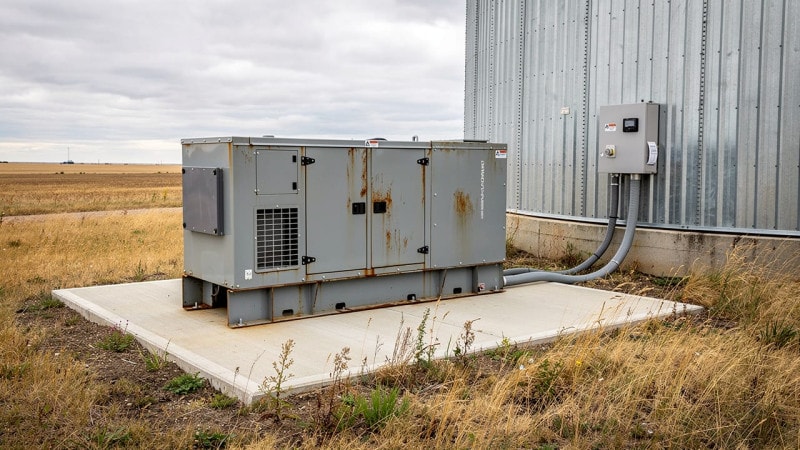
Even with improved infrastructure, rural grid outages still happen. Ice storms, vehicle strikes on poles, or upstream faults can cut supply without warning. For any operator asking how to keep power stable for farm automation, a layered backup plan is no longer a luxury; it is part of normal risk control.
At the heart of most plans sits a standby generator with an Automatic Transfer Switch (ATS). The generator connects permanently to the farm system and starts by itself when the ATS senses loss of utility power. Within seconds, the switch disconnects from the grid and connects the chosen loads to generator power. The operator can choose to feed the whole farm or only the tier one loads defined in the audit, such as barn air, water systems, and key grain equipment. Common fuel choices include:
-
diesel for strong power output in cold conditions
-
propane with long storage life
-
natural gas when a pipe service is available
Generators do not solve every problem by themselves. Sensitive controls still feel the short gap between power loss and generator pickup, and that short gap can reset PLCs, freeze VFDs, or corrupt management data. This is where an Uninterruptible Power Supply (UPS) for farming comes in. A UPS sits between the wall and sensitive gear and provides instant battery power when the input drops. It keeps:
-
computers and farm management software
-
PLCs and VFDs
-
sensor gateways, modems, and camera systems
alive until the generator is stable.
Some farms now add solar power for agricultural automation along with energy storage for agricultural automation, and advances in farming materials and automated systems show how integrated energy approaches are becoming a top trend across modern agricultural operations. A modest agricultural solar panel system can trim hydro bills and keep a battery bank charged. During a grid failure, this storage can feed a limited set of critical circuits or stretch generator fuel by taking part of the load. Cove Electrical designs these backup power for farm equipment layers as one system, so renewable energy for precision agriculture supports reliability instead of acting as a stand-alone add-on.
“Backup power on a farm is disaster insurance, not a luxury.”
— Common view among long-time Alberta producers
Protect Sensitive Automation Equipment From Power Quality Issues
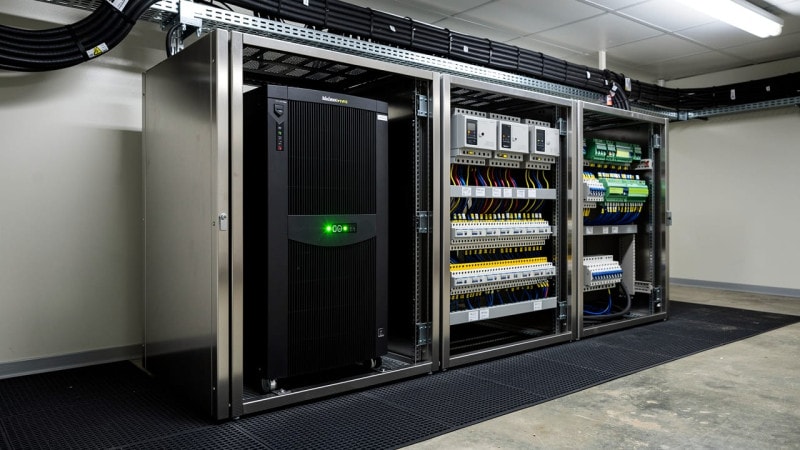
The power grid can be on yet still cause trouble. Surges, sags, and electrical noise damage electronics slowly or, at times, in one violent event. Precision farming power systems often rely on boards and processors that do not forgive poor power quality, which makes protection just as important as raw capacity — a finding reinforced by studies on the optimization of traction power conservation and energy efficiency in agricultural mobile systems.
Voltage surges usually arrive during storms or when large motors switch on and off nearby. One strong surge can punch through the boards inside PLCs, VFD drives, and smart sensors. A good first line of defence is a Surge Protective Device (SPD) at the main service. This device diverts much of the excess energy away from the system to ground. A second line sits closer to the equipment, with point-of-use surge strips or small SPDs on sub-panels feeding the highest value gear.
Voltage sags, often called brownouts, are another real threat. When voltage dips, motors draw more current and heat up, and sensitive controls may trip or reset. Devices that provide voltage regulation for farm equipment watch incoming supply and correct it within a safe range. Power conditioners also filter electrical noise from welders and large motors, which helps sensor networks and communication lines stay stable.
None of this works well without a good grounding and bonding base. A stable reference point to earth gives surge devices somewhere to send excess energy and reduces stray voltage near livestock. When a specialist designs the agricultural automation power supply with grounding, surge protection, and conditioning in mind, sensitive automation reaches its full life instead of failing early.
“Grounding is not just a code rule; it is your first safety device.”
— Principle taught on agricultural electrical projects
Partner With a Certified Agricultural Electrical Specialist
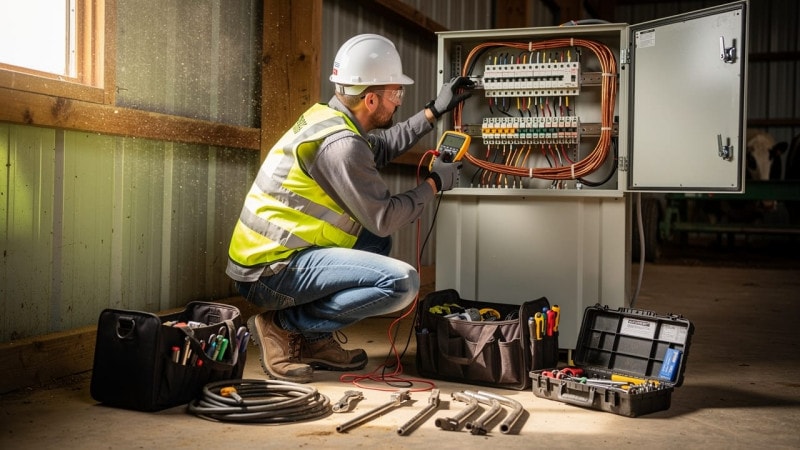
Electrical work on an automated farm has little in common with a new house or a small shop. Dust, moisture, corrosive gases, vibration, long runs between buildings, and high motor loads create an environment that punishes weak design. That is why the person who plans and installs the system matters as much as the hardware itself.
A general electrician may not know the Canadian Electrical Code rules that apply to barns and grain sites, such as Section 22. These rules call for watertight and corrosion-resistant enclosures in wet or harsh areas, dust-tight gear near grain handling, and strict grounding and bonding to limit stray voltage. Miss these points and an operation risks failed inspections, safety hazards, and higher failure rates on new automation.
The right agricultural specialist can handle the full scope, from assessment through design to maintenance. That means experience with smart farming energy management, farm power management systems, backup power, and power supply for irrigation systems, not just basic wiring. When choosing a contractor, look for:
-
demonstrated farm and grain-site experience
-
clear understanding of automation and controls
-
24/7 or priority support for critical breakdowns
It also means response when trouble hits, since every hour down costs money. Cove Electrical fits this role in Bonnyville and rural Alberta through its years of electrical experience and its True Ag Automation Division. Projects like the Cedar Brook Farm grain site show how full electrical builds, PLC controls, grain temperature and shaft monitoring, and generator integration can work together as one dependable system instead of a patchwork of parts.
“Pick your electrician like you pick your vet: on experience with your kind of operation.”
— Advice often shared among Alberta producers
Conclusion
Stable power for automation does not come from a single device. It comes from a clear understanding of loads, stronger infrastructure, well-planned backup power, protection against poor power quality, and the support of a specialist who works every day in agriculture. When these five pillars line up, the question of how to keep power stable for farm automation has a clear and practical answer.
The cost of delay sits on every barn floor and in every grain bin. Stalled robots, stressed animals, spoiled grain, and burnt electronics cost far more than a planned upgrade. For operators in Bonnyville and across rural Alberta, Cove Electrical brings focused agricultural experience, code knowledge, and real field time. To see where your operation stands, contact Cove Electrical to schedule an electrical assessment and start building a power system that supports automation every day of the year.
FAQs
What Size Generator Do I Need For Farm Automation Systems?
Proper generator size depends on the total kilowatt draw of your tier one critical loads plus the motor-start current of large equipment. Some farms choose a whole-farm unit, while others cover only key barns and grain systems. A load audit gives real numbers instead of guesses. Cove Electrical can size and install generator systems based on measured demand.
How Does An Automatic Transfer Switch Work On A Farm?
An Automatic Transfer Switch (ATS) watches utility power all the time. When it senses a loss, it starts the generator, disconnects the farm from the grid, and connects the chosen loads to generator power. This process takes only a few seconds and does not need anyone on site. When grid power returns, the switch moves the loads back and shuts the generator down.
Can Solar Power Act As Backup Power For Farm Automation In Canada?
Solar on its own does not act as backup, but solar combined with a battery system can keep critical loads alive during an outage. A hybrid design can feed the grid in normal times and support a small on-site backup zone when the grid fails. In Alberta, system design must account for winter daylight and snow, so many farms still pair solar with a standby generator for year-round cover.
What Does The Canadian Electrical Code Require For Agricultural Buildings?
The Canadian Electrical Code sets special rules for barns, grain sites, and similar buildings. It calls for corrosion-resistant and watertight enclosures in damp or corrosive areas, dust-tight gear where grain dust is present, and strong grounding and bonding to control faults and stray voltage. Working with a contractor such as Cove Electrical, who knows these sections, helps keep people, animals, and equipment safe while keeping insurance and inspection requirements satisfied.