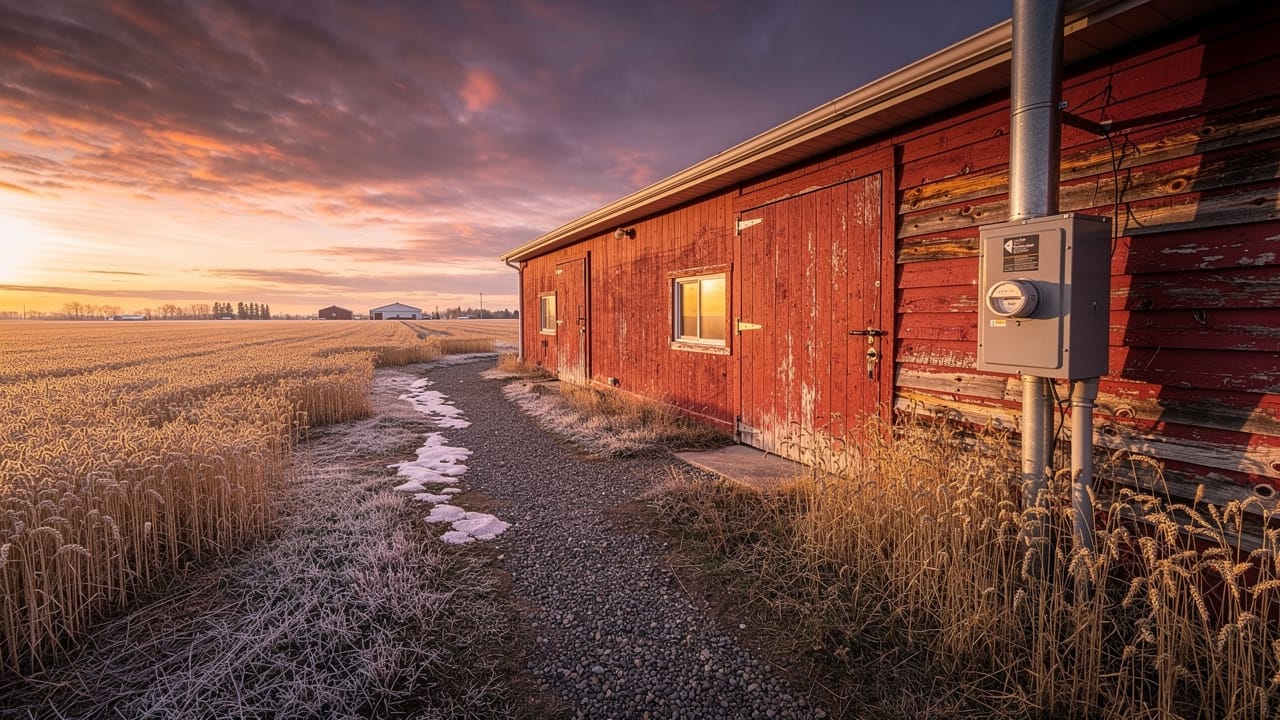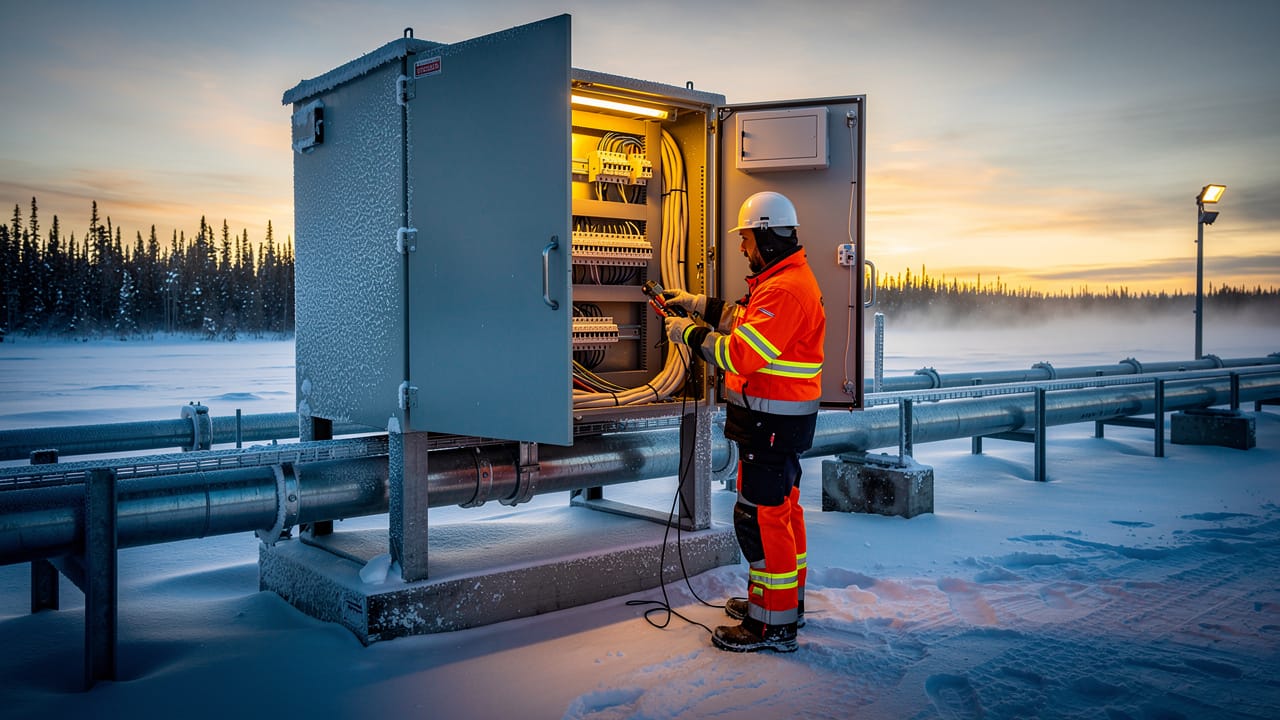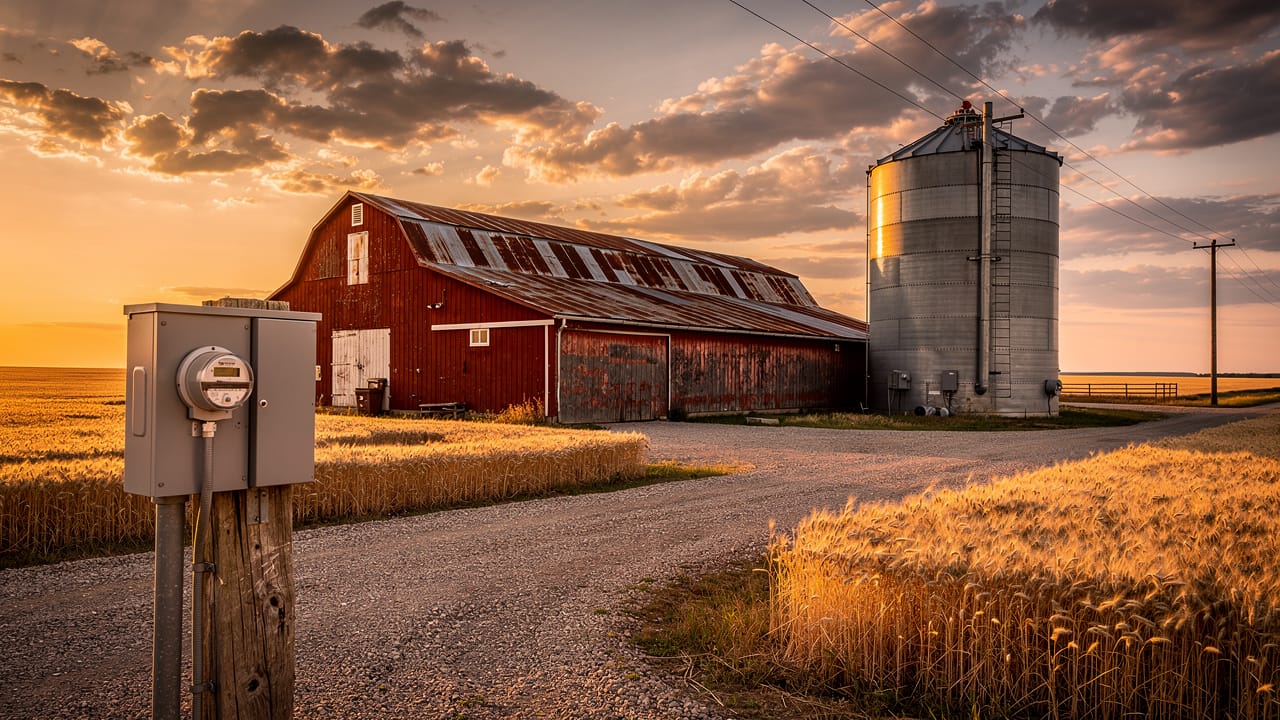
Power stopping in the middle of a January night on a working farm near Cold Lake is more than an annoyance. Fans shut off, waterers freeze, grain dryers sit full, and the temperature keeps dropping. For operations that rely on livestock, grain, and irrigation, the need for reliable farm electrical services in Cold Lake is about survival, not convenience.
Modern farms in the Lakeland region run on a tight web of electrical systems: ventilation, grain dryers, aeration fans, irrigation pivots, pumps, and automated feeders and waterers. Add backup generators, controls, and monitoring, and it is obvious this work goes well beyond basic house wiring.
Cove Electrical focuses on this kind of work. As experienced agricultural electrical contractor serving Cold Lake, Bonnyville, and rural Alberta, the team designs and maintains systems built for harsh weather, dust, moisture, and heavy motor loads. This guide walks through what that looks like in practice—from farm wiring and automation to generators and maintenance—so you know what to expect from a specialist.
Key Takeaways
Modern farm power is too important to leave to generic wiring or guesswork. A quick overview puts the rest of this guide in context.
-
Farm electrical systems around Cold Lake need agricultural‑grade components and Canadian Electrical Code compliant work, not basic residential wiring. Ammonia, moisture, dust, and deep cold demand materials and layouts that stand up to years of abuse; shortcuts often show up later as failures, fire risk, or unsafe barns.
-
Cove Electrical focuses on operations that depend on constant power across the Lakeland region. The team handles farm power design, livestock and grain facility wiring, irrigation and automation projects, and generator setups under one roof—one contractor that understands how every part fits together.
-
Backup power with an automatic transfer switch is treated as core farm infrastructure, not a luxury. Systems are designed to keep critical loads online without anyone needing to flip breakers in the dark. Long‑term planning and local agricultural experience keep upgrades simpler and response times fast.
Why Farm Electrical Systems in Cold Lake Demand Specialized Expertise
A sudden outage in a city home is mostly an inconvenience. On a Cold Lake farm during calving, harvest, or a hard frost, the same outage can mean lost animals, spoiled grain, and missed irrigation. Every hour without power shows up as direct dollars lost and long‑term stress on the operation.
The environment raises the stakes even higher. Northern Alberta brings -40°C cold snaps, heavy snow, lightning, and wide temperature swings. Inside barns there is moisture, ammonia, and constant dust; grain bins add fine combustible dust that can ignite from a single spark. A rural yard is nothing like a clean, climate‑controlled office.
As one Lakeland producer likes to say, “If the power quits, the whole farm feels it within minutes.”
Because of that, the Canadian Electrical Code has specific rules for agricultural buildings and hazardous locations. Class II grain‑dust areas, corrosive livestock spaces, and long outdoor feeds between buildings all need the right cable types, enclosures, bonding, and grounding. A general electrician who mainly does houses may rarely work with these sections, which leaves gaps you do not see until something fails.
Using the wrong contractor can lead to undersized conductors, non‑rated boxes, and shortcuts that will not hold up under continuous motor loads. In a barn or grain site, those errors can start fires or leave people and animals exposed to shock hazards. That is why working with an agricultural electrician in Cold Lake, AB is about risk management as much as convenience.
Cove Electrical was built around this kind of work. As a rural electrical contractor in Cold Lake, the company focuses on farms, plants, and energy sites that cannot afford downtime. The team brings many years of field experience in farm wiring services across Alberta, along with a detailed understanding of the CEC sections that apply on real farm sites. Local knowledge of back roads, weather, and supply delays helps get power back on quickly when it matters.
Core Farm Electrical Services Offered by Cove Electrical
Modern farms do not run from a single breaker panel in one building. Power has to reach barns, grain sites, shops, pumps, and yard lighting, often spread over long distances. Cove Electrical designs and installs complete farm power systems, from incoming service and three‑phase feeds for large motors to the last light in a remote shed, with loads calculated up front so the system can grow without constant band‑aid fixes.
Livestock Facility Wiring and Grain Handling Systems
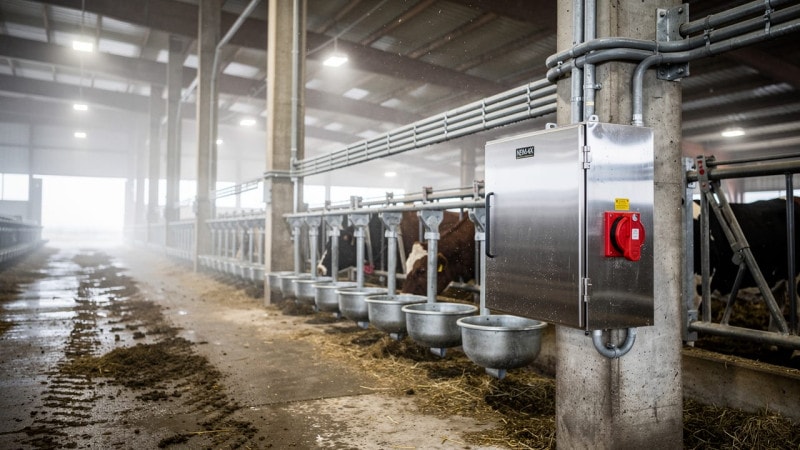
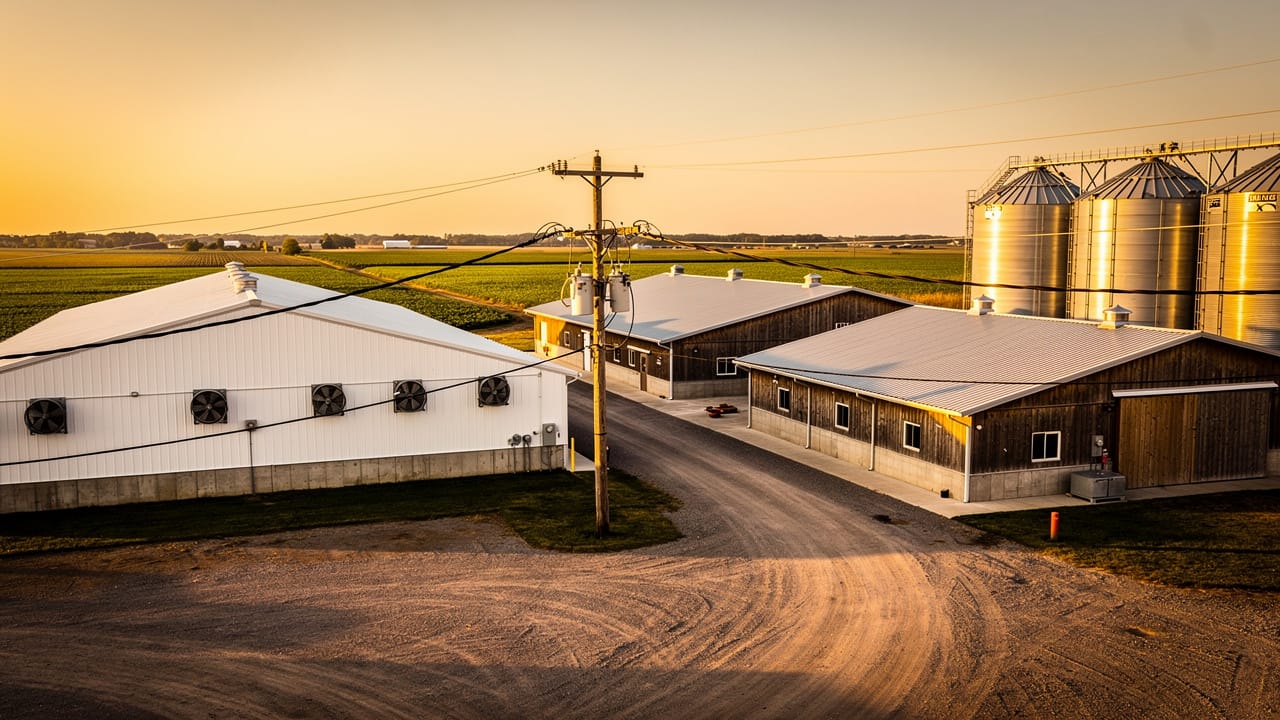
Livestock barns put electrical gear to the test. Fans, heaters, automated feeders, water‑bowl heaters, and alley lighting all run for long hours in damp, dirty air. Cove Electrical designs livestock facility electrical layouts with dedicated, clearly labelled circuits and extra capacity for future equipment. Wiring runs in rigid PVC or metal conduit to protect against rodents and machinery, and NEMA 4X style enclosures and agricultural‑grade switches stand up to ammonia and wash‑downs.
Safety in these spaces is a major concern. Main disconnect switches let staff cut power to sections of the barn in seconds during an emergency. Circuits and conductors are sized for continuous motor duty rather than short domestic use. Every barn project follows CEC rules for agricultural buildings so fire and shock risk stay as low as possible over the long run.
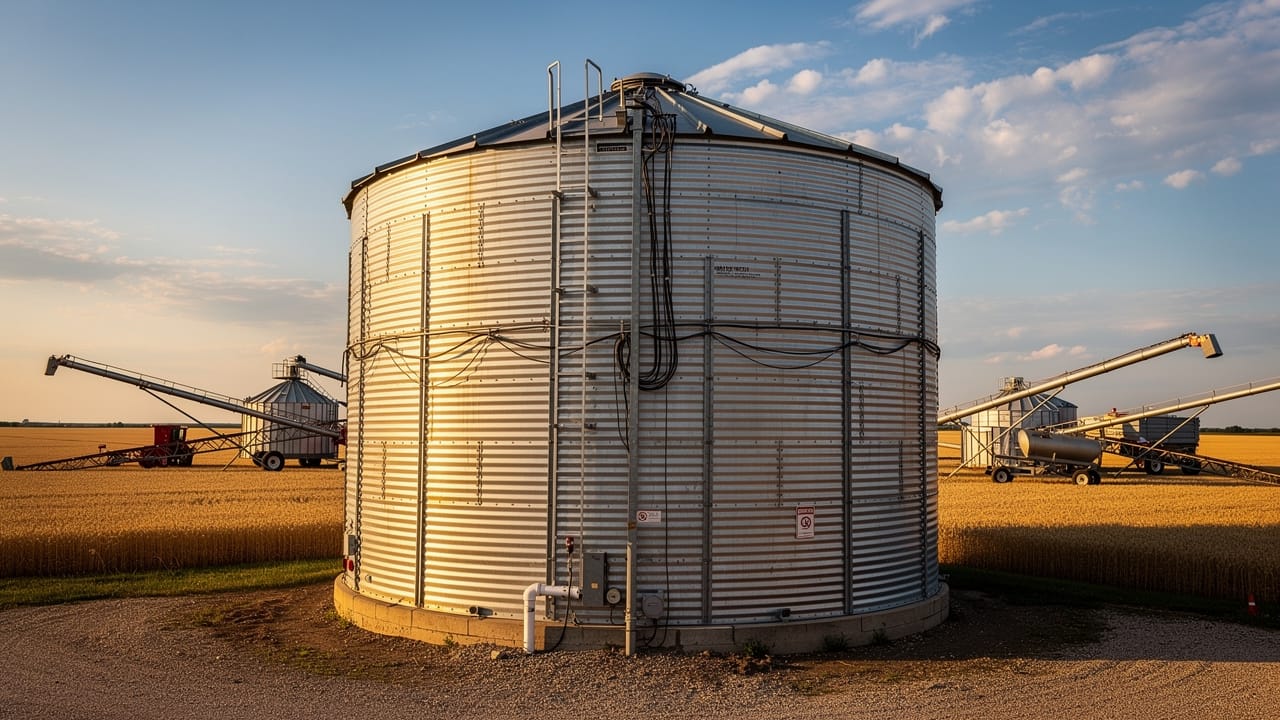
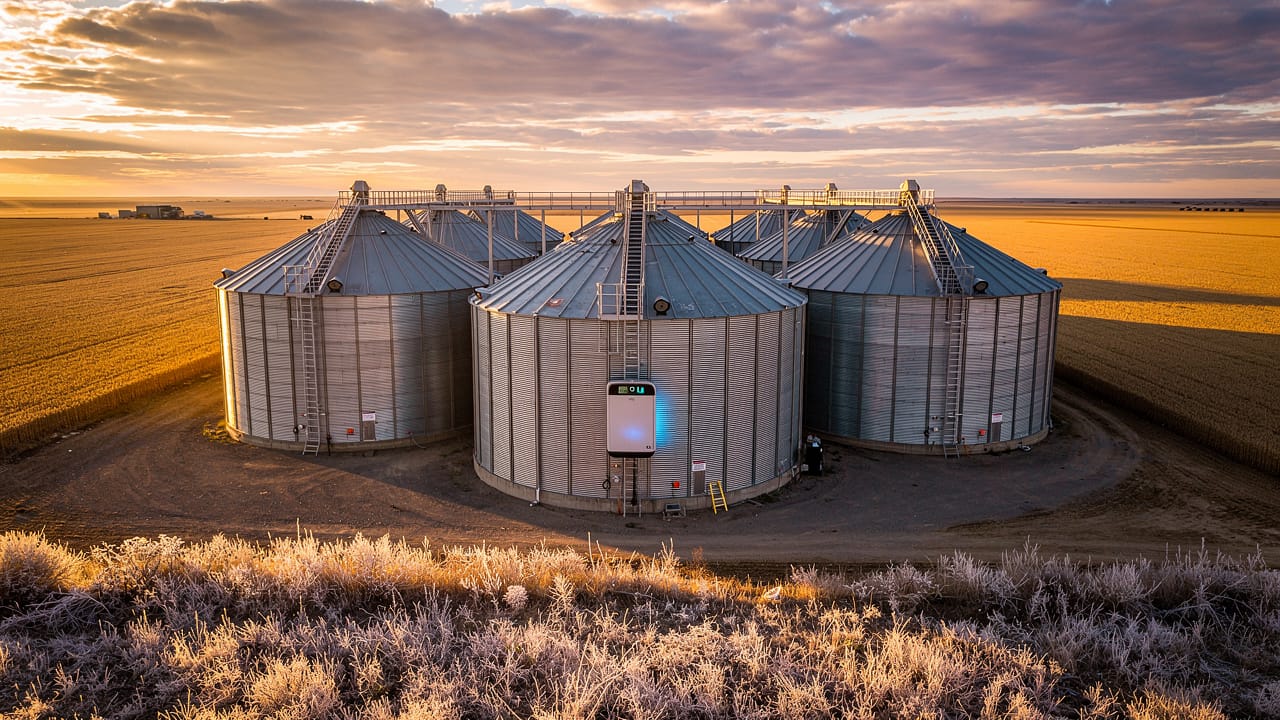
Grain‑handling equipment is just as demanding. Augers, conveyors, grain dryers, and bin aeration fans draw high motor currents, often for many hours at a time. Cove Electrical designs grain bin electrical wiring that handles these loads and harsh dust‑filled air. In Class II grain‑dust locations, explosion‑proof enclosures and sealed conduit keep electrical gear from igniting suspended dust. Yard safety is rounded out with outdoor farm lighting installation using durable LED fixtures that keep bins and work areas safely lit in the dark.
Irrigation, Automation, and Control Systems
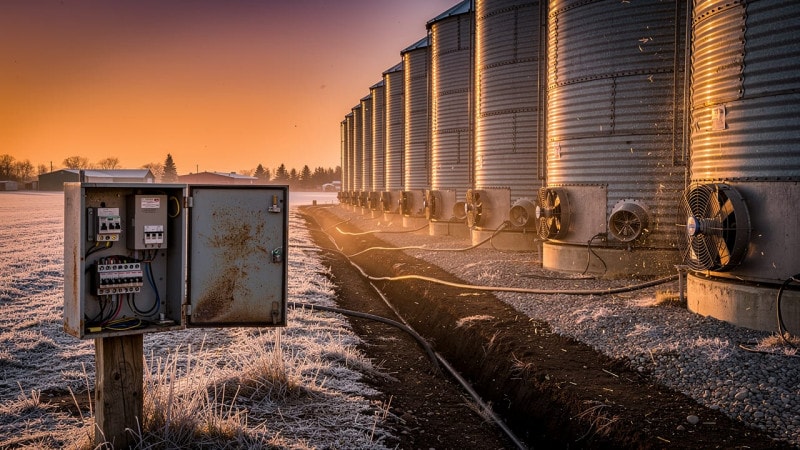
Water systems are another key part of farm power. For irrigation pump electrical installation, Cove Electrical handles trenching, underground feeds, pump‑motor sizing, and control panels for centre pivots and well pumps. Variable Frequency Drives provide smoother motor starts, match pump output to real water demand, and cut wasted power and wear. Three‑phase feeds for heavy irrigation motors are set up to meet three phase power farm Alberta requirements.
Beyond simple on/off controls, many Cold Lake farms are moving to more automation, and adopting energy efficient systems principles — such as variable load management and smart monitoring — helps reduce operating costs and improve long-term sustainability. In partnership with True Ag Automation, Cove Electrical installs PLC‑based systems that manage ventilation, feeding, grain management, and environmental controls from a central panel. With remote access, operators can check fan status, bin levels, or irrigation conditions from a phone or office computer instead of driving out in bad weather.
Panel work ties it all together. Farm panel upgrades in Alberta are common when new grain dryers, bigger fans, or automation are added. Cove Electrical replaces aging panels with new gear that has extra breaker space and conduit room for future equipment. At Cedar Brook Farm, upgrades added high bin‑level shutoffs, integrated scales, and smarter controls, cutting downtime and giving the owners confidence their system is ready for the next expansion.
Backup Power and Generator Systems for Agricultural Operations
Weather and grid problems around Cold Lake often hit without warning. High winds, ice, or equipment faults can drop power across a wide area, making resilient farm power planning — much like the approach outlined in BIG RED Utilities Reliability research — essential for continuous operations. On a farm, that can stop barn ventilation, freeze water lines, stall grain dryers, and halt yard pumps in minutes. The risk is real enough that backup power is better viewed as core infrastructure than a luxury.
Cove Electrical treats generator installation for farms in Alberta as an engineering exercise, not a quick add‑on. Each project starts with a load review that lists every circuit that has to stay live during an outage. Barn ventilation and heat, well and pressure pumps, grain‑dryer controls, key augers, and office gear are grouped as critical loads. Less urgent loads, such as some shop receptacles or non‑essential lighting, are kept off the generator to avoid overload.
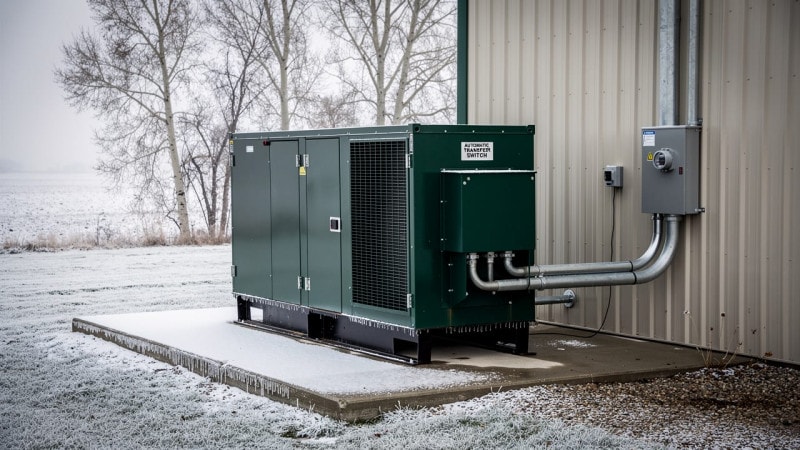
Once the critical list is clear, the team selects and installs a natural gas, diesel, or propane generator sized for that demand. For many farm power systems in Cold Lake, this means units that can start and run in deep cold and hold up under long, continuous use. Placement, venting, fuel lines, and concrete pads are all handled to code, and wiring ties back through panels that separate critical and non‑critical circuits.
An automatic transfer switch is part of every system. The ATS watches for loss of utility power, starts the generator, and switches the pre‑selected circuits over in seconds. When grid power returns, it moves the load back and cools the generator down automatically, which is vital for overnight storms or outages when nobody is on site.
On many operations, the mindset is simple: “Backup power isn’t optional—it’s part of the farm’s insurance plan.”
As a rural electrical repair provider in Cold Lake, Cove Electrical also stays involved after the initial install. The team can set up service plans that cover test runs, oil changes, inspections, and control checks so the generator is ready when the next outage hits, not just the day it was installed.
Keeping Your Farm System Safe, Compliant, and Future-Ready
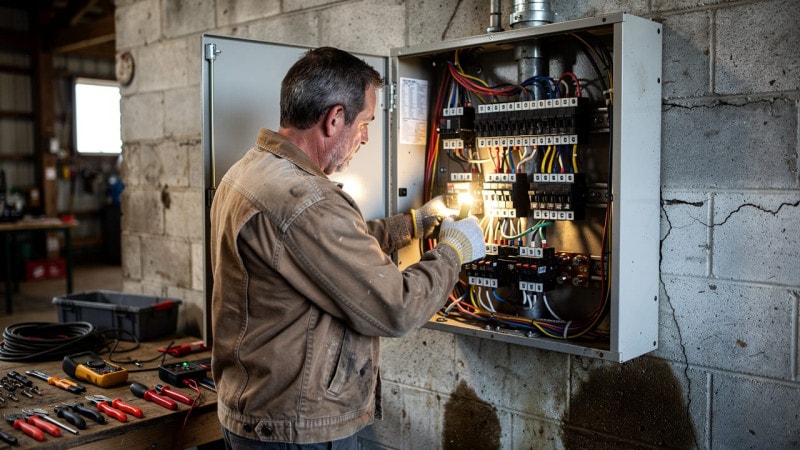
Every farm owner knows that a weak electrical system has a way of failing at the worst possible time. That is why Cove Electrical builds safety and code compliance into every design from the start. Main disconnects are placed where staff can reach them, and conductors, breakers, and enclosures are chosen specifically for damp, dusty, or corrosive areas. As a Cold Lake electrical contractor, the company treats the Canadian Electrical Code as a baseline, then adds practical field experience learned on real Alberta farms.
Materials play a big role in long‑term safety. NEMA 4X style enclosures, heavy‑duty switches, and rigid conduit handle power washing, manure gases, and physical abuse from equipment. Standard housings and box‑store devices may be cheaper at first, but they often corrode or crack early in farm conditions. Cove Electrical uses components that keep their rating over years of use, which protects both people and the investment in the electrical system.
Good design still needs active care. Farm electrical maintenance in Alberta should include regular checks of:
-
service panels and breakers
-
terminations and lugs
-
grounding and bonding
-
outdoor boxes and conduit runs
so corrosion, loose connections, or overloaded circuits are caught before they cause failures. As part of its agricultural wiring services, Cove Electrical can build maintenance schedules around the farm season, so inspections happen before calving, harvest, or other busy periods, not during them.
Many operations also rely on powered fences for animal control. Professional electric fence installation in Alberta makes sure energizers are correctly grounded, located, and supplied, which improves fence performance and reduces shock risk around buildings. All of this fits a wider view of agricultural electrical services in Alberta as a long‑term partnership. When the same team designs, upgrades, and maintains the system year after year, they know the layout and history, which saves time and cuts surprises on future work.
As farmers like to remind each other, “Electrical problems don’t fix themselves—they only get worse if you ignore them.”
Conclusion
For farms around Cold Lake, reliable electrical infrastructure is as important as quality feed, equipment, or seed. Loss of power is not a minor hassle; it puts livestock, grain, irrigation, and day‑to‑day operations at direct risk. That is why many operations choose reliable farm electrical services in Cold Lake that are built specifically for harsh farm conditions instead of generic wiring.
Cove Electrical focuses on this work. The team designs and installs full farm power systems, handles livestock and grain facility wiring, sets up irrigation and automation, and delivers generator systems that keep critical loads running. Ongoing maintenance and upgrades keep everything aligned with CEC rules and ready for growth.
For operators who cannot afford downtime, the next step is simple. Reach out to Cove Electrical to discuss current pain points, future plans, and budget, and schedule an on‑site assessment. With the right plan and a long‑term partner, farm power becomes one less thing to worry about when the weather turns or the workload spikes.
FAQs
What makes agricultural electrical work different from standard residential or commercial wiring?
Farm sites combine corrosive gases, moisture, and dust with long runs between buildings and heavy motor loads that run for hours at a time. Grain bins add combustible dust, which can ignite if wiring and enclosures are not rated for hazardous locations. The Canadian Electrical Code has special sections for these spaces—NEMA 4X style enclosures, Class II areas, grounding—that a general electrician may rarely see, while an agricultural specialist works with them every week.
How do I know if my farm’s electrical system needs an upgrade?
Warning signs include breakers that trip often, lights that flicker when large motors start, or panels full of double‑tapped breakers. Visible rust or white corrosion on lugs, boxes, or conduit is another clear signal that moisture is getting where it should not. Any farm adding new grain‑handling systems, bigger fans, or more automation should get a formal load review from an agricultural electrician in Cold Lake, AB before connecting new gear.
Why is a backup generator essential for farms in Cold Lake, AB?
Cold snaps, wind, and grid faults in this region can shut power off with no notice and keep it off for hours. On a farm, that quickly affects barn ventilation, water systems, heat, and grain drying, which can lead to animal loss or crop damage. A properly sized generator with an automatic transfer switch keeps critical circuits live within seconds of an outage, even at night or when nobody is on site.
Does Cove Electrical serve farms outside of Cold Lake?
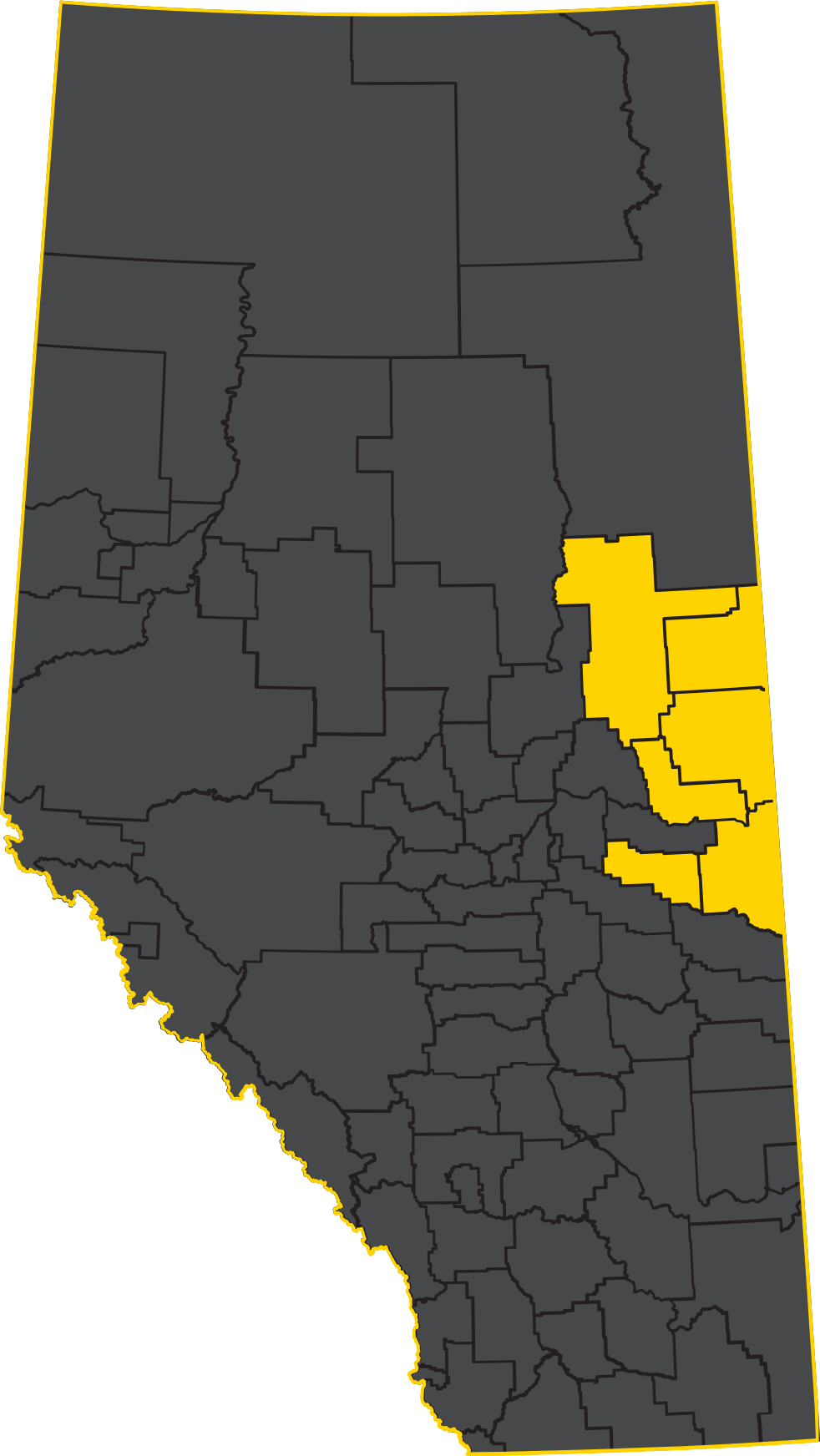
Yes, Cove Electrical works with farms and other power‑intensive operations across the wider Lakeland area. That includes Bonnyville and many surrounding rural communities where a rural electrician from Cold Lake can still reach sites in a reasonable time. Local presence means faster response for both planned upgrades and urgent repair work when something fails without warning.