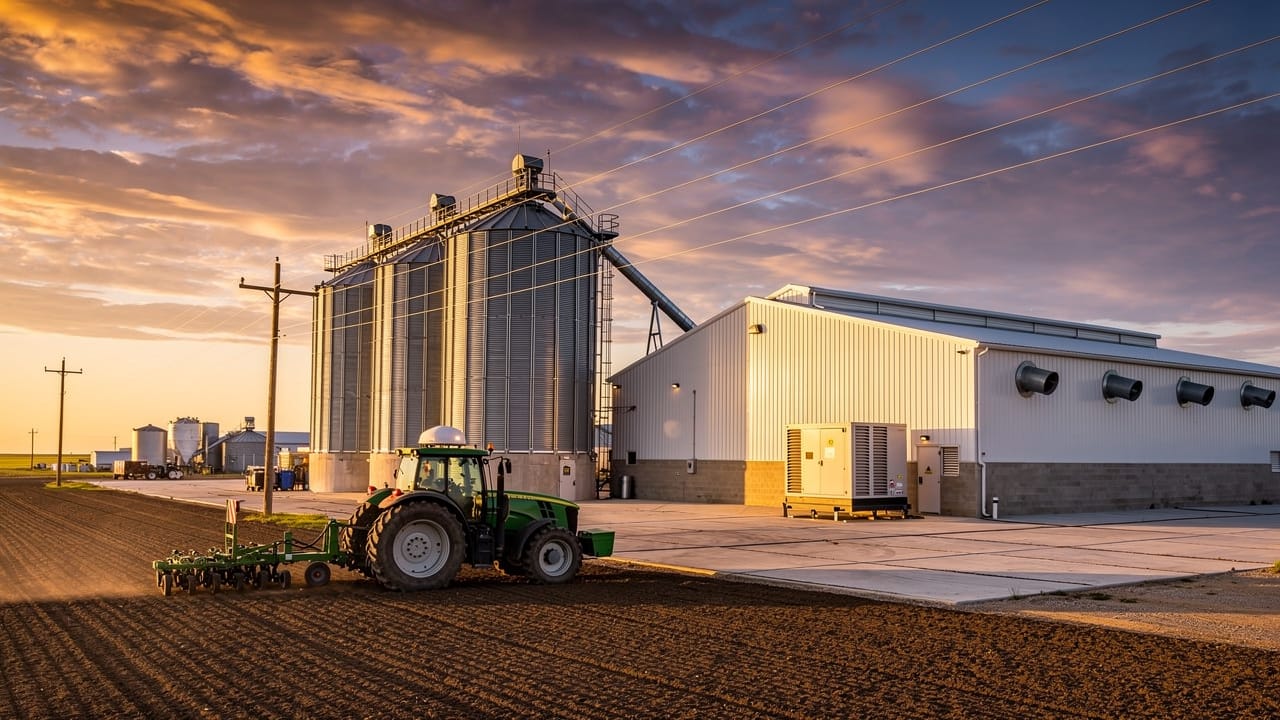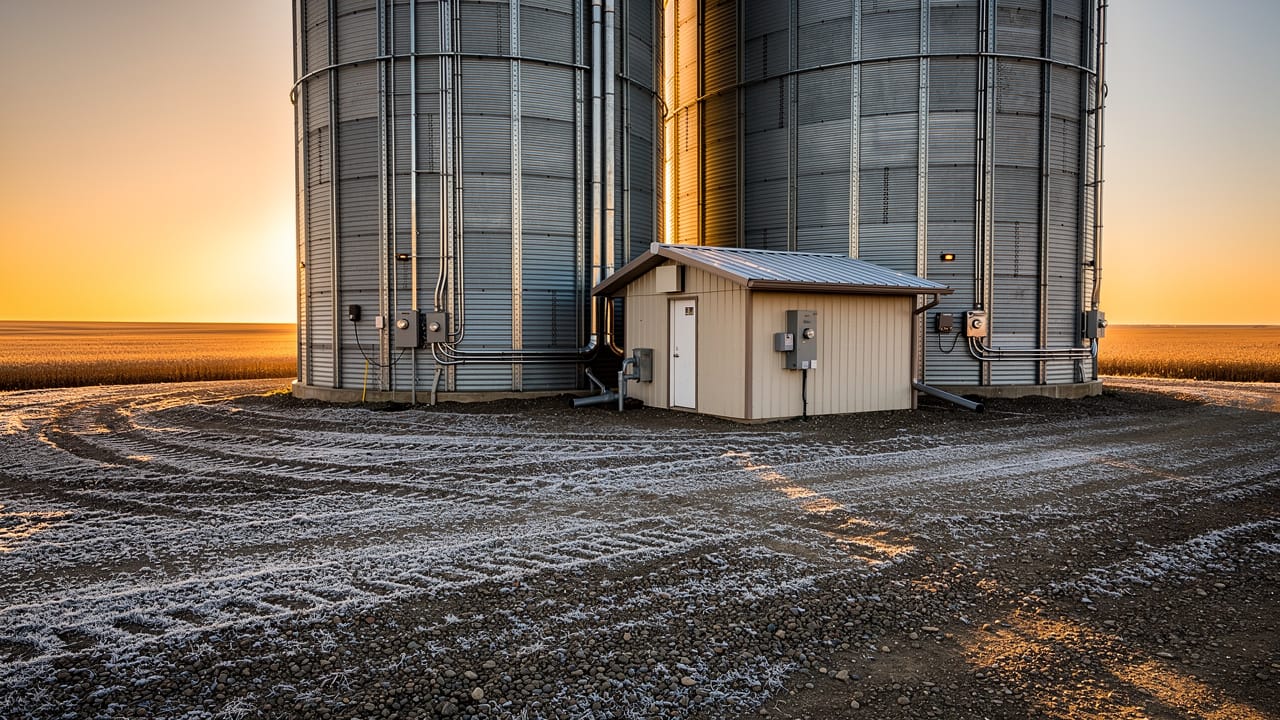
On a modern Alberta farm, almost every critical task already ties into some form of automation. Grain dryers cycle on and off, ventilation fans ramp up, pivots sweep a field, and feeding systems keep livestock on schedule. All of this agriculture automation depends on one thing above everything else: reliable electrical power.
At the same time, Canadian farm operators face more pressure every season. Skilled labour is hard to find, harvest windows feel tighter, and input prices keep climbing. Missing a drying window or a day of irrigation is not just an inconvenience; it can mean real lost revenue and long-term crop or herd impacts.
Agriculture automation is no longer a future idea; on many competitive operations it is standard practice. The real question is how to keep those automated systems running every hour of every season. Without well-designed electrical infrastructure, automation turns from an asset into a liability.
As one Alberta grain grower put it: “The computers are the easy part. If the power is wrong, nothing runs when you need it.”
In this article, we walk through what agriculture automation actually means, the core technologies behind it, why electrical design is the foundation, and how Cove Electrical builds systems that keep Canadian farms producing reliably.
Key Takeaways
This quick summary highlights the most important points before we dive into the details.
-
Agriculture automation helps increase yield, reduce dependence on manual labour, and keep grain, livestock, and irrigation systems running around the clock. When set up correctly, it gives operators more control instead of adding more daily work, and it supports smarter use of fuel, water, and other inputs.
-
The hardware on its own is not enough, because every automated system depends on clean, stable power and well-designed controls. Weak electrical design shows up as nuisance trips, random shutdowns, hard-to-trace faults, and shortened equipment life. Strong design supports safe, predictable operation season after season.
-
Harsh farm conditions such as dust, moisture, and corrosive gases demand electrical work that is engineered for those risks, along with backup power that keeps critical loads alive during outages. Planning for growth in the electrical design keeps the yard ready for added bins, new barns, and more automation.
-
Cove Electrical focuses on agriculture automation and related power systems, providing engineering, installation, and maintenance that match real Western Canadian farm conditions. The goal is to keep critical equipment running, protect animals and crops, and support long-term farm expansion.
What Is Agriculture Automation and Why Does It Matter for Canadian Farms?
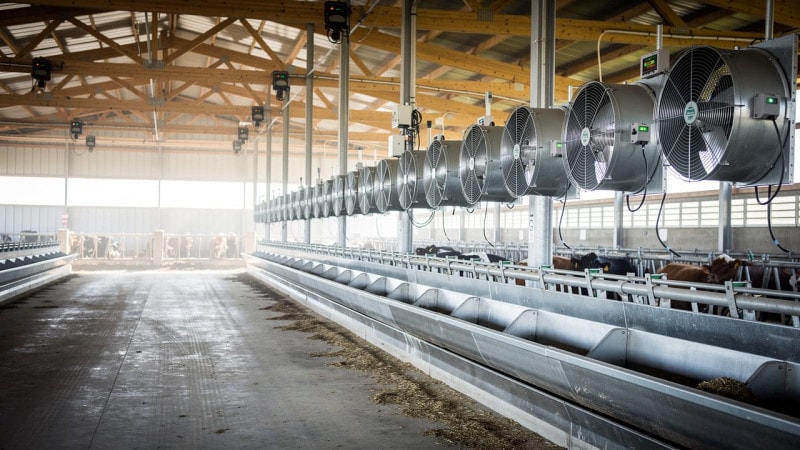
Agriculture automation is the use of technology-driven systems to run farm tasks with very little manual intervention. Instead of an operator starting every motor by hand, programmable controllers, sensors, and monitoring platforms manage day-to-day work. Fans, pumps, grain legs, and feeders start and stop based on real conditions, not guesswork or constant supervision.
This is different from basic mechanization. A tractor with a cab and autosteer still needs a person in the seat. True farm automation adds controls that can start, stop, and adjust equipment on their own, while sending data back to the operator. That shift turns individual machines into integrated systems that work together.
Several pressures are pushing Canadian farms toward more automation:
-
Rural labour shortages that make it harder to staff long harvest or calving seasons
-
Short planting and harvest windows that leave no room for delays
-
Rising fuel, feed, and fertilizer costs, which mean every pass and every hour of fan time must count
-
Operations getting larger, with more acres, more bins, and more livestock sites to watch
As farms add more capacity, manual oversight simply cannot keep up.
In grain operations, agriculture automation shows up as:
-
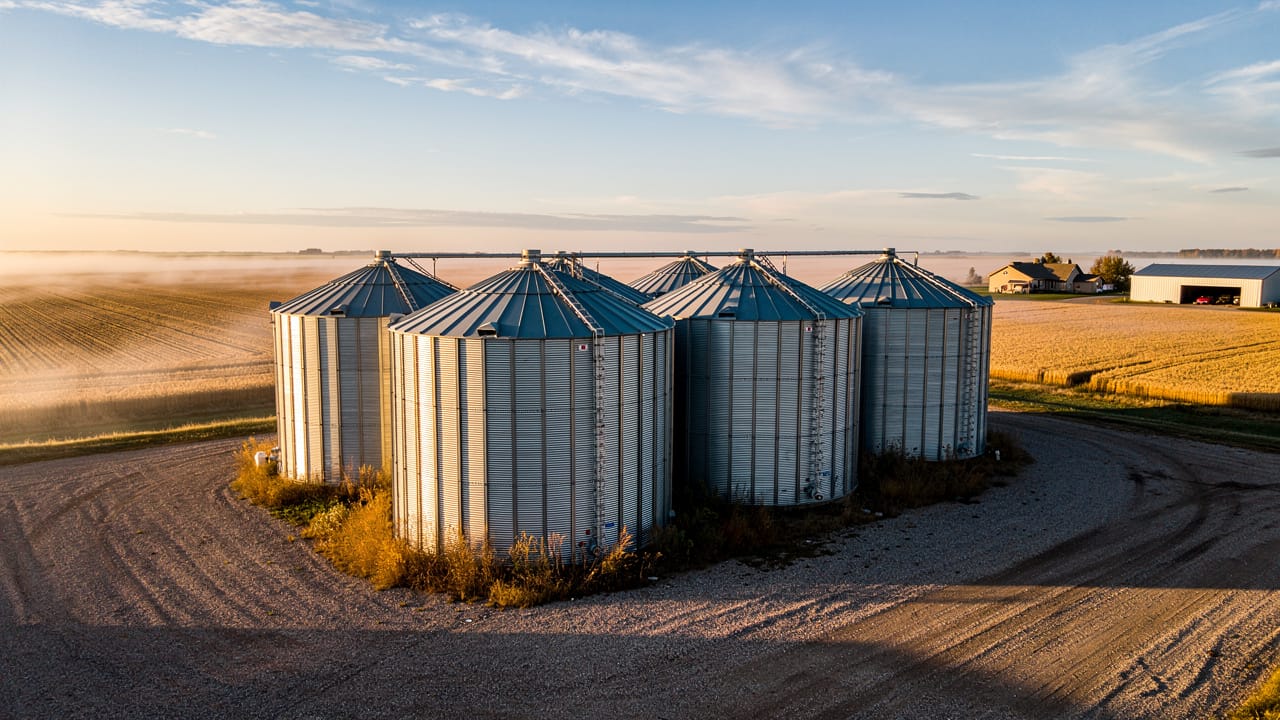
Automated dryers, conveyors, and bin fans that respond to grain temperature and moisture readings
-
Sensors that track bin levels so grain does not overfill or run short
-
Centralized controls so a full handling system can be started or stopped in a safe sequence
Livestock facilities use automated feeding lines, ventilation, water systems, and barn climate controls to keep animals on a steady, healthy schedule. On the irrigation side, pivots and pumps start based on soil moisture and weather data instead of a clock alone, helping fields receive the right amount of water at the right time.
Agriculture automation does not push farm operators out of the picture. It gives them:
-
Better information
-
Better control
-
The ability to manage from the yard, the house, or the highway
Every piece of that control, however, depends on electrical systems that are sized, protected, and wired correctly.
Core Technologies Powering Modern Farm Automation
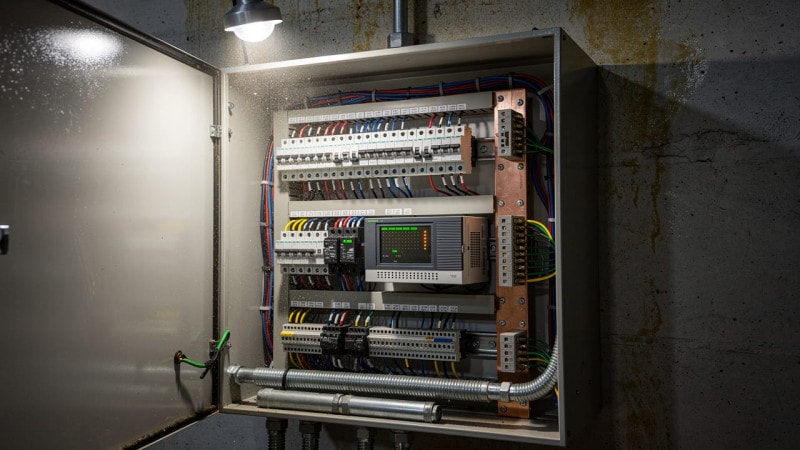
When we talk about agriculture automation on Canadian farms, we are not talking about science fiction. We are talking about control panels, sensors, and drives that already run real grain sites, barns, and irrigation systems across Alberta and beyond.
At the centre are Programmable Logic Controllers (PLCs). These industrial computers act as the control brain for many agriculture automation projects. A PLC can:
-
Monitor temperature probes in a grain bin
-
Turn fans on and off based on setpoints
-
Keep conveyors and legs running in a safe sequence
In a barn, the same style of controller can link fans, heaters, and feeding equipment so they respond together to changes in temperature, humidity, or time of day.
Around the PLCs sit networks of sensors and monitoring devices:
-
In-bin probes measure grain temperature and sometimes humidity to catch hot spots before spoilage starts.
-
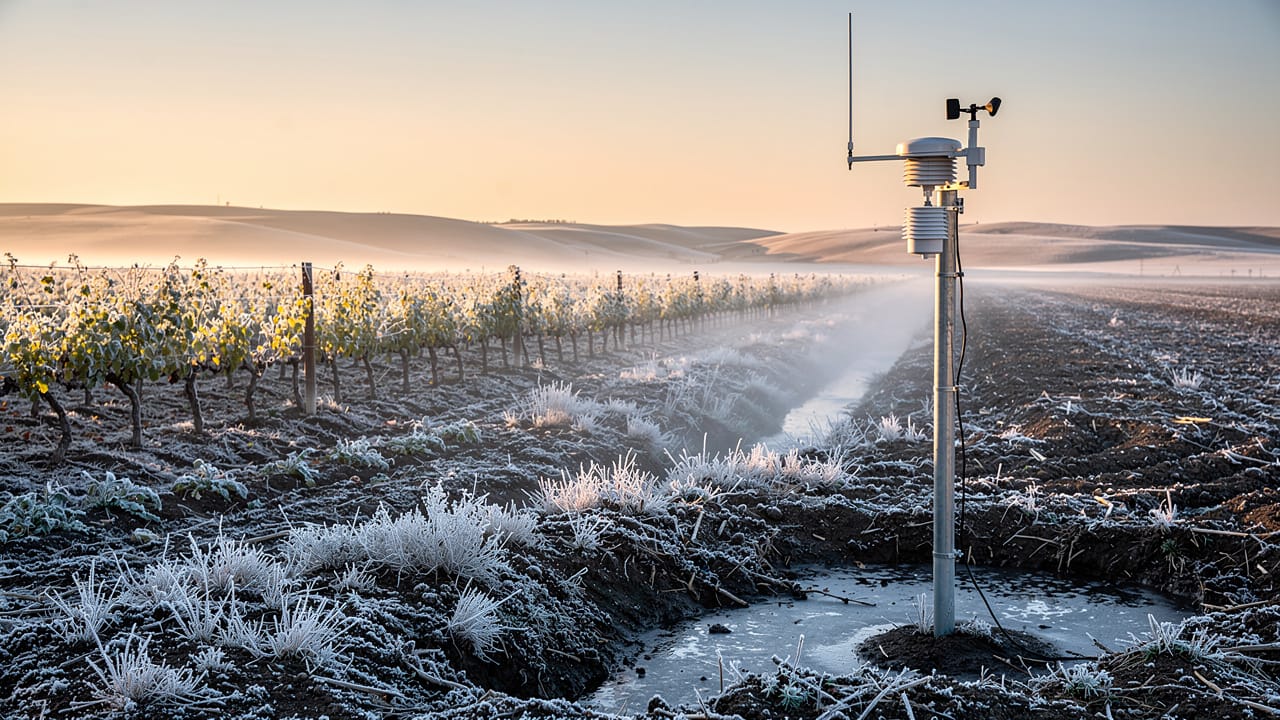
Soil moisture probes and on-farm weather stations feed data into irrigation control systems, so pivots and pumps run only when fields need water.
-
In livestock buildings, environmental sensors keep constant watch on air quality, temperature, and humidity.
Modern systems often add Variable Frequency Drives (VFDs) for motors on fans, pumps, and conveyors. VFDs:
-
Allow soft starts, reducing mechanical stress and inrush current
-
Adjust speed to match real load conditions, saving power
-
Help fine-tune airflow in barns or water pressure in irrigation lines
Remote monitoring is now a standard part of serious agriculture automation. Web-based dashboards, local HMIs, and text or email alarms let operators see system status at a glance. A grain dryer alarm can go to a phone in the middle of the night instead of being discovered in the morning. A ventilation fault can alert staff before animals are stressed. This support does not remove the need for people, but it gives them far better tools.
Automated feeding, ventilation, and climate systems in barns rely on this same technology mix. Timers, sensors, and PLC logic keep feed, water, air flow, and heat steady without someone flipping switches all day. Irrigation control systems apply the same idea to fields by combining valve controls, pump drives, and field sensors.
In every case, the success of these agriculture automation tools depends on electrical infrastructure that is designed for the load and the environment, not just for what happens to be on-site today.
The Critical Role of Electrical Infrastructure in Agricultural Automation
As more agriculture automation is added, the electrical demands on a farm grow sharply. Older yards built for a few bins and basic barn fans often do not have the panel capacity, grounding, or feeder sizes to support rows of dryers, long conveyor lines, and multiple PLC panels. The weak point is usually not the automation programming; it is the power and wiring behind it.
Undersized services, aging breakers, and improvised expansions are some of the most common reasons automation underperforms. Frequent trips, voltage dips, and unplanned shutdowns put both equipment and product at risk. Professional electrical design for agriculture turns a stack of new hardware into a stable, long-term system.
W. Edwards Deming famously said, “A bad system will beat a good person every time.” On the farm, a bad electrical system will also beat good automation every time.
Well-thought-out electrical infrastructure for automation typically includes:
-
Adequate service size and panel space for current and future loads
-
Correctly sized feeders and branch circuits, laid out to avoid bottlenecks
-
Proper grounding and bonding to reduce electrical noise and shock hazards
-
Surge and overvoltage protection for sensitive controls
-
Clear labelling and documentation so issues can be found and fixed fast
Backup Power A Non-Negotiable for Farm Operations
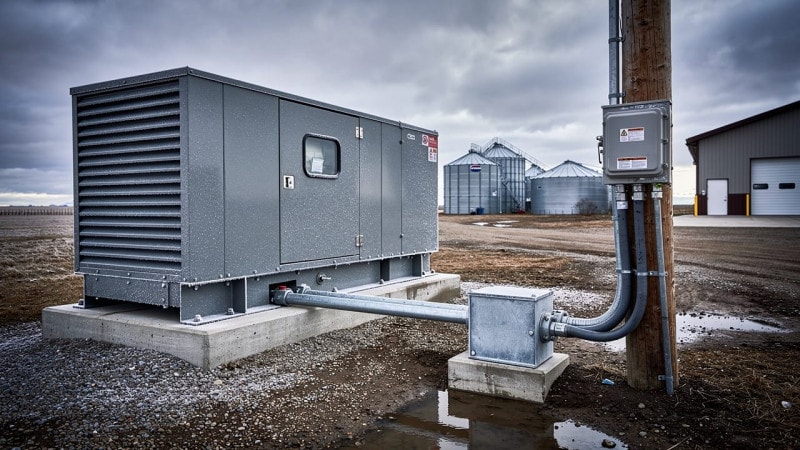
Rural grid outages in Alberta and across Western Canada are a fact of life. Ice, wind, vehicle strikes, or upstream equipment failures can leave a site dark with no warning. For a modern farm that depends on agriculture automation, that blackout is more than a small pause in work.
Ventilation loss in a full livestock barn can put animals in danger within hours. If grain aeration fans stop during a warm spell, moisture and heat can build up fast, damaging high-value crops. An irrigation pump failure during a dry stretch can cut into yield across an entire field. For this reason, backup power is standard risk control rather than a nice upgrade.
A solid backup power strategy usually includes:
-
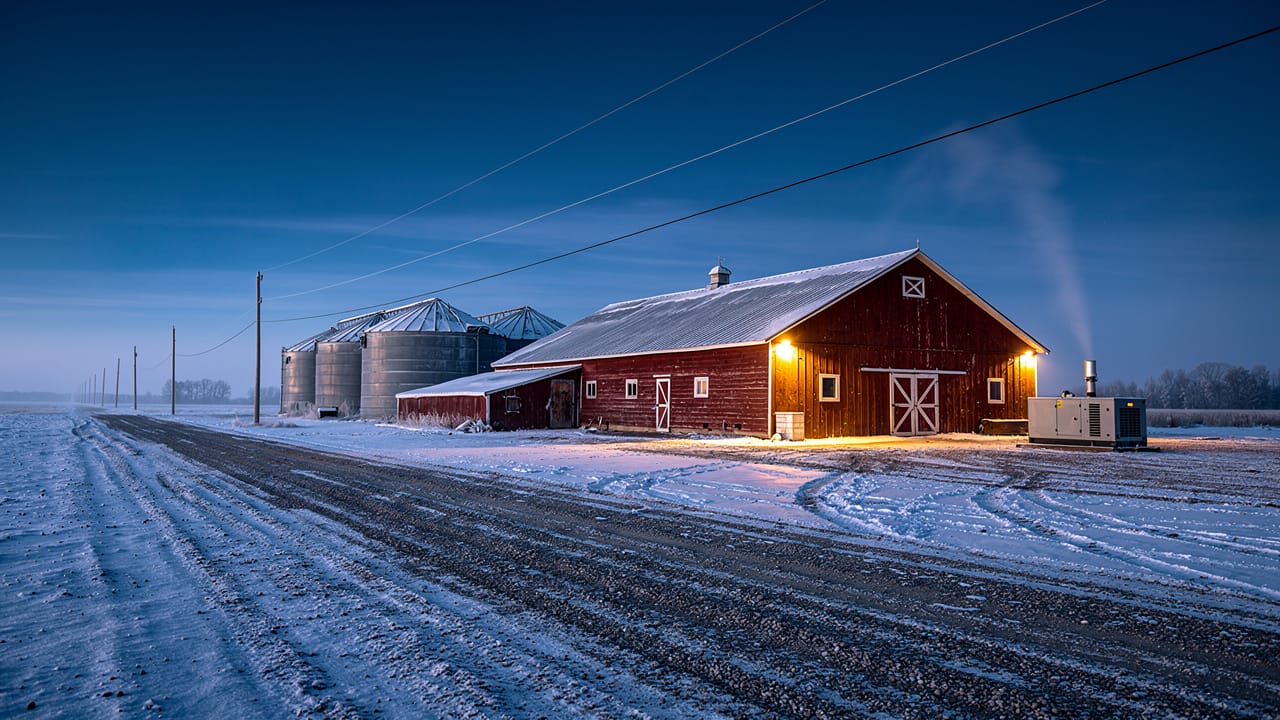
Standby generators sized from detailed load calculations, matched to fuel types available on-site such as natural gas, diesel, or propane
-
Automatic Transfer Switches (ATS) to handle the change from grid to generator without someone running to a panel in the dark
-
Load prioritization, so the most important fans, pumps, and controls keep running even if not every circuit can be supported
-
Uninterruptible Power Supplies (UPS) for sensitive electronics like PLCs, communications gear, and some controls, to keep voltage steady during switchover and brief disturbances
-
Regular testing and maintenance runs, so the generator starts when it is needed most
Together, these layers keep agriculture automation systems alive when the grid does not, and they help protect both livestock and stored grain from avoidable loss.
Specialized Wiring and Controls for Harsh Environments
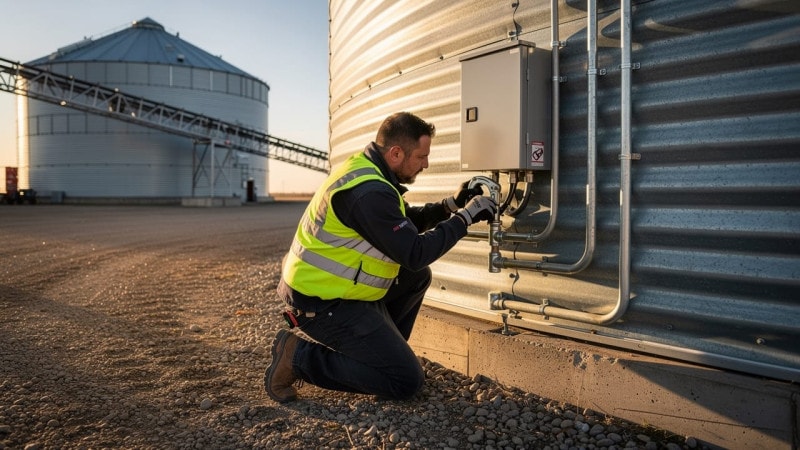
Farm yards are some of the harshest places for electrical equipment. Fine grain dust can form an explosive mix in handling areas. Wash-down water, manure gases, and corrosive air attack metal parts in barns. Outdoor equipment faces wide temperature swings, snow, UV exposure, and physical impact from machinery.
Standard wiring methods that work well in a small shop often fail early in these conditions. Safe farm electrical work needs wiring, enclosures, and controls selected for more than just amperage. For example:
-
In grain facilities, enclosures and fittings rated for dust hazards are used, and equipment is installed in line with Canadian Electrical Code requirements for those locations.
-
In wash-down or wet zones, watertight conduit systems, GFCI protection where required, and sealed boxes keep water out and reduce corrosion.
-
For large motors and VFDs, grounding and bonding need careful attention to prevent nuisance trips, electrical noise, and interference with sensors and control circuits.
-
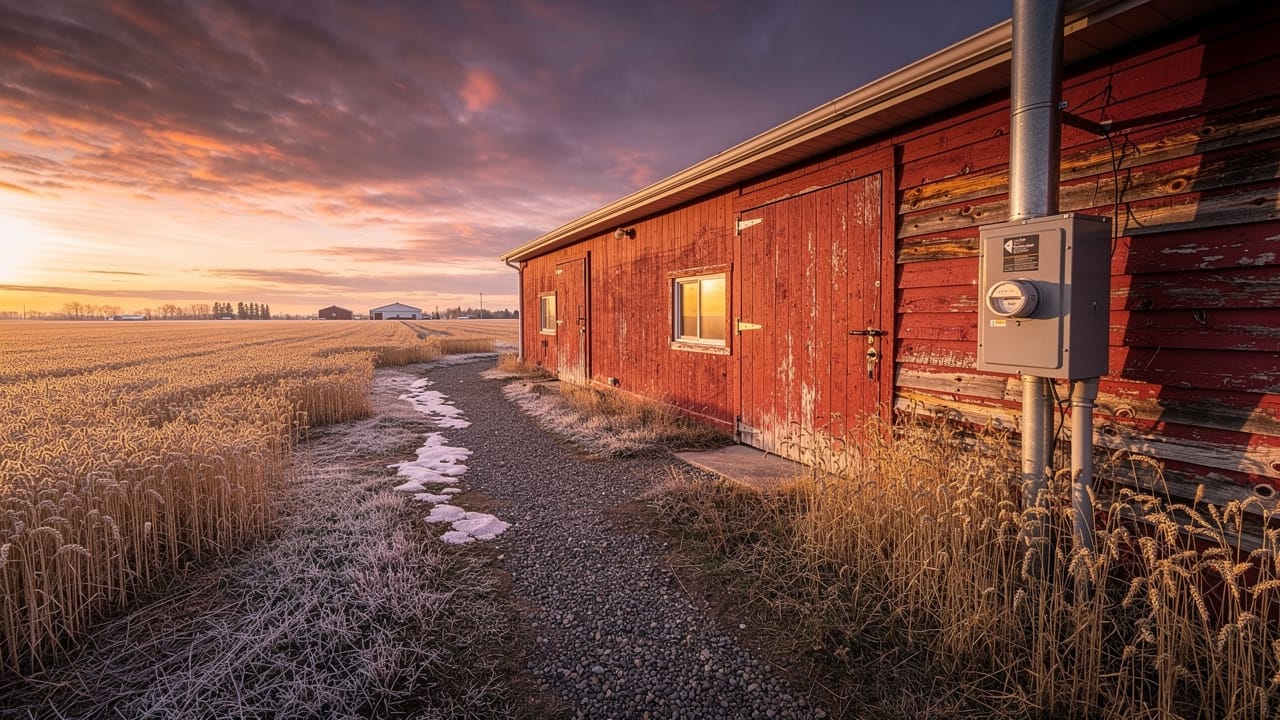
Outdoor disconnects, junction boxes, and control panels need weatherproof ratings and physical protection from augers, tractors, and trucks.
This level of electrical care is not just about passing an inspection. It reduces the chance of fires, arc faults, and sudden failures that could shut down a dryer line, stall a barn ventilation system, or stop an irrigation pump in the middle of a hot week. It also stretches the life of both electrical gear and the automation hardware connected to it.
How Cove Electrical Delivers Full-Scope Agriculture Automation Systems
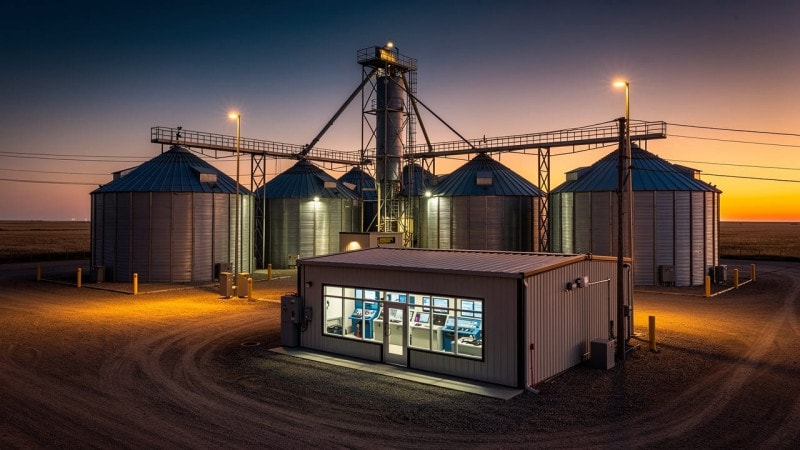
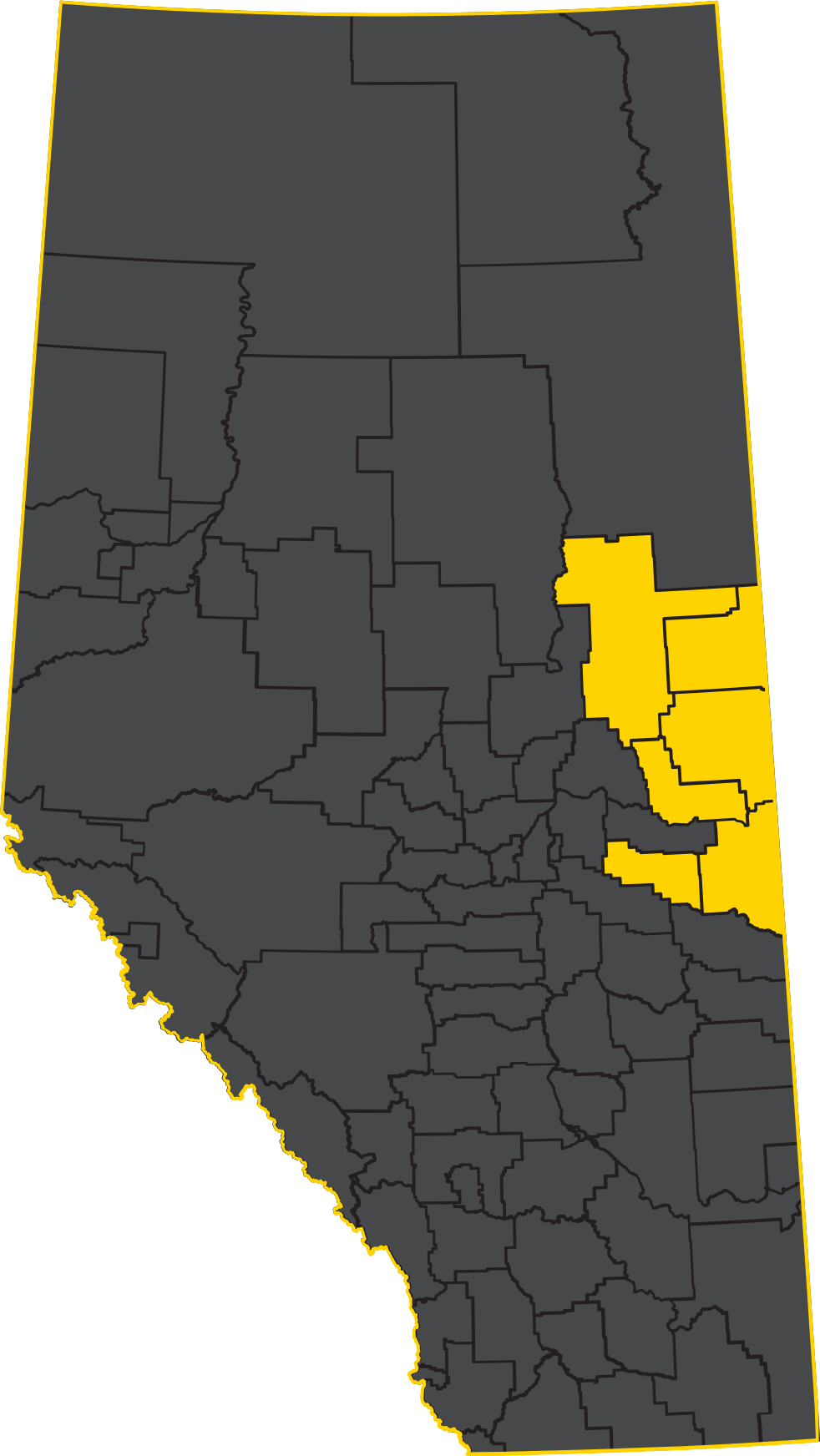
Cove Electrical focuses on operations that cannot afford power interruptions, with a strong presence in agriculture across Alberta. The company is master electrician-led, with many years of hands-on work in grain handling, livestock facilities, irrigation, and other heavy-use sites. The team designs, installs, and commissions agriculture automation and electrical systems built around real farm conditions.
On grain sites, Cove Electrical handles wiring and controls for dryers, conveyors, and bin systems from the main service right through to the last sensor. That includes:
-
Temperature monitoring for grain and oilseed
-
High bin level shutoffs
-
Overhead bin scale integration
-
Central control panels that show the running status of key motors and drives
They also bring monitoring for many grain handling shafts into a single view, so operators can see what is running and what is not without walking the entire yard.
In livestock facilities, Cove Electrical installs and supports power systems that keep ventilation fans, heaters, automated feeding, water systems, and barn climate controls operating steadily. For irrigation customers, they provide reliable feeds and controls to pivots and pumps, along with drive panels that match motor loads and site conditions. Across all of these settings, they design and install multi-layer backup power setups with whole-yard generators, Automatic Transfer Switches, and UPS units sized from proper load studies.
A recent project at a growing grain operation near Jarvie, Alberta shows how this approach comes together. The farm’s original electrical system could not keep up with its expanding handling site. Cove Electrical:
-
Provided full-scope engineering and installation
-
Added PLC-based control for the handling system
-
Integrated bin temperature monitoring and high-level safety controls
-
Tied in overhead scales
-
Supplied a yard-wide backup generator arrangement
The result was smoother daily operation, less downtime, and an electrical backbone ready for the next phase of growth.
Cove Electrical also looks ahead in every design. Extra conduit between key buildings, space in panels for added drives or PLC cards, and capacity in services are part of normal practice. Ongoing service and maintenance keep agriculture automation systems performing to spec long after start-up, so operators can focus on production instead of chasing electrical problems.
For many farm clients, the most appreciated result is simple: “We don’t have to think about the power anymore. Things just run.”
Conclusion
Agriculture automation has become a core part of high-yield farming across Canada, not a side project for later. From grain handling to livestock care and irrigation, automated systems help farms stretch labour, protect product, and run around the clock. Whether those systems help or hurt comes down to the electrical work behind them.
Well-planned services, panels, wiring, PLC controls, and backup power turn automation into a stable, predictable partner on the farm. Poor or improvised electrical work turns it into a source of risk and lost time. For operators in Alberta planning new agriculture automation or upgrading older yards, starting with electrical design is the most practical way to protect that investment.
Cove Electrical specializes in this kind of work for grain, livestock, and irrigation operations. Contact the team to talk through your site, your plans for automation, and the electrical infrastructure needed to keep everything running when it matters most.
FAQs
What Is Agriculture Automation?
Agriculture automation is the use of PLCs, sensors, automated controls, and monitoring systems to run farm tasks with little manual switching. It covers grain handling, livestock barns, and irrigation. Fans, pumps, conveyors, and feeders start, stop, and adjust based on real data instead of constant human input. On many farms, it also includes remote alerts and dashboards so operators can check system status from almost anywhere.
Why Is Electrical Infrastructure Critical To Farm Automation?
Every automated device depends on clean, stable power and correctly designed wiring. If panels are undersized or protection is poor, agriculture automation systems can trip, fail, or even damage equipment. In livestock settings, electrical problems can also threaten animal welfare. Good agricultural electrical design keeps systems running safely and predictably and makes it easier to expand later without rewiring the entire yard.
What Backup Power Systems Do Farms Need For Automation?
Most automated farms benefit from a layered backup plan. A standby generator sized from proper load calculations supports key barn, grain, and irrigation loads when the grid drops. An Automatic Transfer Switch handles the change between grid and generator. UPS units protect sensitive controls and PLCs during that brief handoff and short disturbances. Larger sites often add load shedding and clear operating plans so staff know which circuits to keep online first.
How Does Cove Electrical Support Agricultural Automation Projects?
Cove Electrical delivers full-scope electrical and automation work for farms, including system engineering, PLC programming, grain handling controls, livestock facility power, and irrigation feeds and drives. The company also designs and installs generator systems, ATS units, UPS protection, and weather station power. All work follows Canadian Electrical Code requirements and is planned to grow with the operation, from the first control panel to future barns, bins, or pivots.