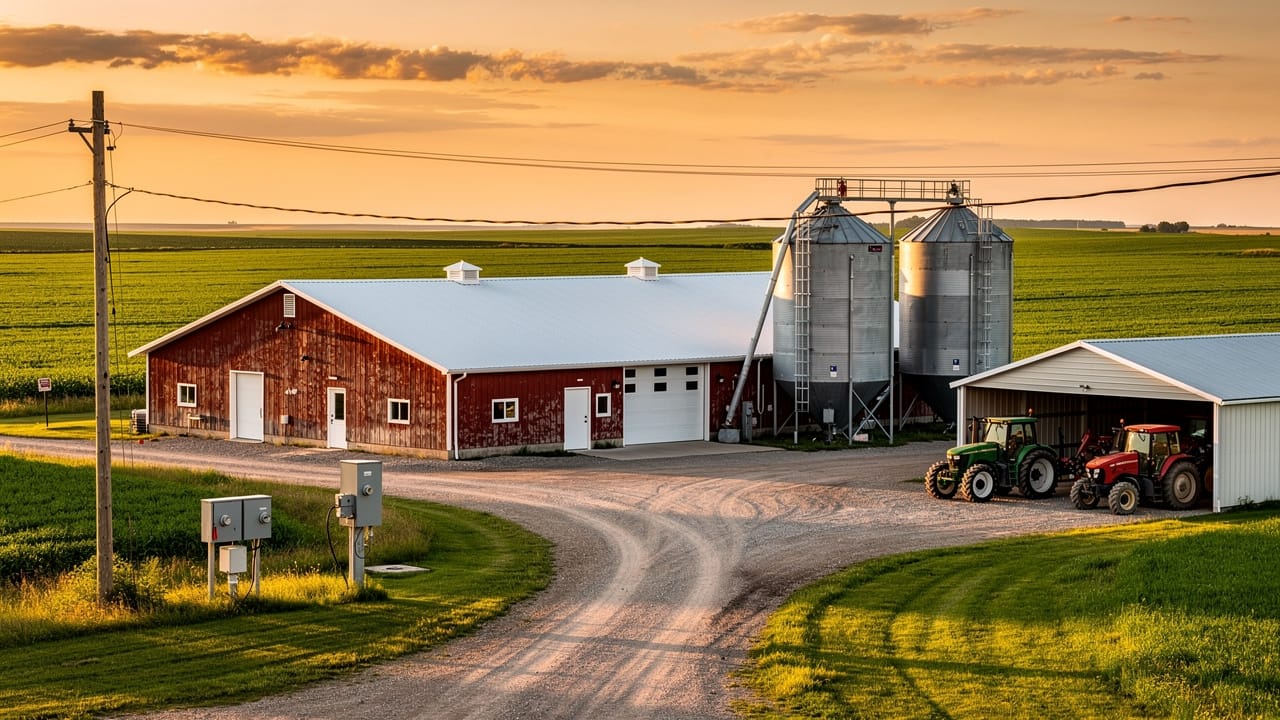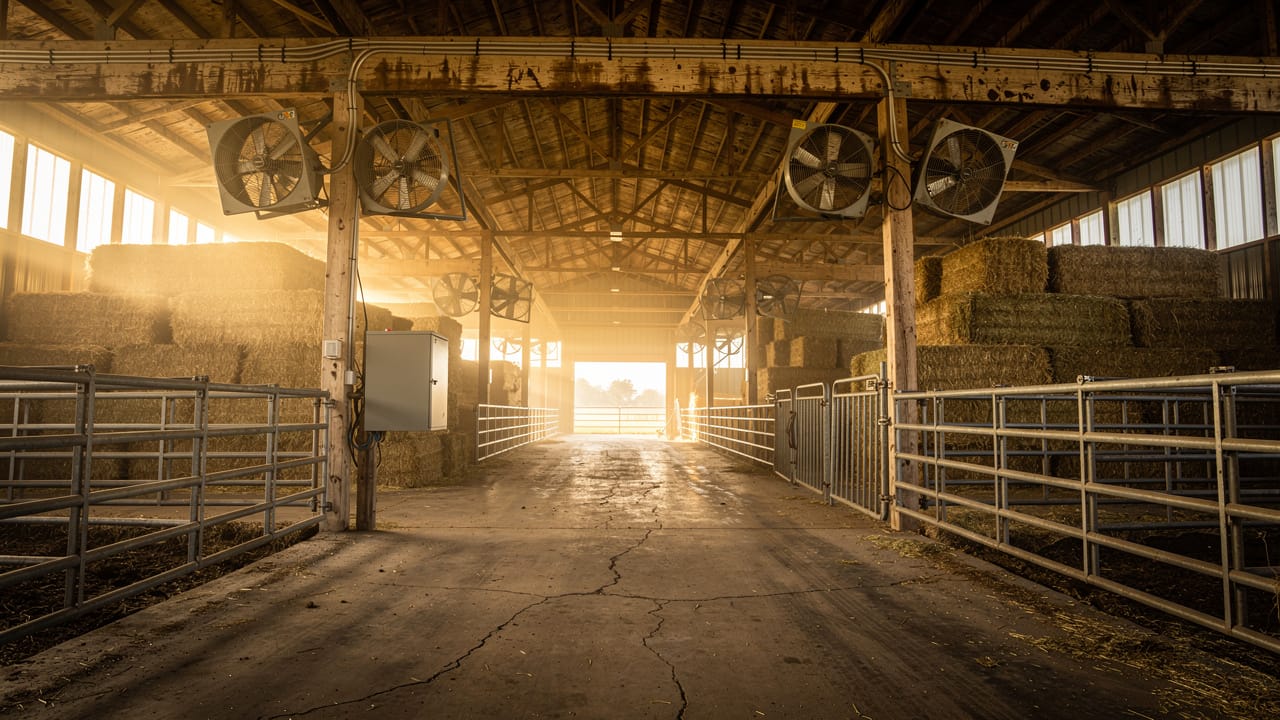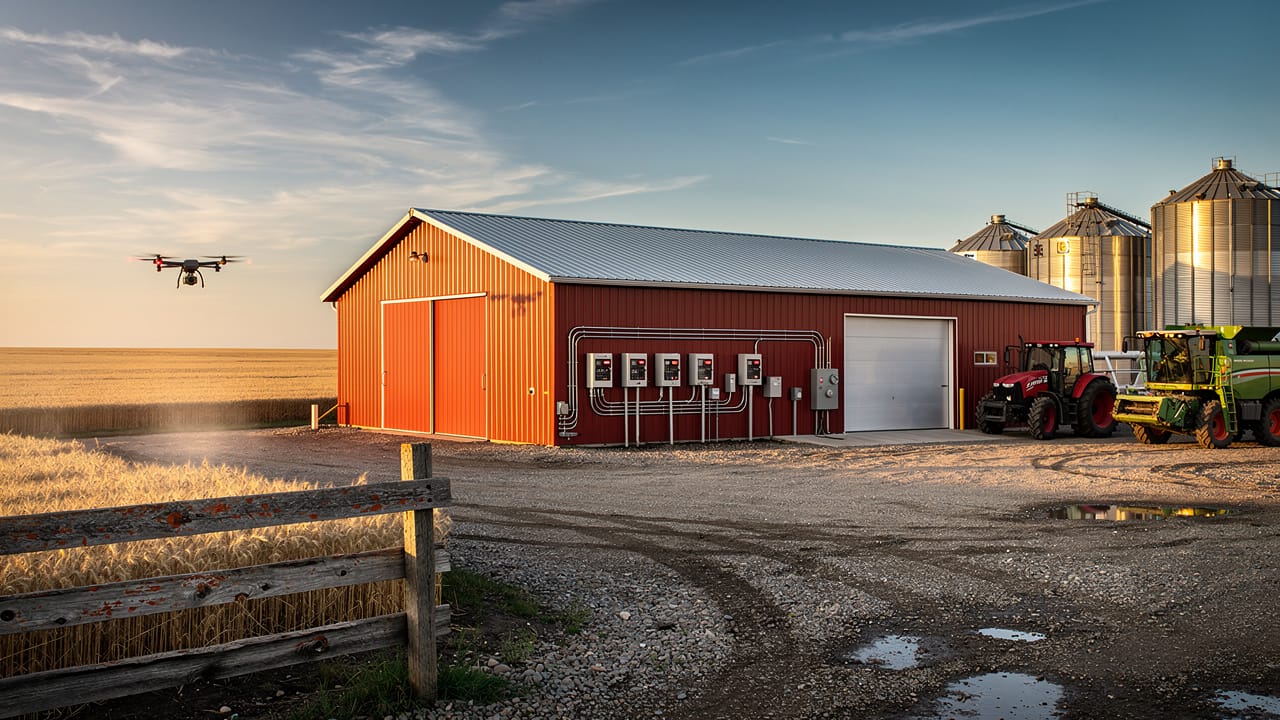
On a hot July afternoon, a storm rolls across an Alberta yard. Power drops for just a few minutes. Fans coast to a stop, feed lines sit still, and alarms on control panels go dark. At that moment, farm automation electrical design considerations stop being theory and turn into a very real risk.
Modern farms lean on automated systems for almost every daily task. Ventilation, feeding lines, grain handling, irrigation pivots, greenhouse controls, and smart barn monitoring all depend on stable, well‑planned farm electrical systems design. When that electrical backbone fails, the result is not just inconvenience. It can mean lost livestock, spoiled grain, frozen pipes, or a dryer fire that shuts the yard down.
Off‑the‑shelf or “house‑style” electrical work does not fit these demands. Agricultural sites face corrosion, dust, long cable runs, heavy motor loads, and remote locations that sit at the weak end of rural grids. Add precision agriculture technology, crop monitoring sensor systems, and remote monitoring of equipment, and the stakes only rise.
This guide walks through the key farm automation electrical design considerations that matter most: accurate load planning, Canadian Electrical Code (CEC) compliance, backup power systems, core automation hardware, and scalability for future growth. Along the way, it explains how Cove Electrical, a master‑electrician‑led firm serving Bonnyville and rural Western Canada, designs smart farming electrical infrastructure that keeps operations running when others fail.
“Power is the one piece of equipment that touches everything else on the farm.” — Common saying among barn electricians
Key Takeaways
Before diving into the detail, a few main points frame the whole topic.
-
Accurate farm electrical load calculations come first. That means a full inventory of motors, heaters, controls, and automation gear. Guesswork at this step leads to nuisance trips, weak voltage, and real fire risk when systems run hard.
-
Safety and CEC compliance are mandatory in agricultural automation systems. Wet barns, corrosive air, and grain dust need specific wiring methods and equipment ratings. Shortcuts might not show up right away, but they increase shock risk, fire risk, and legal exposure.
-
Backup power is core infrastructure, not a luxury. A properly sized generator, automatic transfer switch, and UPS for control systems keep ventilation, irrigation, and feeding online through outages. For most farm operations, that protection pays for itself the first time a storm hits.
-
Scalable design and spare capacity in services and panels make it easier and cheaper to add new bins, barns, or smart devices without tearing existing work apart.
Building A Reliable Power Foundation For Farm Automation
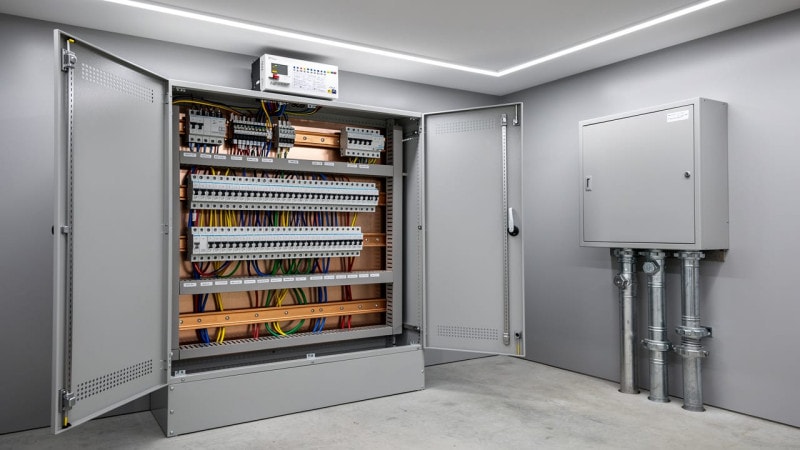
Every smart barn electrical design rests on one thing first: a reliable power foundation. Without the right service size, distribution layout, and power quality, even the best automation gear will act up or shut down when it matters most.
The starting point is precise farm electrical load calculations. That means listing every load on the yard, for example:
-
grain legs and augers
-
ventilation fans and shutters
-
automated irrigation electrical systems and pumps
-
milk cooling and other refrigeration
-
heating, lighting, agricultural PLC systems, and networks
Large motors need special attention, because starting current can be five to seven times higher than the running current. If the design ignores that inrush, the system may look fine on paper but trip breakers as soon as several motors start together.
Next comes service sizing and type. For many farms, especially with big pumps or long grain lines, three‑phase power gives smoother motor starts, better efficiency, and more balanced farm power distribution design than single‑phase service. Early talks with the local utility help confirm three‑phase availability, pole locations, and any upgrade costs. Smart rural electrical system design also leaves 25 to 40 percent spare capacity in the main service and panels, so future barns, bins, or precision agriculture technology can tie in without a full rebuild.
Power quality is easy to overlook and expensive to ignore. Sensitive devices such as agricultural variable frequency drives, sensors, and PLCs react badly to voltage drops, surges, and electrical noise — a challenge well documented in research on Precision Farming with Smart sensor integration. To protect those devices, good farm automation electrical design addresses power quality with:
-
surge protection devices at the service and main panels
-
line reactors or harmonic filters on drive feeds
-
dedicated clean circuits or power conditioners for control equipment and networks
Cove Electrical designs farm electrical systems from the ground up with these factors in mind. Projects for livestock, water systems, and complex agricultural control systems all follow the same rule: build a solid electrical base first, so automation can do its job without constant trouble and fewer late‑night service calls.
Farm Electrical Safety Standards And CEC Compliance
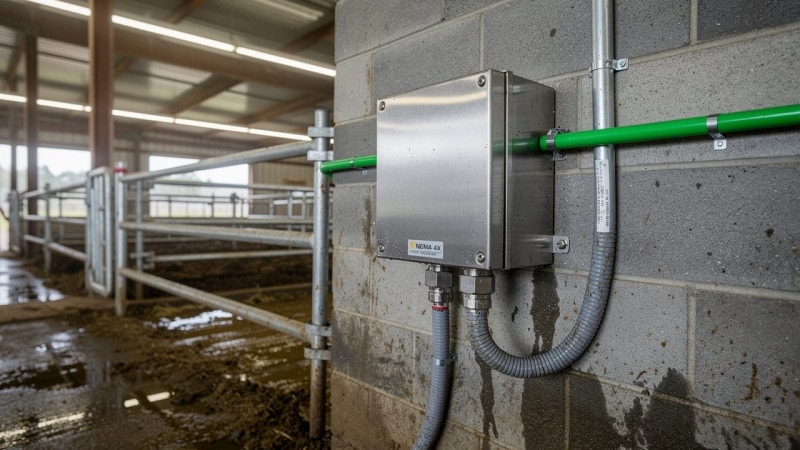
Agricultural sites sit among the harshest electrical environments in Canada. Wet floors, wash‑downs, ammonia, dust, and moving equipment all raise risk. The Canadian Electrical Code sets detailed agricultural electrical code requirements for those conditions, and following them protects people, animals, and property.
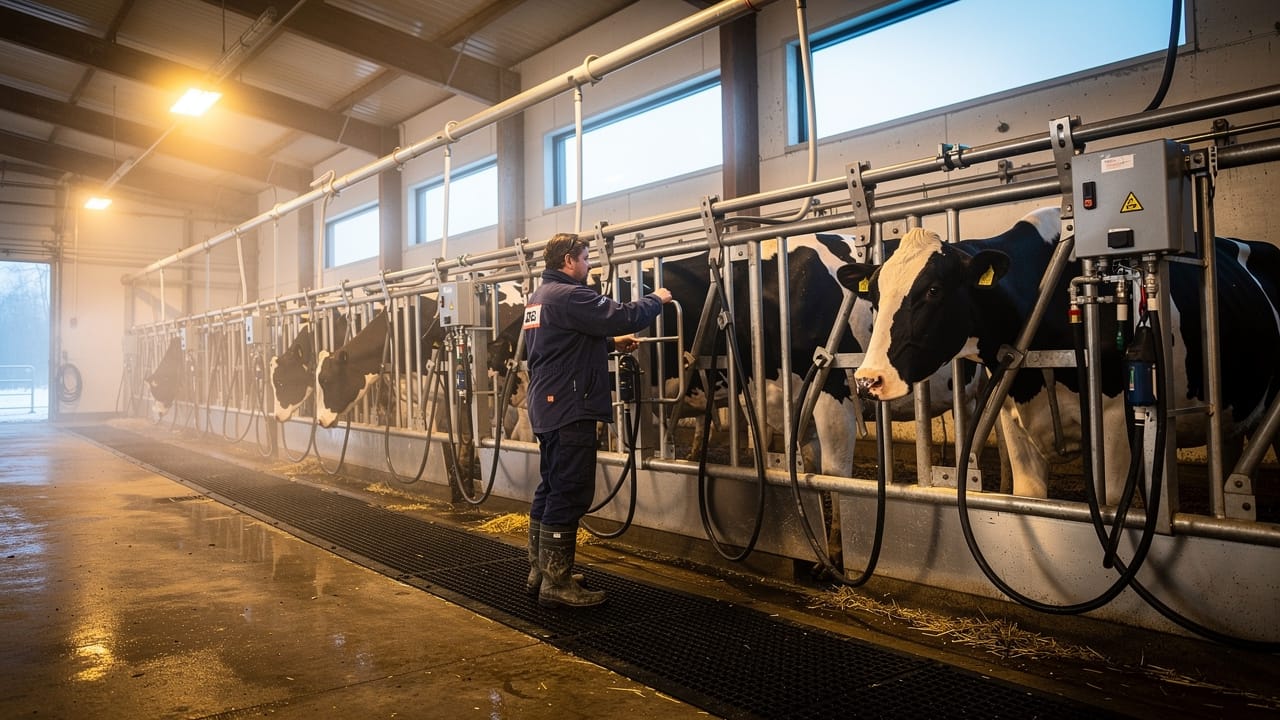
Grounding and bonding form the safety bedrock. Proper grounding gives fault current a low‑resistance path back to the source so breakers trip fast instead of energizing metalwork. In dairy and hog barns, bonding also stops stray voltage. Small voltage differences between floors, stabling, and waterers can stress animals, cut feed and water intake, and drop milk production. The CEC deals with this through equipotential planes that tie all metal parts together, so animals never stand across a voltage difference.
Protection devices matter just as much. GFCI protection is required at outdoor receptacles, wash bays, parlours, and any damp or wet point where a person could contact live parts and ground at the same time. These devices watch for tiny current imbalance and shut power off in a fraction of a second, which often means the difference between a scare and a fatal shock.
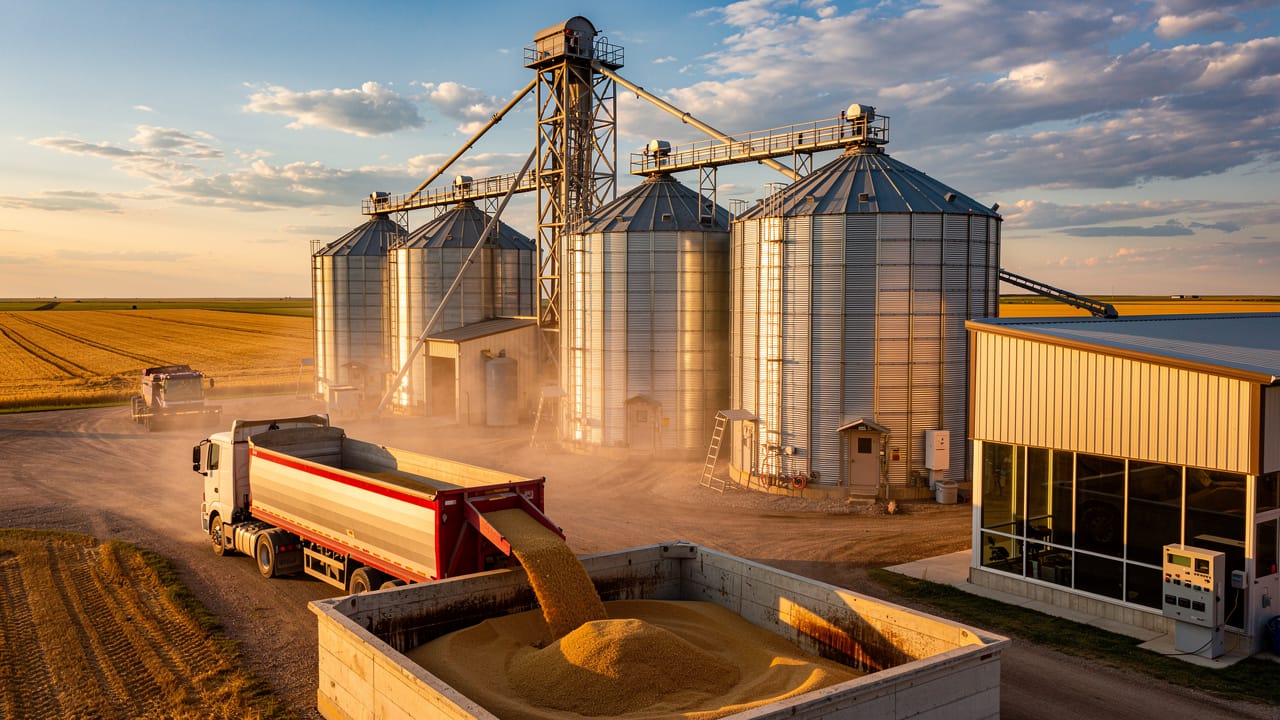
Grain systems add another layer of risk. Fine grain dust can ignite with one arc, so areas inside bins, legs, and enclosures often fall under Class II hazardous location rules. Motors, lighting, sensors, and controls there must be dust‑ignition‑proof and installed with sealed wiring methods. One cheap light or junction box that does not meet this mark can allow an explosion.
Corrosion cannot be ignored either. In poultry house automation electrical work and other livestock barns, moist, acidic air attacks mild steel quickly. Designs for these sites should use NEMA 4X stainless or fibreglass enclosures, liquid‑tight fittings, and wiring types rated for wet, corrosive locations.
On farm projects, inspectors often see the same problems:
-
open junction boxes in dusty or wet areas
-
household‑grade fixtures where industrial ratings are needed
-
missing or damaged bonding jumpers on metal equipment
Cove Electrical treats safety and compliance as the starting point on every job. From permit applications to final inspection, every farm project in Alberta follows the CEC and local rules so operators can sleep at night and insurance inspectors stay happy.
“Code is the floor, not the ceiling, for barn safety.” — Many experienced agricultural electricians
Backup Power Systems And Operational Continuity
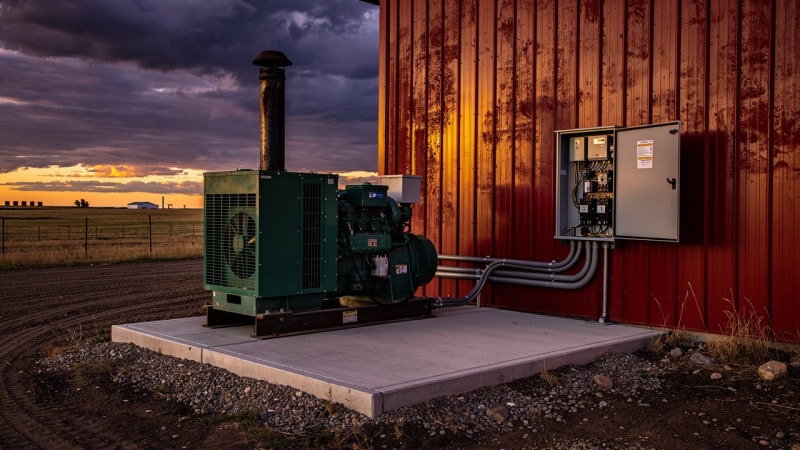
For many rural Alberta yards, the question is not if the power will fail, but when and for how long. When that outage hits a poultry or hog barn on a hot day, or an irrigation system during a dry stretch, minutes count. That reality makes reliable farm backup power systems a core part of any serious design.
Correct generator size sits at the centre of this plan. The unit must start and run all critical loads at the same time, including high inrush motors for fans, pumps, and transfer equipment. A unit that only matches running kW on paper can stall under real starting conditions and leave the barn without air or water.
Fuel choice also matters. Diesel, propane, or natural gas can each work well as long as the farm has secure storage and steady supply through storms or road closures.
A complete backup power system usually includes three main pieces that work together:
-
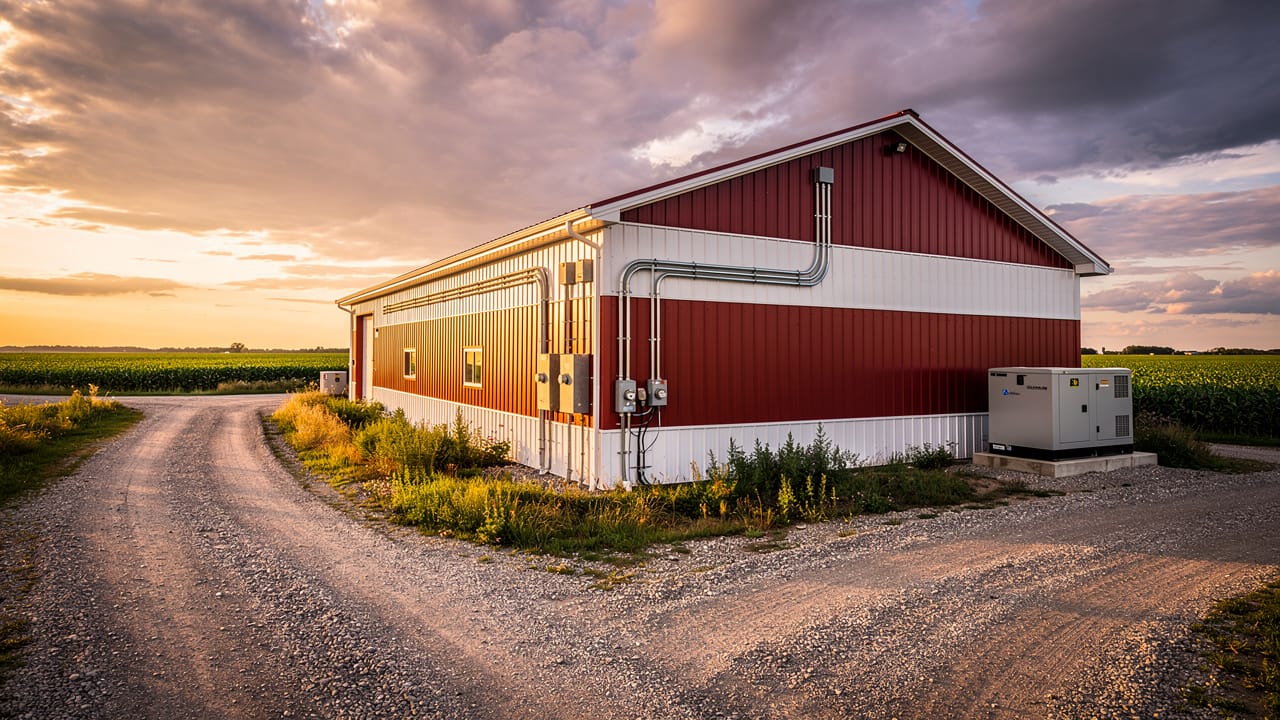
Standby generator – carries the load during an outage. It needs a proper concrete pad, safe exhaust routing, and a dedicated feeder back to the main switchgear. Good farm automation wiring diagrams also label which circuits tie to backup, so future changes do not overload the unit by accident.
-
Automatic transfer switch (ATS) – watches incoming utility power. When power fails, the ATS isolates the farm from the grid, signals the generator to start, and shifts the chosen circuits to generator power in seconds. When utility power comes back and stabilizes, the ATS shifts back and cools down the generator. No one has to run across the yard in a storm to throw a manual switch.
-
Uninterruptible power supplies (UPS units) – protect the “brains” of the system. PLCs, computers, and network hardware stay live on battery while the generator starts, so there are no corrupt programs, frozen HMIs, or lost data in the middle of a grain cycle.
“If ventilation stops, you can lose a barn in minutes, not hours, so backup power has to be ready to go.” — Common warning among poultry producers
Cove Electrical designs and installs backup systems that tie these parts into one dependable package. At Cedar Brook Farm in Jarvie, for example, the team paired a yard‑wide generator system with PLC‑based grain controls so the entire automated yard can ride through outages without chaos.
Key Electrical Components For Agricultural Automation Systems
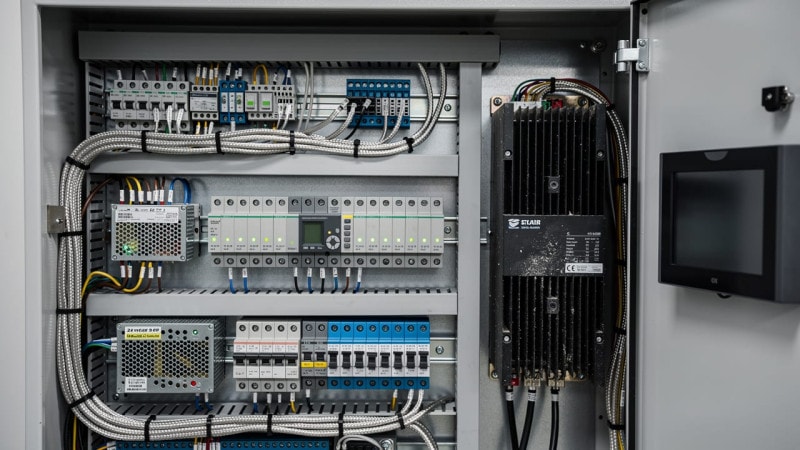
Once the power base and safety pieces line up, attention shifts to the hardware that runs smart farming. Good farm automation electrical design considers not just what each device does, but what it needs from the electrical system to stay stable.
Programmable logic controllers (PLCs) sit at the heart of most agricultural automation systems. These industrial computers read inputs from sensors, apply logic, and send commands to motors, valves, and alarms. Agricultural PLC systems usually run on 24‑volt DC power and live inside sealed panels away from dust and moisture. They need clean, stable power and proper grounding, or random faults and crashes appear at the worst times. Cove Electrical engineers and programs PLC panels for livestock, grain, irrigation, and greenhouse automation electrical projects across Western Canada, with clear labeling so maintenance staff can follow what each point does.
Variable frequency drives control AC motor speed on fans, pumps, and conveyors. By matching motor speed to actual demand, agricultural variable frequency drives often drop energy use and mechanical wear. They do, however, create harmonic distortion on the line. A good smart barn electrical design includes correct breaker sizing, cable size, line reactors or filters, and panel ventilation so these drives do not overheat or inject noise into nearby controls.
For large sites with many motors, agricultural motor control centres (MCCs) bring starters, drives, and protection into one tidy lineup. That layout simplifies troubleshooting, keeps live parts behind proper doors, and gives a clean point to expand later.
Field devices round out the picture. Temperature, humidity, pressure, and level sensors feed data into the PLC, while actuators, contactors, and valves carry out commands — an approach consistent with the deployment of Robotics in agriculture for real-time monitoring and control. To keep crop monitoring sensor systems and livestock automation technology reliable, designers route low‑voltage signal and data cables away from high‑voltage feeders and use shielded cable where needed. Good documentation and as‑built drawings help everyone track what is in the field when upgrades or repairs are needed.
Cove Electrical also integrates monitoring for grain and oilseed temperatures, high bin level shutoffs, overhead bin scales, and remote monitoring of agricultural equipment. That data gives operators early warning of hot spots, plug‑ups, or scale errors before they turn into breakdowns or safety incidents.
Designing For Scalability And Long-Term Farm Growth
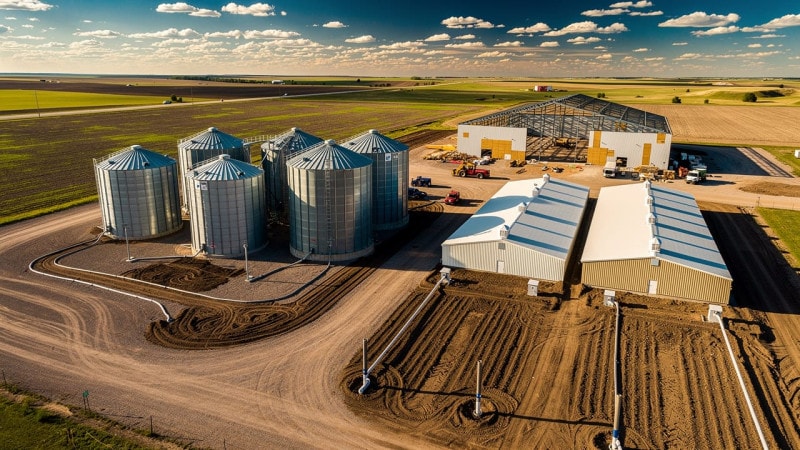
Very few farms stay the same size for long. New bins, barns, dryers, or precision agriculture technology often arrive faster than expected, driven in part by research such as work on Automating the harvest: WSU projects aimed at easing labor shortages and expanding on-farm automation. Good farm automation electrical design considerations treat that growth as a given, not a surprise.
Physical infrastructure is the first place to plan ahead. Trenching and conduit work cost real money, so it makes sense to upsize raceways during the first install. Larger conduits and a few spare ducts with pull strings allow new circuits or network lines to slide in later without another dig. Inside, main panels and control enclosures should leave 25 to 30 percent spare breaker space and physical room for more drives, relays, and I/O modules.
When the trench is open or a new panel is going in, it is wise to think about:
-
spare conduits between key buildings and control panels
-
extra room in enclosures for future PLC cards and drives
-
central locations for network switches and communication gear
Control architecture matters as well. Modular PLC platforms that accept extra input and output cards make it simple to add another grain leg, a new barn section, or more crop sensors without a full rewire. Space and power for farm energy management systems, agricultural solar power integration, weather stations, Wi‑Fi, and cameras keep the door open for more smart farm tools over time.
Cove Electrical often starts by assessing older farm electrical systems that have reached their limit. The team then designs practical upgrades that raise safety, improve performance, and give clear room for future automation. That approach helps farms avoid the painful moment when a new piece of gear arrives and there is nowhere safe to tie it in.
“It’s cheaper to install capacity than to wish you had it five years later.” — Advice heard often from long‑term farm owners
Conclusion
Farm automation can raise efficiency, protect animal welfare, and support better yields. Those gains only hold when the electrical foundation behind them is strong. Load calculations, CEC compliance, backup power, automation hardware, and scalability are all part of one connected picture. Cutting corners on any one of those weakens the entire farm.
The cost of a careful, code‑driven design and professional install is small compared with a barn full of lost birds, a grain explosion, or a long outage that stops milking and irrigation. Operations that depend on constant power need more than a quick fix or a house‑style panel.
Cove Electrical focuses on farms, plants, and energy sites that cannot afford downtime. With master‑electrician oversight, field experience in rural Alberta, and deep knowledge of industrial automation for agriculture, the company designs, installs, and supports electrical and control systems that stand up to real conditions. To talk through the needs of a new build, upgrade, or full farm automation project, reach out to Cove Electrical and put a proper electrical plan in place before the next storm hits. Start that conversation early in the planning phase, when electrical choices are easiest to get right.
FAQs
What Electrical Code Applies To Farm Buildings In Canada?
The Canadian Electrical Code governs all electrical work in farm buildings, including barns, grain systems, and shops. Special sections cover wet, corrosive, and hazardous agricultural areas. In Alberta, permits and inspections flow through provincial rules such as the Electrical Utilities Act. Some insurers or municipalities add extra requirements for certain barn types, so it pays to check those up front. Working with a licensed contractor who understands agricultural sites keeps your project safe and compliant.
How Do I Size A Backup Generator For My Farm?
Correct sizing starts with a detailed load analysis of every circuit that must run during an outage. That list includes the running load plus the high starting current of big motors, such as fans, pumps, and grain equipment. An undersized unit may never start those loads when it matters. A qualified electrician will also look at voltage drop, motor starting sequence, and fuel supply. Cove Electrical designs farm backup power systems around real measurements, not guesses.
What Is Stray Voltage And Why Does It Matter In Livestock Facilities?
Stray voltage means small voltage differences between metal parts that animals can touch, such as stabling, gates, or waterers. Even a few volts can cause stress, lower water and feed intake, and reduce milk production in dairy herds. Poor grounding or bonding often sits at the root of the issue. The CEC calls for equipotential bonding planes in livestock barns to remove these differences. Testing and corrections should be handled by people who understand both livestock behaviour and electrical systems.
Do I Need Explosion-Proof Electrical Equipment In My Grain Bins?
Most grain bins, legs, and handling points fall under Class II hazardous location rules because of combustible grain dust. In those areas, motors, lights, sensors, and control stations must be dust‑ignition‑proof and installed with sealed wiring methods. Standard farm gear does not meet that test. Non‑compliant equipment can allow a single arc or hot surface to ignite dust and cause a serious explosion. Work in these areas should be designed and installed by contractors familiar with hazardous‑location requirements.