Power on a modern farm is more like a lifeline than a convenience. Ventilation for barns, grain dryers, irrigation pivots, well pumps, and automation all depend on steady electricity. When the grid goes down, generator sizing for farm backup power is what decides whether things keep running or shut down fast.
A short outage can spoil grain in a dryer, warm up bulk tanks, stall milking, or stop water to livestock. In a tight poultry or hog barn, a failed fan system can turn into an animal‑welfare emergency in less than an hour. For many farms across rural Alberta and the rest of Canada, a serious power cut is a direct hit to income, not just a bad day.
“Backup power on a farm is not about comfort; it is about keeping animals, crops, and people safe.”
— Common saying among farm electricians
That is why a whole‑farm backup generator cannot be picked on guesswork or a rough number from a brochure. Both an undersized unit and an oversized diesel generator for farm use can cost money, damage gear, and leave critical loads unprotected. This guide walks through practical, step‑by‑step generator sizing for farm backup power, with a focus on real equipment, Canadian code rules, and the way farms actually run. By the end, it will be clear how to size a generator properly, what to watch for in your load list, and when to bring in a specialist like Cove Electrical to lock in a safe, reliable design.
Key Takeaways
-
Correct generator sizing for farm backup power starts with a full electrical inventory, not with a guess on kW. Nameplate data, starting and running wattage, and peak demand all need to be written down and checked so that nothing important is missed during a grid outage.
-
A good farm generator sizing plan always adds reserve capacity on top of the calculated peak demand. A buffer of at least twenty five percent keeps the generator away from its limit, gives room for future growth, and helps large motors start cleanly without stalling or dimming lights.
-
Starting wattage on motors is very different from running wattage and must be part of any generator load calculation. Many farm loads such as irrigation pumps, grain augers, compressors, and large fans draw three to six times their running watts for a short burst when they start.
-
For most commercial operations, the best generator for farm use is an automatic standby system with an Automatic Transfer Switch (ATS). This setup starts within seconds, moves the farm off the grid safely, and brings power back without a scramble in the dark or any risk to utility workers.
-
The safest way to lock in the right agricultural generator size is to work with a licensed electrical contractor. A company like Cove Electrical can measure real peak loads, design a code‑compliant farm standby generator system, and install it so it is ready when the next major outage hits.
Why Getting Farm Generator Sizing Wrong Is Costly
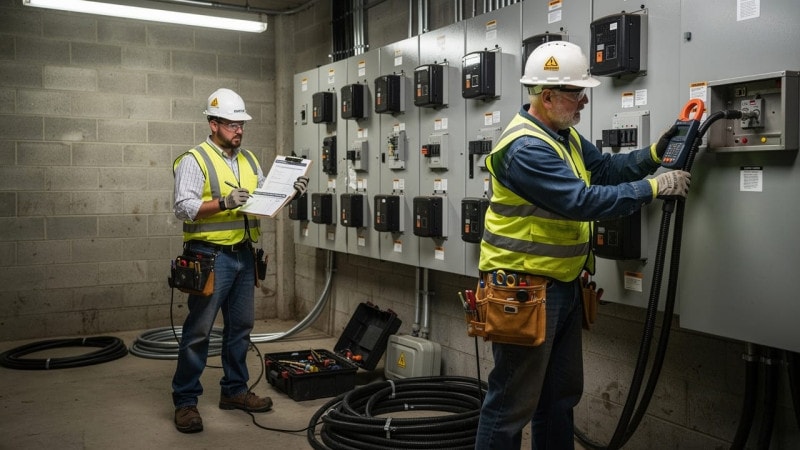
When generator sizing for farm backup power is off, the impact shows up fast in both equipment health and day‑to‑day operations. A unit that is too small struggles every time big motors start. A unit that is far too large never works in its best range and can damage itself over time. In both cases, the farm pays for that mistake in fuel, repairs, and risk to livestock and crops.
If a generator is undersized, it often runs at or past its rating whenever grain dryers, well pumps, and barn fans try to run together. Voltage sags, motors slow down, and contactors chatter. That kind of use heats up windings in both the generator alternator and the farm equipment. Over time this can burn out motors on a generator for livestock farm ventilation or a generator for well pump farm water, just when the power is needed most.
Common signs that a generator is too small include:
-
Lights dimming or flickering when large motors start
-
Breakers tripping when several pieces of gear run at once
-
The generator engine lugging down, smoking, or stalling under load
Going the other way and choosing an oversized agricultural generator size can look safer, but it has its own problems. Large diesel sets running on light farm loads spend most of their lives in a dirty, low‑temperature state. This leads to wet stacking inside the engine, extra soot, and more frequent service calls. Fuel use per hour stays higher than it needs to be, and the extra capital tied up in the machine never pays back. At very low load, voltage and frequency can also wander enough to bother sensitive devices such as controls, VFDs, and data systems — a challenge also well documented in how Data Centers’ Use of diesel generators for backup power creates parallel operational problems.
Warning signs that a generator is far too large for the job include:
-
The unit idling along at a small fraction of its rating most of the time
-
Heavy black exhaust under brief heavier loads
-
Repeated service visits to clean up carbon and fuel deposits
The real sweet spot is a farm standby generator that normally works around seventy to eighty percent of its rating on peak load, which comes only from careful generator sizing for farm backup power.
How to Audit Your Farm’s Power Needs
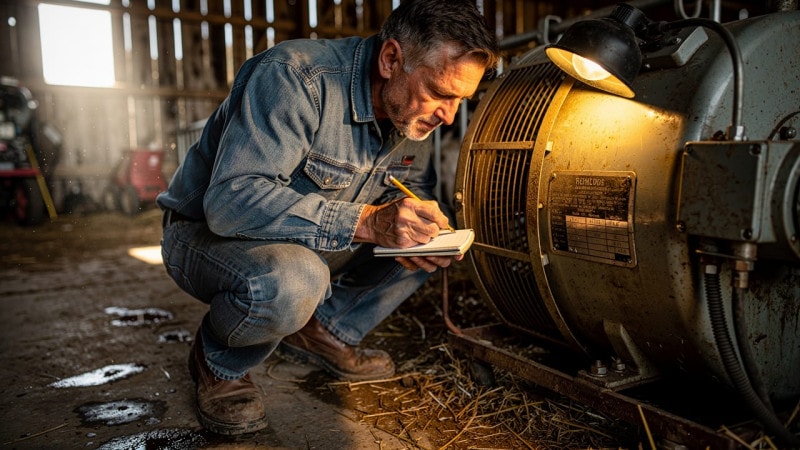
Every solid generator sizing guide starts with the same step, which is a proper load inventory. Before talking about kW or using any generator wattage calculator, the farm needs a full list of what really must run during a power cut. That means walking each building and writing down real numbers, not guesses.
A good audit covers every area that will tie into the whole‑farm backup generator. That includes livestock barns, milking parlours, grain handling sites, irrigation pump houses, shops, offices, and any on‑farm homes that share the service. For each space, list every motor, heater, fan, pump, control panel, and general circuit that needs backup power for farm safety or product quality. On each item, find the nameplate and record volts, amps, phase, and if listed, watts or horsepower. If only volts and amps are shown, use the simple rule that watts equal volts times amps to note both running and, where possible, starting draw.
To make the walk‑through easier, many farms use a simple checklist that covers:
-
Location (barn, parlour, dryer site, shop, residence)
-
Equipment name (for example: tunnel fan, well pump, bulk tank)
-
Voltage, phase, and amperage from the nameplate
-
Running watts and, where available, starting watts or horsepower
Next, sort those loads by how critical they are during a farm power outage backup event:
-
Life‑critical loads come first. This group covers barn ventilation fans, well pumps that feed livestock, heaters and heat lamps for young stock or chicks, and sump pumps in key areas.
-
Mission‑critical loads sit just behind and include bulk tanks, milking systems, grain drying fans and controls, irrigation pumps, and key automation.
-
General loads such as shop lighting, office gear, and most household circuits come last. Many farms choose to leave some of these off the generator to keep the agricultural generator size and cost under control.
The last part of the audit is to understand starting versus running wattage. Motors on a generator for irrigation pump operation or a large air compressor can need several times their running watts for a few seconds at start‑up. The generator must be sized so it can pick up the largest single motor while the other planned loads are already running. This is where many do‑it‑yourself farm generator sizing attempts fall short and why a careful list and some help from Cove Electrical can make the difference between a system that holds and one that fails in the first major storm.
How to Calculate Your Farm’s Total Generator Size
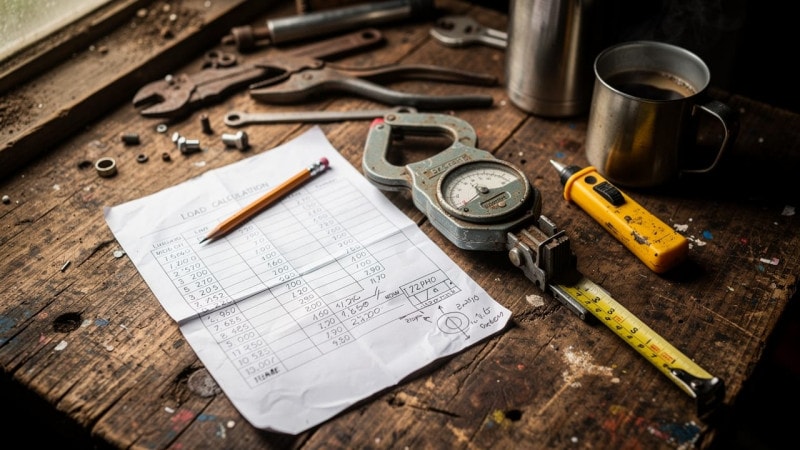
Once the load inventory is complete, the next step is to turn that list into a solid generator load calculation. For many farms, the nameplate method is the most practical place to start, backed up by utility history and, when needed, professional metering.
Begin with the nameplate numbers gathered during the audit. Convert volts and amps into running watts for each critical device with the watts equal volts times amps rule. Add all the running watts for the equipment that must run at the same time during an outage. This total is the base running load. Then pick out the single device with the highest starting wattage. For many sites this will be a generator for irrigation pump duty, a big grain auger, or a large compressor. To find the peak demand, add that one starting wattage to the running watts of all the other items. Divide the final watt number by one thousand to get the kW needed. To arrive at a practical generator sizing for farm backup power, multiply that kW by one point two five so there is at least a twenty five percent reserve.
A quick example:
-
Total running load for all needed equipment: 60,000 watts (60 kW)
-
Extra starting watts for the largest motor: 25,000 watts (25 kW)
-
Peak demand: 85,000 watts (85 kW)
-
Generator with 25% reserve: 85 kW × 1.25 ≈ 106 kW
In this case, the farm would look for a generator in the 100–110 kW range that matches the service voltage and phase.
Historical utility bills add another cross‑check. On many Canadian hydro bills, the highest demand in kW is listed for each month. Looking back twelve to twenty four months will show what the service has actually drawn during harvest, peak irrigation, or cold snaps. Taking the single highest kW value, then adding twenty five percent for reserve, gives a sense of the size of a whole‑farm backup generator that will cover the bulk of operations. This method does not always show the short surge needed to start big motors, so it is best used as a guide, not a stand‑alone sizing tool.
For larger or more complex sites, real‑time metering by a licensed electrician is the gold standard, and Modelling and metrics for optimal sizing of power systems supply a rigorous academic framework that reinforces why precise load measurement matters before committing to a generator size. Cove Electrical often uses clamp‑on meters on each phase of the main service while the farm runs at peak load. Those readings, converted to kW, show the true farm demand under real working conditions. Combined with nameplate data for the very largest motors, this produces the most accurate farm generator sizing and avoids both oversizing and undersizing.
During all of this, it is important to match the generator to the service type. Many small operations use single‑phase 120 or 240 volt power, while bigger livestock, grain, or irrigation sites use three‑phase, often at higher voltage. The generator for well pump farm use, grain systems, or large fans must have the correct phase and voltage to tie in cleanly. Manufacturers list both kW and kVA ratings for their machines, with most farm‑scale diesel units based on a power factor near zero point eight. As long as the kW rating of the chosen set meets or slightly exceeds the calculated need, the farm will have a solid base for generator sizing for farm backup power.
Choosing The Right Generator Type, Fuel, And Transfer Switch
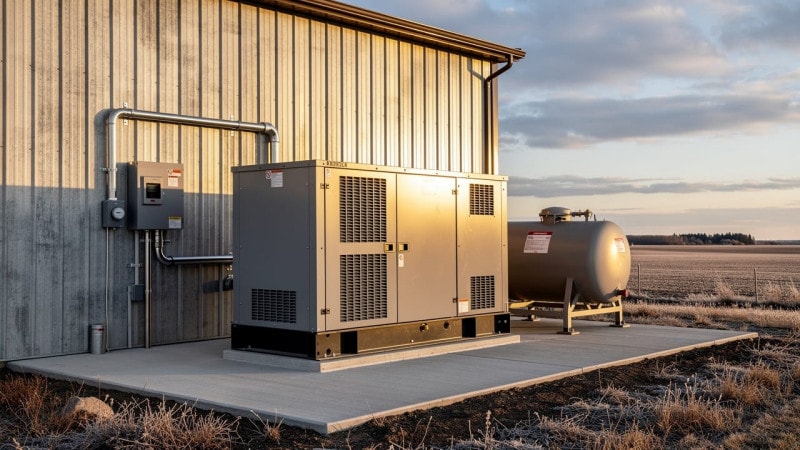
After the kW size is clear, the next step is to choose the style of generator, fuel type, and transfer gear that fit the farm. This is where many operators move from a small portable mindset to a proper automatic standby generator farm system.
Portable units can help in a pinch for a single barn or a small house panel, but they come with manual start, fuel cans, cords, and long nights in bad weather. For a generator for livestock farm operations, grain handling, or critical irrigation, that setup is rarely enough. A permanently installed standby generator ties into the main farm system, starts on its own within seconds, and lines up with a transfer switch so power moves in a safe, clean way — much like the hardened backup infrastructure described in analyses of 7 Ways Data Centers manage critical power continuity at scale. For most commercial‑scale sites, this is the best generator for farm use, because it acts like another piece of fixed equipment rather than an emergency toy that may or may not be ready.
Typical advantages of an automatic standby system include:
-
Automatic start and stop with no one running outside in a storm
-
Hard‑wired connection to key loads through an ATS
-
Larger, safer fuel storage and longer run times
-
Cleaner voltage and frequency for controls and electronics
The Automatic Transfer Switch (ATS) is the control centre of a serious farm power outage backup plan. It watches the incoming grid, starts the generator when the grid fails, disconnects the farm from the utility line, and connects the load to the generator once it is stable. When the grid comes back, it moves the farm back in the same controlled way and lets the generator cool down before shutting off. This sequence protects workers, prevents any chance of back feed onto rural lines, and keeps voltage swings away from sensitive electronics. Cove Electrical designs and installs both automatic and manual transfer setups, with automatic switching as the normal choice for farms that cannot afford even short gaps in power.
Fuel choice comes down to what is on site and how the generator will run. A diesel generator for farm backup often makes sense because many farms already keep diesel in bulk for tractors and trucks, and diesel engines handle long heavy loads very well. A propane generator for farm use works well where propane is already used for heat or grain drying, since the fuel keeps well and burns clean. Natural gas is a strong option where a line is available, since it removes on‑site storage and refilling.
In simple terms:
-
Diesel – Works well for long, heavy loads; fits farms with existing diesel tanks; needs regular fuel maintenance.
-
Propane – Clean burning and stable in storage; good where propane is already used on site.
-
Natural gas – No refuelling on the yard; depends on the gas utility staying online during major storms.
During layout, noise, clearances, and fuel access also matter, especially near homes or noise‑sensitive livestock. Cove Electrical takes all of this into account when building rural backup power systems that meet Canadian Electrical Code rules and stand up to real farm use.
Conclusion
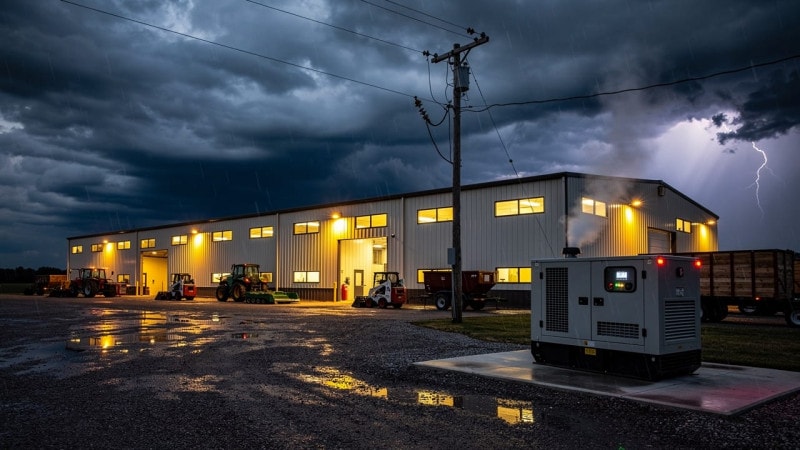
Sizing a generator for a farm is not just a product pick from a catalogue. It is a careful process that starts with a full load audit, covers running and starting watts, checks real demand, and ends in a generator sizing for farm backup power plan that matches phase, voltage, and code rules. When that work is skipped or rushed, the cost shows up later as failed motors, wet grain, stressed animals, and engines that never seem to run quite right.
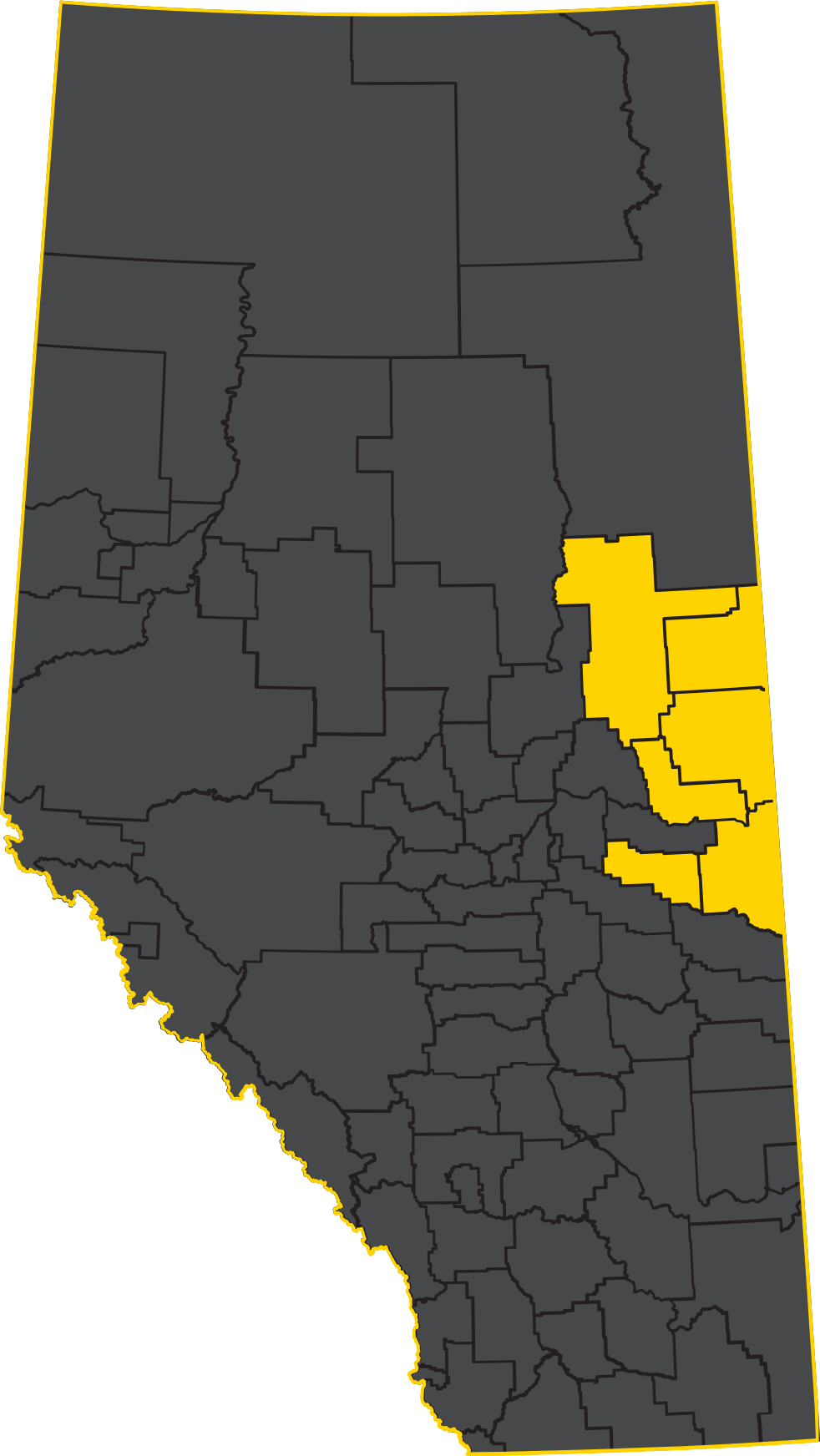
Cove Electrical focuses on farms and other operations that cannot afford downtime across northeast Alberta and similar rural areas. The team designs farm standby generator systems that match real loads, integrate the right transfer gear, and meet the Canadian Electrical Code from the first bolt to the final test. For operators who want confidence that their backup power for farm use will work on the worst day of the year, the next step is simple. Contact Cove Electrical to schedule a professional on‑site load assessment and start moving toward a generator system that is sized right and ready to run.
FAQs
How Many Watts Does A Farm Need For A Backup Generator?
There is no single watt number that fits every farm. A small hobby or mixed farm might need only 10–20 kW for key loads, while a large livestock barn, grain drying site, or irrigation network can require 100 kW or more. The only way to know is to complete a full load audit, check nameplates, and measure real demand. Once the peak load is known, add at least twenty five percent reserve when planning generator sizing for farm backup power.
What Is The Difference Between A Standby And A Portable Generator For Farm Use?
A portable generator is usually a smaller, moveable unit that someone must start by hand, refuel often, and connect with cords or a basic manual switch. It can keep a few circuits alive but does not suit full farm generator sizing needs. A standby generator is a fixed machine that starts on its own, feeds the farm through an automatic transfer switch, and runs on bulk fuel. For livestock barns, grain systems, or irrigation pumps that must keep running, an automatic standby system is the reliable and safe choice.
Do I Need An Electrician To Install A Farm Backup Generator In Alberta?
Yes, a farm backup generator is a major electrical project and must meet the Canadian Electrical Code along with Alberta safety rules. A licensed electrical contractor must install the transfer switch, conductors, grounding, and bonding, and must confirm that the agricultural generator size matches the service and protection devices. Improper work can send power back onto utility lines, damage equipment, or lead to failed inspections. Working with a specialist such as Cove Electrical brings both technical skill and farm experience to the installation so the system is safe, legal, and ready when the grid fails.