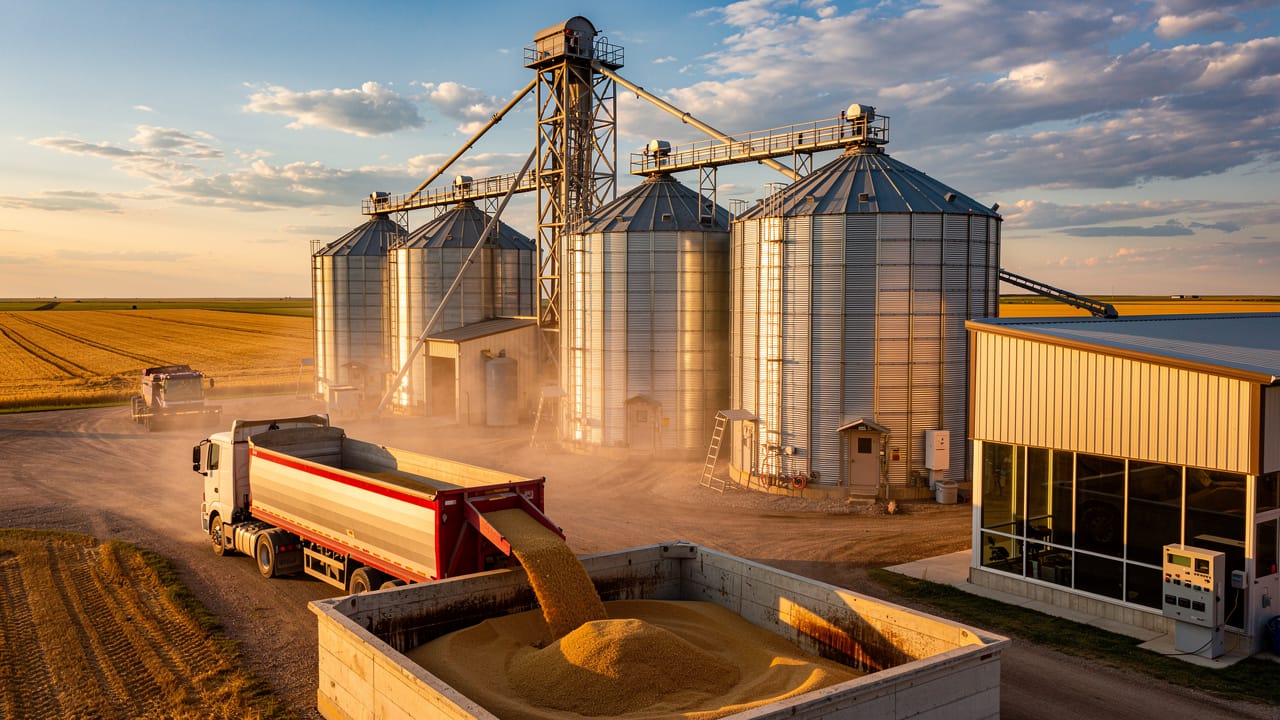
One hot spot in a full bin of canola can wipe out months of work. A quiet rise in temperature deep in the grain can turn into mould, insects, and a six‑figure loss before anyone notices. By the time smell or crusting gives it away, the damage is usually done. That is why more operations now rely on grain bin monitoring systems instead of guesswork.
Manual bin checks demand ladders, long probes, and a lot of time. Readings are spaced days or weeks apart and only cover a few spots. On top of that, every climb and every bin entry adds safety risk from dust, poor air, and flowing grain. In many cases, operators are working blind between checks, hoping nothing is going wrong inside the bin.
Grain bin monitoring systems change that. They use sensor cables, communication hardware, and simple software to watch temperature, moisture, and other indicators continuously. Real‑time alerts show problems early so operators can act fast, rather than reacting after spoilage spreads.
“You cannot manage what you do not measure” is a saying that fits grain storage perfectly. Continuous monitoring turns hidden risk into visible data.
Keep reading to see how these systems work, what they measure, the real payback in safety and revenue, and why the electrical work behind them decides how reliable they will be. The article also shows where Cove Electrical fits in as a long‑term partner for grain handling and automation.
Key Takeaways
-
Grain bin monitoring systems track temperature, moisture, carbon dioxide, and inventory inside every bin in real time. This constant data flow lets operators spot early warning signs long before grain quality or grade starts to slide.
-
Remote access and automatic alerts mean fewer trips up ladders and fewer bin entries. That reduces the risk of engulfment, dust exposure, and falls, while still giving a clear picture of what is happening in storage.
-
Smart fan control based on sensor readings and outside weather cuts wasted run time. Fans only run when air conditions help cool or dry grain, which lowers power bills while still keeping grain in a safe range.
-
Professional electrical design and installation keep data accurate and systems reliable. Cove Electrical delivers engineering, PLC programming, monitoring integration, shaft monitoring, high bin level shutdowns, overhead bin scales, and other services that tie the whole grain system together.
How Grain Bin Monitoring Systems Work
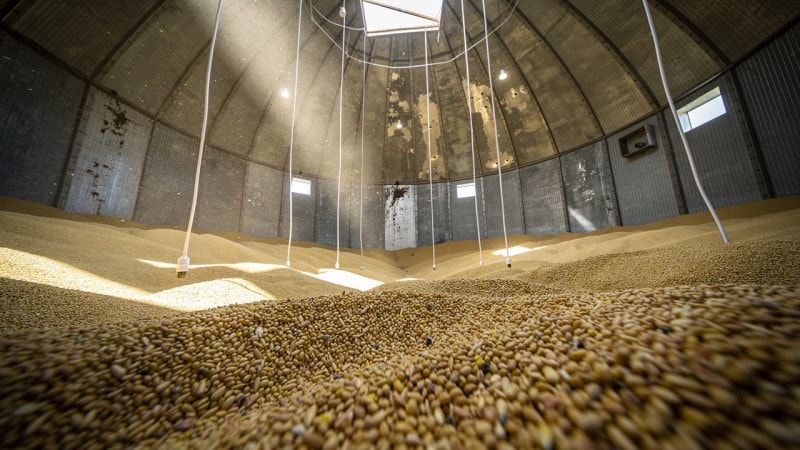
A modern grain bin monitoring system turns every bin into a watched piece of equipment instead of a sealed guess. Sensor cables hang from the roof and run down through the grain at several points in the bin. These sensors read temperature and sometimes moisture at different depths so the system sees what is happening in the centre, the shoulders, and near the floor, not just at the surface.
Each sensor cable connects to a controller panel or to a wireless node. From there, readings move either through shielded wiring or radio signal to a central gateway. The basic data path usually looks like this:
-
Sensor cables collect readings at multiple depths.
-
A controller or wireless node gathers those readings and handles local communication.
-
A central gateway aggregates data and sends it to a computer, local network, or cloud platform.
That gateway then pushes data to a local computer, a farm network, or a cloud platform, depending on how the site is set up. Operators see bin status through an easy dashboard on a phone, tablet, or office computer.
The software lets operators set safe ranges for each bin based on crop type and storage plan. When any sensor crosses a limit or starts trending the wrong way, the system sends an alert by text or email. Compared with manual probing, where samples are taken in a few spots and on a loose schedule, grain bin monitoring systems provide constant, bin‑wide coverage without sending people into a hazardous space.
What Grain Bin Monitoring Systems Actually Measure
Temperature monitoring is usually the first step. Multi‑sensor cables read temperature every few feet down their length. They highlight hot spots that point to insect activity, excess moisture, or microbial growth before the problem spreads through the bin.
Moisture content readings add another layer of control. Moisture cables or moisture‑capable sensors show the actual grain moisture at different depths. This helps operators see moisture migration and decide when to run aeration to dry or equalize the bin.
Carbon dioxide sensing gives the earliest sign that life is starting inside the grain mass. As moulds and insects ramp up, they produce CO₂ before temperature shifts much. A steady rise in CO₂ lets operators act while the affected area is still small and easier to manage.
Grain inventory levels round out the picture. Level sensors or overhead bin scales show how much grain is in each bin in real time. That data supports contract planning, trucking, and cash‑flow decisions without climbing bins or guessing at volumes.
The Operational Benefits Of Automated Grain Monitoring
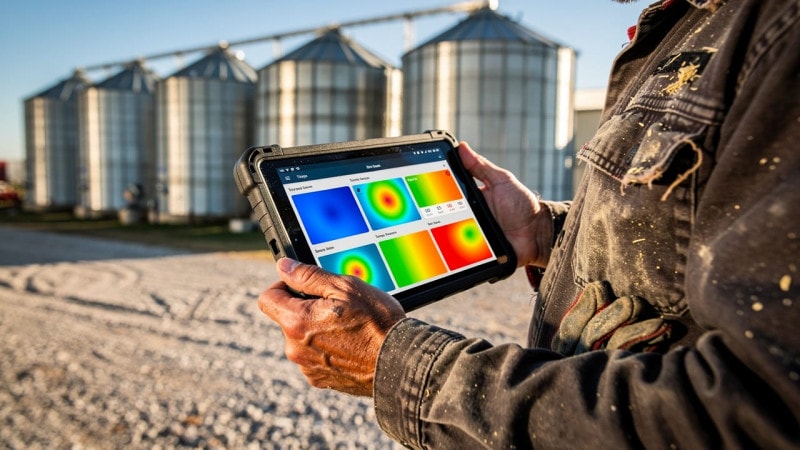
The main reason operators invest in grain bin monitoring systems is simple. They want to keep more grain in condition that earns a strong price. Early warnings from temperature, moisture, and CO₂ trends allow targeted fan use or coring long before a problem turns into a downgraded load or a rejected truck.
There is a direct safety gain as well. Remote readings and camera or HMI views replace a lot of physical bin entry. Staff do not need to stand on crusted grain or work near flowing grain nearly as often. That lowers the chance of engulfment and cuts exposure to dust, spores, and poor air inside the structure.
As many grain safety trainers say, “The safest grain bin is the one you never have to enter.”
Energy savings add up over time. Instead of running fans by habit or on a simple timer, systems with automated fan control start fans only when outside air will actually cool or dry the grain. When air is too warm or too damp, fans stay off. This smarter use of aeration avoids over‑drying, trims demand charges, and reduces wear on motors.
Better information also leads to better marketing. When operators know the grade, moisture, and safe storage timeframe for each bin, they can hold grain through weak price periods and sell into stronger, more favourable markets. Precise inventory numbers make it easier to match sales contracts, avoid over‑committing, and plan trucking with confidence.
Operational efficiency improves across the entire site. One person can check every bin from a phone while riding in a combine or sitting in a meeting. Less time on ladders and catwalks means more time maintaining equipment, planning field work, or handling paperwork. All of these gains stack together to protect both revenue and people.
Cove Electrical’s Role In Grain Bin Monitoring Systems
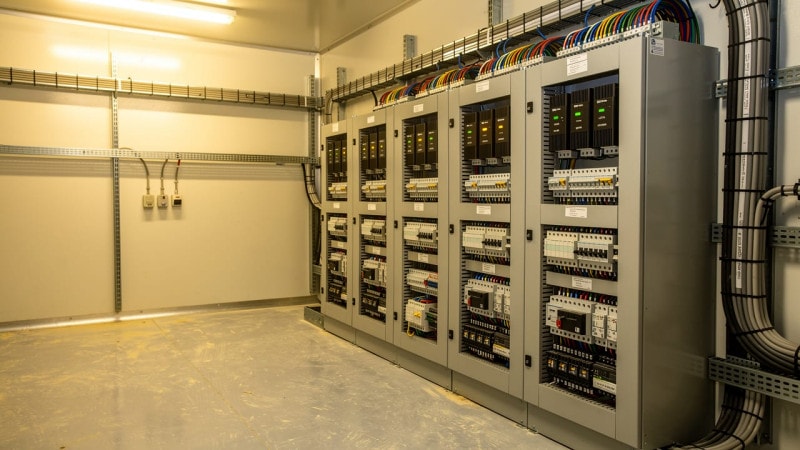
Cove Electrical focuses on operations that rely on steady power, and grain handling sites are a major part of that work. The team designs and installs full electrical and automation packages that support grain bin monitoring systems from the service entrance all the way to the last fan motor.
Services include integration of grain and oilseed temperature monitoring, monitoring of more than twenty grain handling shafts, high bin level shutdowns, and overhead bin scale links. PLC programming and HMI touchscreen design give operators a clear, simple interface where they can see every bin, fan, and conveyor at a glance.
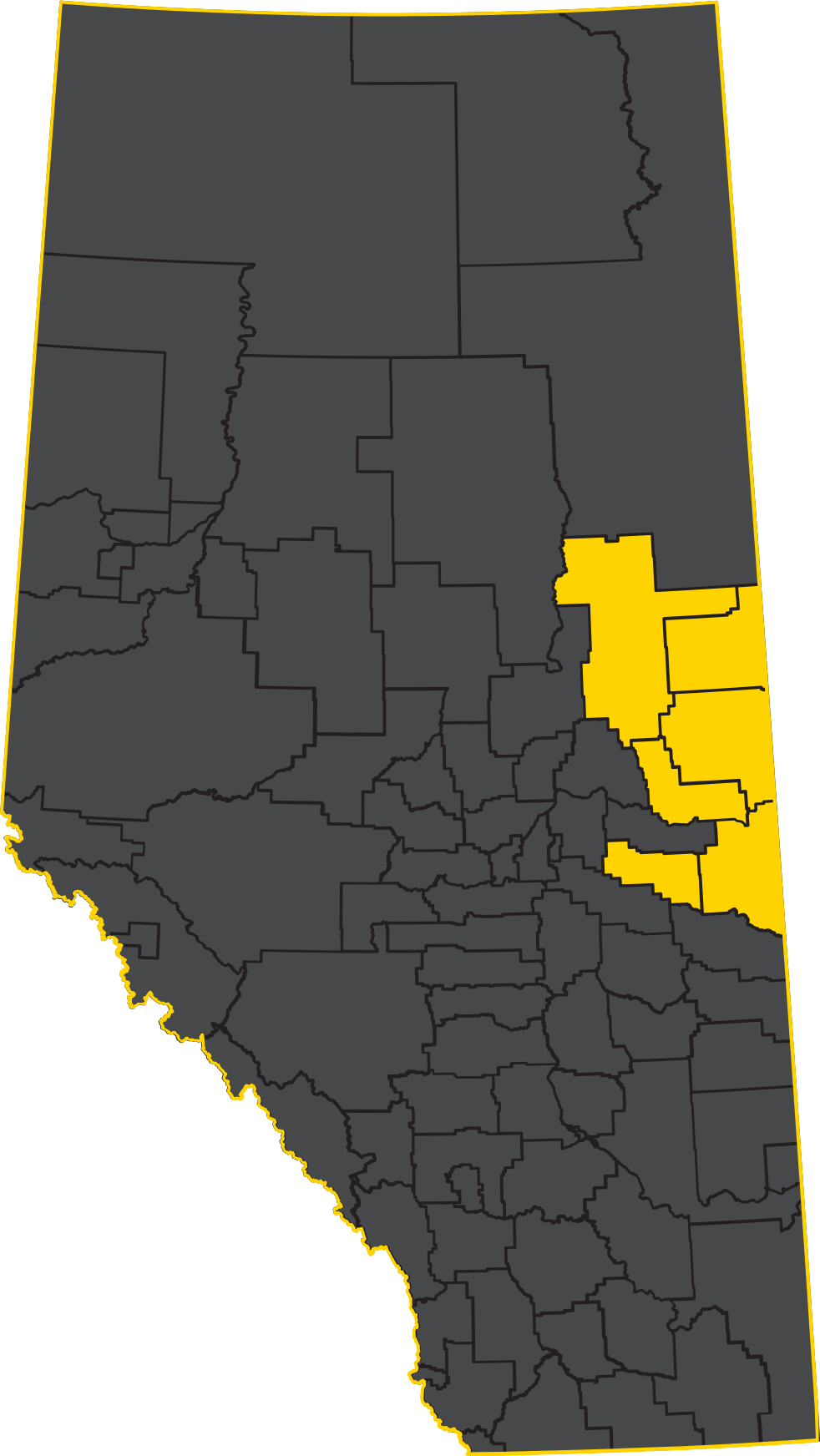
Cove Electrical also installs Variable Frequency Drives (VFDs) to match fan and conveyor motor speed to the actual load, which saves energy and reduces mechanical stress. Motor Control Centres (MCCs) bring starters, drives, and protection into a central, labelled location that is easier to service. Through its True Ag Automation Division, Cove partners with agtech providers such as Adaptive Agriculture for wireless grain monitoring and S3 Air Systems for high‑performance aeration fans. Projects like the Cedar Brook Farm upgrade in Jarvie, Alberta show how modern monitoring, automation, and electrical work can turn a strained grain setup into a stable, scalable system.
Key Considerations For Choosing And Implementing A System
Picking the right grain bin monitoring system starts with how the site is built. Wired systems suit new projects where conduit and cable can be planned into foundations, towers, and cable trays. They are very steady and not affected by radio interference. Wireless systems work well on older yards or spread‑out sites where running cable is expensive or disruptive. With proper placement and antenna design, wireless readings stay consistent across many bins.
Scalability comes next. A system should let an operator add bins, sensors, fans, or new features without tearing out what is already there. That means looking for hardware and software that support more devices than the site needs on day one, along with licence models that do not penalize growth.
Grain type and bin design also matter. Oilseeds such as canola heat faster than cereals and often justify more temperature cables per bin. Tall wide bins may need extra cables or different anchor points to avoid blind spots. Hopper bins and flat bottom bins often use different cable layouts, so design help at the start pays off.
Software is the daily face of the system, so it must be clear and simple. Operators should be able to read trends, check alarms, and change setpoints quickly from a phone or office computer. Data ownership is important as well. The provider should state that the farm owns the data and can export it when needed.
Strong integration links the monitoring system with aeration controls, existing Motor Control Centres, and any farm management software on site. When alarms can start or stop fans, log events, and record inventory changes automatically, the monitoring system becomes part of a wider control platform instead of a stand‑alone gadget.
Why Professional Electrical Installation Is Non-Negotiable
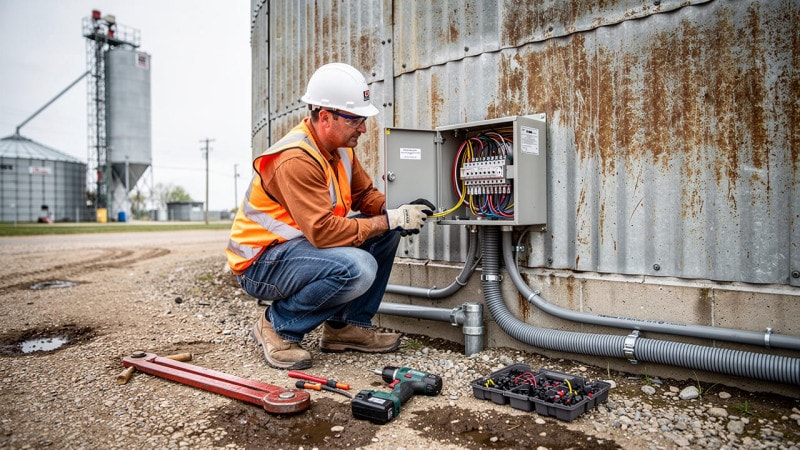
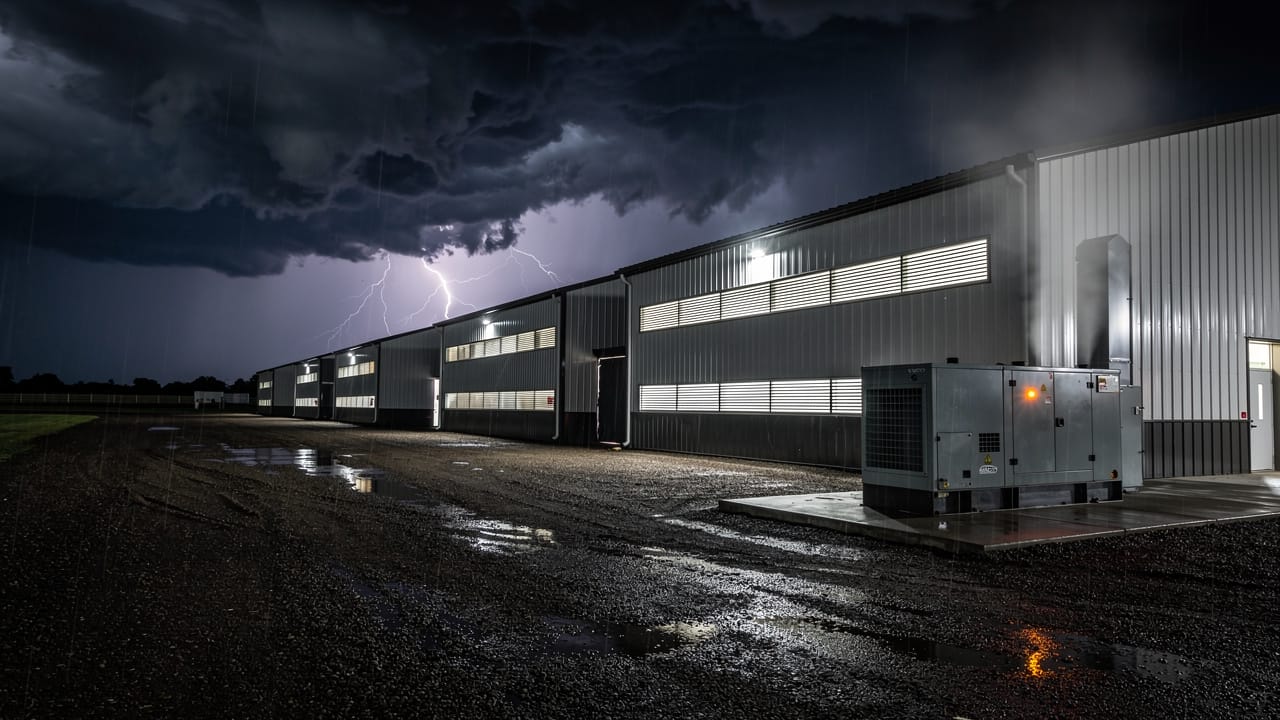
Even the best grain bin monitoring hardware fails when the electrical base is weak. Poor grounding, undersized wiring, and electrical noise from large motors can scramble sensor readings or shut down controllers at the worst time. Clean, stable power and proper bonding are the starting points for trustworthy data.
Grain sites in Canada face extra risk because of combustible dust. The Canadian Electrical Code treats many grain handling areas as hazardous, so gear must use the right enclosures, seals, and conduit types. NEMA 4X panels, agricultural‑grade fittings, and correct seal offs help prevent dust from reaching live parts and remove ignition sources.
Power quality is another hidden issue. Voltage spikes, sags, and harmonics can damage PLCs, VFDs, and sensor panels. Cove Electrical addresses this with surge protection, line reactors, harmonic filters, and dedicated clean circuits for controls. Safe integration of fan starters and contactors with the monitoring controller ties everything together in a way that protects both people and equipment.
Conclusion

Grain bin monitoring systems are far more than a convenience add‑on. They protect stored grain from hidden hot spots, keep staff out of dangerous bins, and give operators the information needed to sell at the right time instead of under pressure. Real‑time alerts and automatic fan control turn bins from passive storage into managed assets.
The value of any monitoring system depends on the strength of the electrical work under it. Stable power, sound grounding, and code‑compliant wiring keep data flowing and equipment running during the moments when grain condition is most at risk. Without that foundation, even high‑end monitoring gear can produce gaps or failures.
Cove Electrical brings deep experience with grain handling, automation, and farm power systems. From PLC programming and temperature monitoring integration to VFDs, Motor Control Centres, and ongoing service, the team builds systems designed for long service and minimal downtime. Farm owners and operations managers who want to protect both grain and people can contact Cove Electrical to review their current setup and design a monitoring approach ready for the next harvest and beyond.
FAQs
What Parameters Do Grain Bin Monitoring Systems Measure?
Grain bin monitoring systems read temperature through multi‑sensor cables, moisture content at key depths, and carbon dioxide levels as an early sign of biological activity. Many setups also track headspace temperature and humidity to watch for condensation near the roof. Inventory level through bin scales or level sensors rounds out the picture so operators know both grain condition and quantity at all times.
Can Grain Bin Monitoring Systems Be Retrofitted Into Existing Bins?
Most modern grain bin monitoring systems work very well on existing bins, including older flat bottom and hopper styles. Wireless designs are especially helpful on built yards because they avoid major trenching and conduit work. Cove Electrical, through its True Ag Automation Division, designs monitoring and electrical layouts that fit the current site while leaving room for future upgrades.
Why Does Professional Electrical Installation Matter For Grain Bin Monitoring?
Accurate data and steady uptime depend on quality electrical work. Grain bins sit in dusty, sometimes corrosive areas, so wiring, enclosures, and grounding must match hazardous area rules and the Canadian Electrical Code. Power conditioning and surge protection guard PLCs, VFDs, radios, and sensors from spikes and electrical noise. With a professional installer such as Cove Electrical, operators gain a monitoring system that stays reliable during both busy harvest periods and long storage seasons.