Weather can make or break a season. A cold snap during calving, a surprise storm during harvest, or a missed spray window can erase a lot of hard work and money. That is why more operations are turning to an on‑site agriculture weather station instead of guessing off an airport forecast.
An agriculture weather station sits on the yard or in the field and feeds real numbers to the operator in real time. It watches temperature, rainfall, wind, humidity, soil conditions, and more, right where the work is happening. That local data guides irrigation, spraying, seeding, livestock care, and day‑to‑day planning far better than any regional forecast.
Cove Electrical’s True Ag Automation Division, through the Cloud7 Weather Solution, designs and installs systems built for Western Canadian conditions. In this article, you will see what an agriculture weather station does, what it measures, how to pick and install the right system, and why reliable electrical infrastructure is the backbone of accurate data and long‑term performance.
“You can’t manage what you don’t measure.” — Common saying among precision agriculture specialists
Key Takeaways
-
On‑farm agriculture weather stations give hyper‑local data from your own fields. Regional forecasts can miss frost pockets, heavy cells, and wind shifts that matter to real operations. Field‑level data supports faster, better decisions every single day.
-
Core measurements include temperature, rainfall, humidity, wind speed, wind direction, soil moisture, soil temperature, and leaf wetness. These readings guide spraying windows, irrigation timing, planting dates, and harvest plans.
-
Canadian farms and industrial yards are hard on equipment. Weather stations need tough materials, quality sensors, and reliable power systems to handle blizzards, hail, freezing rain, mud, and summer heat without constant repair.
-
Proper siting, professional installation, and regular maintenance are essential. A poorly placed or weakly powered station can send bad data, which is worse than no data at all when planning high‑value work.
-
Cove Electrical’s Cloud7 Weather Solution uses LTE‑M or NB‑IoT connectivity, smart software, and farm‑ready hardware designed for Western Canada, and pairs it with professional electrical system design so your data keeps flowing.
What Is An Agriculture Weather Station And Why Does It Matter?
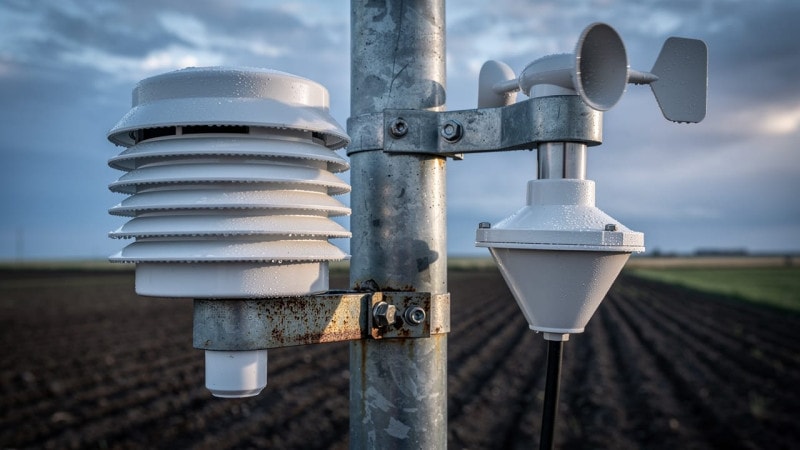
An agriculture weather station is an on‑site system that gathers weather and environmental data directly from your field, feedlot, or yard. Instead of relying on a public forecast from a station 30 or 50 kilometres away, you get real‑time readings for the exact area that drives your revenue. That difference is huge when spray windows are tight and frost risk changes from one low spot to the next.
At a basic level, the system includes:
-
a sensor suite
-
a data logger
-
a power source
-
a communication module
Sensors measure conditions like temperature, rainfall, humidity, wind speed, wind direction, soil moisture, and soil temperature. The data logger collects these readings at fixed intervals and stores them. Power can come from solar with battery, hardwired grid power, or a mix of both.
The communication module sends data to a cloud platform through LTE‑M or NB‑IoT cellular, Wi‑Fi, or radio. From there, you can see live conditions and history on a phone app or web dashboard. Alerts can warn of frost, high wind, heavy rain, or heat stress so action is taken before damage occurs.
For Western Canadian farms, feedlots, and even remote oil and gas sites, the margin for error is small. Weather windows are short, storms move fast, and downtime is expensive. An agriculture weather station shifts decisions from guesswork to hard numbers, which turns experience and local knowledge into a clear, data‑backed advantage.
What Do Agriculture Weather Stations Actually Measure?
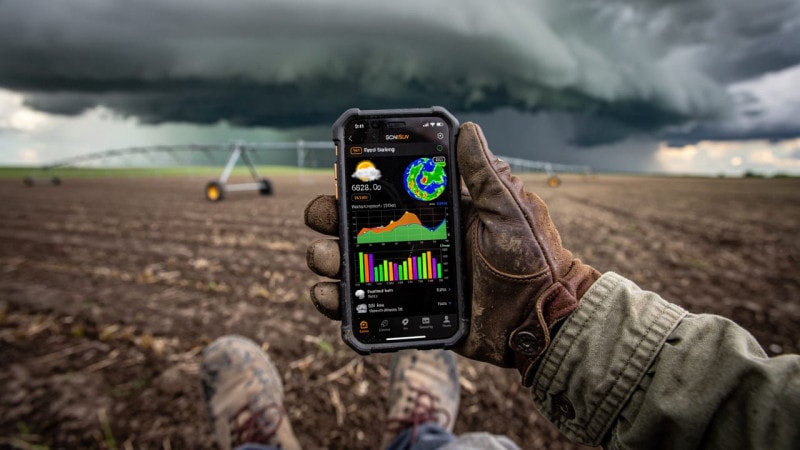
The strength of an agriculture weather station comes from the specific numbers it tracks and how those numbers connect directly to daily decisions. Each sensor adds another piece to the picture of what is really happening on the ground.
Precipitation is one of the most important readings. A station records exactly how many millimetres of rain fall on a field, not what was reported at an airport. This helps decide whether:
-
irrigation can wait
-
a pivot should run tonight
-
a wet low spot needs drainage work
Over the season, it also builds a clear record of moisture going into yield.
Air temperature and relative humidity work together. These values feed dew point, Delta T, and Growing Degree Day (GDD) calculations. You can:
-
see safe spray windows
-
track crop development
-
know when conditions are sliding toward frost or heat stress
Instead of guessing by feel, operators see the numbers on a screen before sending a sprayer or crew.
Wind speed and direction are vital for any farm that sprays herbicides, fungicides, or insecticides. Real‑time wind readings at the field edge help avoid drift onto neighbouring land, public roads, or sensitive crops. That lowers liability risk, reduces wasted product, and keeps more active ingredient where it needs to be.
Soil moisture and soil temperature take the guesswork out of planting and irrigation. Moisture sensors in the root zone show how much water is actually available to plants. Soil temperature readings show if it is still too cold for seed to germinate properly or if the ground is ready for early seeding. This protects seed, fuel, and labour costs.
Evapotranspiration (ET) is calculated using solar radiation, temperature, humidity, and wind data. ET shows how much water the crop has used since the last rain or irrigation pass. When irrigation is planned to match ET, water and pumping power are used far more efficiently, and plants avoid stress from dry periods or over‑watering.
Leaf wetness duration is key for high‑value crops such as potatoes, canola, vegetables, and fruit. Many fungal diseases need a certain number of wet hours to get started. A leaf wetness sensor shows exactly how long leaves stayed damp after rain, dew, or overhead irrigation. With that data, fungicide sprays can be timed for real risk instead of fixed calendar dates.
Many systems also include frost and heat stress alerts. When the temperature passes user‑set limits, the system sends text or email warnings. This gives a valuable window to start frost fans, switch on protective irrigation, move livestock, or shift work plans before damage is locked in.
“Good data does not replace local knowledge, it sharpens it.” — Common view among experienced producers
How To Select And Install A Field-Ready Weather Station
Choosing the right agriculture weather station means matching hardware, power, and connectivity to real‑world conditions on your operation. A small market garden near town needs a different setup than a 10,000‑acre grain farm or a remote feedlot on marginal cell coverage.
Key factors to think about include:
-
Durability and build quality
-
Connectivity and signal strength
-
Data platform and software
-
Scalability for future expansion
-
Installation quality and siting
Durability and build quality come first. Western Canada brings blizzards, freezing rain, high winds, dust, and hard UV. Stations should use industrial‑grade, corrosion‑resistant materials and sensors rated for deep cold as well as summer heat. Mounts must stand up to strong winds without bending or shaking, or the data will drift over time.
Connectivity is next. Before ordering equipment, check cellular coverage at the planned site, not just in the yard. Cove Electrical’s Cloud7 Weather Solution uses LTE‑M and NB‑IoT networks, which often reach locations where standard cell service struggles. For sites within range of a strong Wi‑Fi network or radio link, those options can work as well.
The data platform and software experience matter as much as the hardware. Good systems give clear dashboards, easy‑to‑set text or email alerts, and simple graphing of trends over days, weeks, and seasons. Features like GDD tracking, frost alarms, and disease modelling turn raw numbers into guidance instead of just charts.
Scalability is another key point. Many operations start with one agriculture weather station, then later add more towers, extra soil probes, or leaf wetness sensors for specific fields. A system that can grow without replacement saves cost and training time. Cloud7 is designed to support extra sensors and multiple stations under one account.
Installation quality has a direct impact on accuracy. The station should sit on open, level ground, well away from trees, bins, or buildings. A good rule is to keep it at least ten times the height of the nearest obstruction. Anemometers belong around ten metres high, while temperature and humidity sensors sit around two metres. Rain gauges work best in low, open spots without splash or shade.
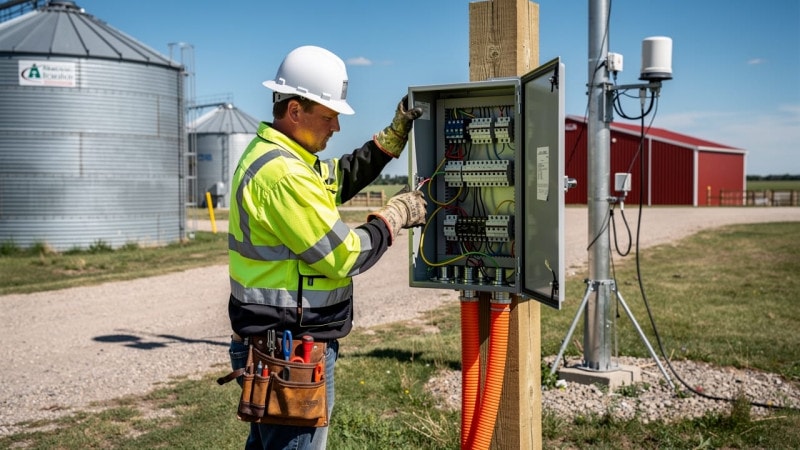
The surface under the station should match the surrounding area, usually short grass. Avoid bare soil, concrete, or gravel pads that can heat up and throw off readings. All wiring should run in conduit, and sensitive electronics should sit in weatherproof, corrosion‑resistant enclosures that meet NEMA 4X standards for farm yards.
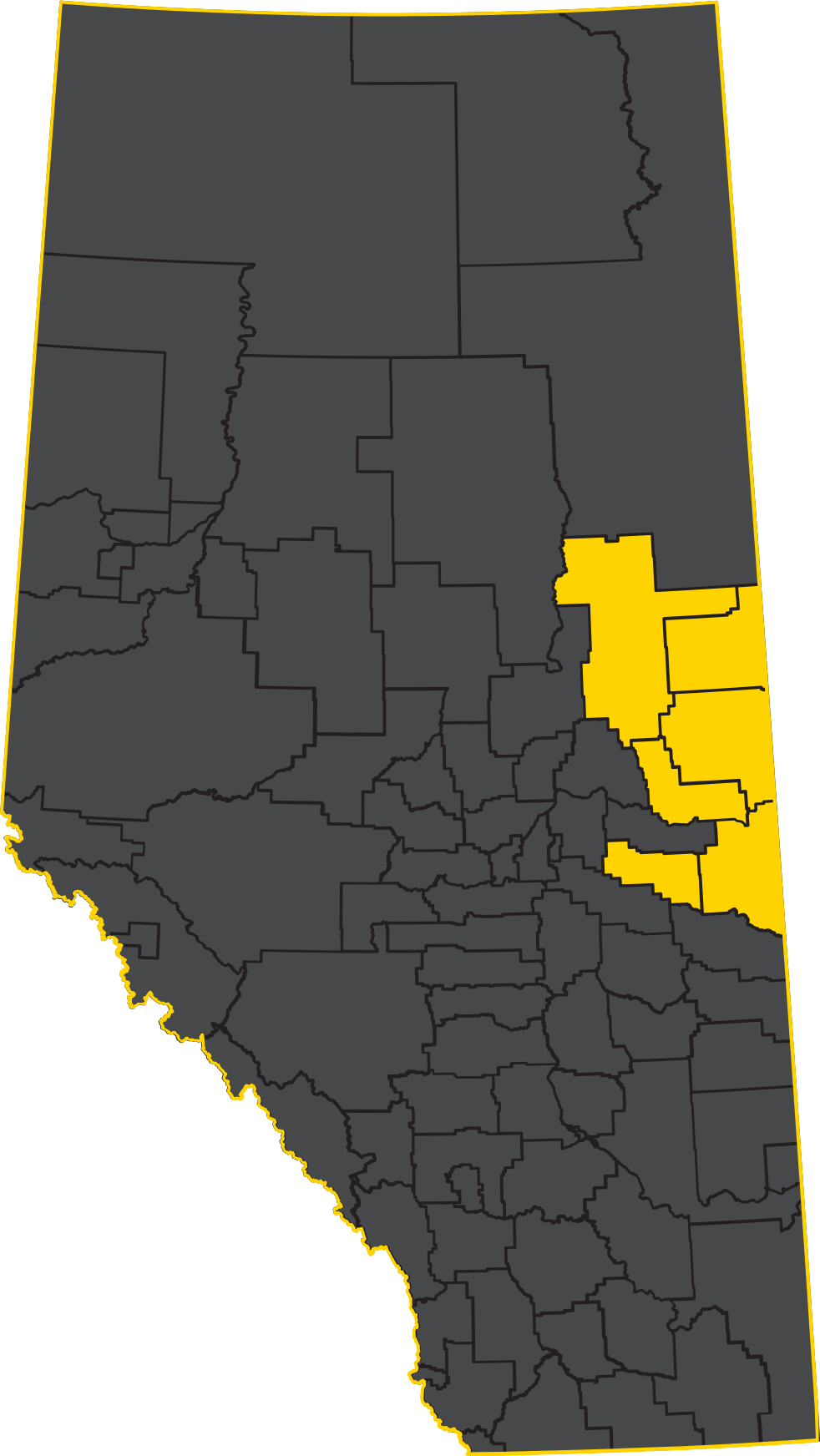
For hardwired power, professional installation under the Canadian Electrical Code is strongly recommended. Cove Electrical’s True Ag Automation Division handles full installation and commissioning around Bonnyville and rural Alberta, tying the station into safe, clean power and integrating it with other on‑farm automation where needed.
“Place the station where you would stand to judge the weather yourself, then give it a little more room.” — Practical siting tip from experienced installers
How Reliable Power Infrastructure Keeps Your Weather Station Running
An agriculture weather station is only reliable when its power supply is stable. Gaps in power create gaps in data, often during storms or outages when information is most valuable. Low voltage, spikes, and electrical noise can also damage sensors, data loggers, and communication modules.
Sensitive electronics do not like dirty power. Voltage drops and surges, common on long farm feeders or in busy industrial yards, can lock up loggers and modems. Good electrical design uses:
-
surge protection
-
proper grounding and bonding
-
harmonic filtering where needed
-
clean, dedicated circuits for sensitive gear
That design work requires experienced electrical design expertise, not in generic “plug and play” wiring.
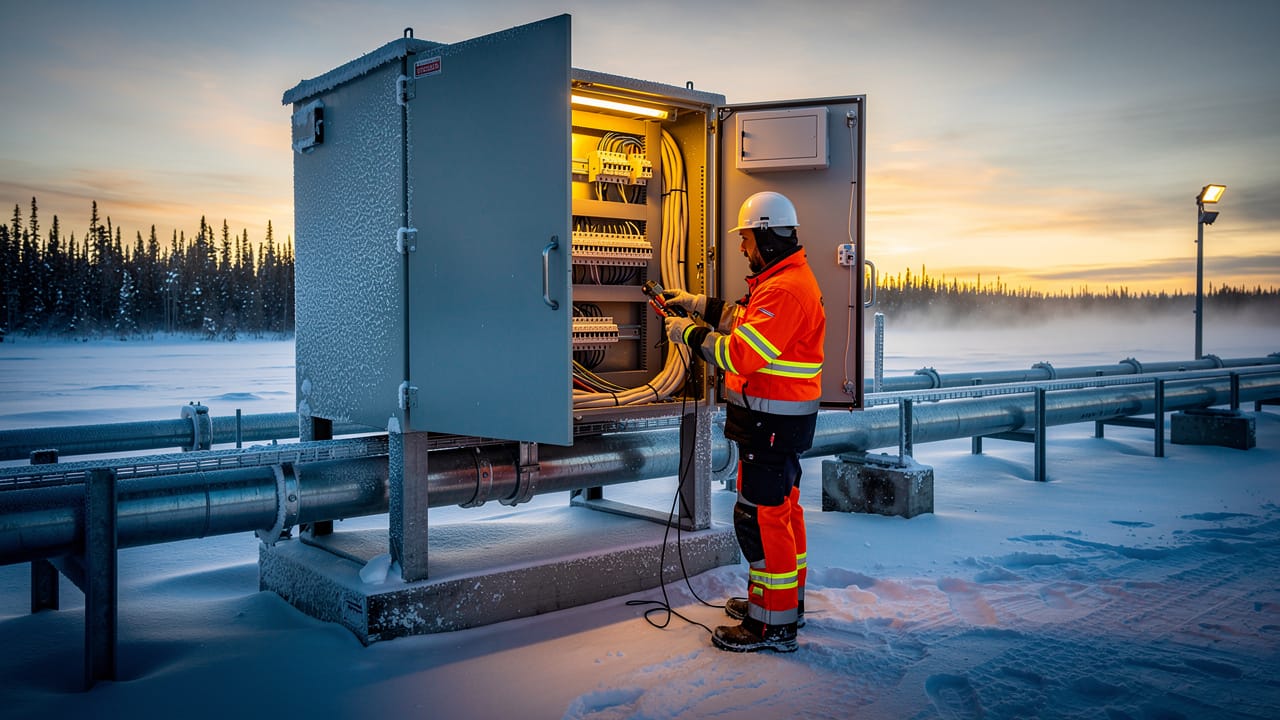
Farm and industrial environments add more stress. Dust, chaff, moisture, corrosive gases from manure or fertilizers, and impact from equipment all threaten cables and panels. Proper conduit, sealed junction boxes, and NEMA 4X enclosures help keep contacts dry and clean. Without that protection, corrosion slowly creeps in and intermittent faults start to appear.
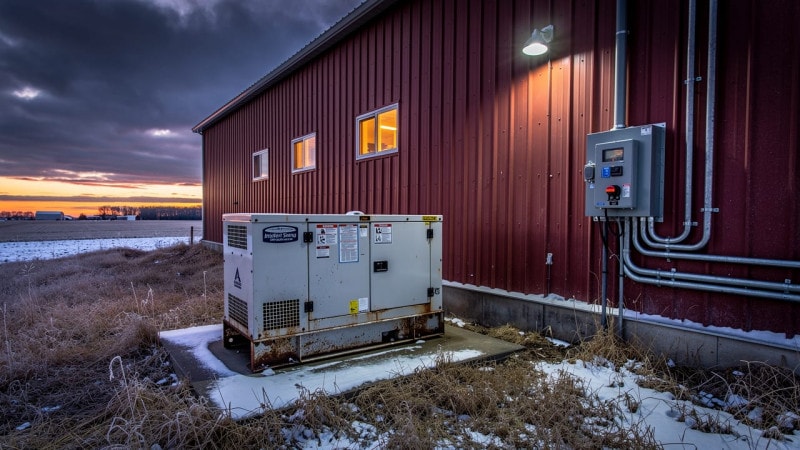
Backup power ties it all together. Whole‑yard generator systems sized by Cove Electrical keep weather stations, grain handling controls, barn climate systems, and other automation running through outages. Add a well‑designed battery system at the station, and the data keeps flowing even if the main yard power is down for an extended period.
Cedar Brook Farm near Jarvie, Alberta, is a strong example of this approach. Cove Electrical redesigned and installed a complete electrical and automation package there, including grain and oilseed temperature monitoring, a yard‑scale backup generator, and safety controls. With stable, clean power in place, the farm gained confidence to add and rely on advanced monitoring technology without fearing random shutdowns.
By designing power infrastructure with scalability in mind, Cove Electrical makes sure a current project does not box in future plans. When the time comes to add another agriculture weather station, more automation, or extra storage capacity, the electrical backbone is ready instead of needing another major upgrade.
Conclusion
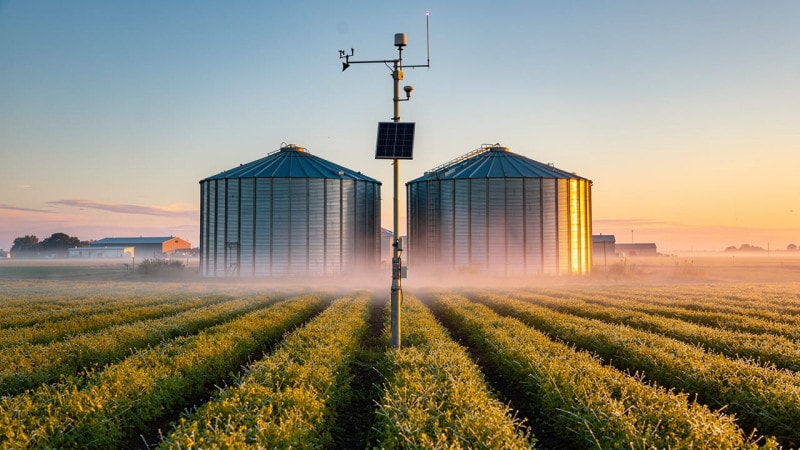
An agriculture weather station is no longer a “nice extra” for Canadian farms and other heavy‑duty operations. It is a core piece of infrastructure that feeds real‑time data into every decision about spraying, irrigation, planting, harvest, and worker safety. Without it, operators are forced back to guesswork and regional forecasts that do not reflect what is happening in their own fields.
To deliver real value, a station needs more than good sensors. It depends on proper siting, code‑compliant installation, and strong, stable power that stands up to Western Canadian weather and demanding yard conditions. That is where Cove Electrical stands out.
Through the Cloud7 Weather Solution and the True Ag Automation Division, Cove Electrical brings together professional‑grade weather hardware, smart connectivity, and deep electrical expertise. For farms and operations across Western Canada that cannot afford downtime, now is a good time to talk with Cove Electrical about a weather station installation or a full electrical infrastructure review.
FAQs
What Is The Best Agriculture Weather Station For Western Canada?
The best agriculture weather station depends on farm size, crop mix, terrain, and how reliable cell coverage is at the site. In Western Canada, many operators choose Cove Electrical’s Cloud7 Weather Solution because it uses LTE‑M or NB‑IoT networks, rugged hardware, and an easy‑to‑use app. Cove Electrical’s True Ag Automation Division supplies, installs, and commissions the system end to end.
Do Agriculture Weather Stations Require Professional Installation?
Simple solar‑powered units can be set up by the owner, but any station with hardwired power must follow the Canadian Electrical Code. Farm yards also need NEMA 4X enclosures, proper conduit runs, and wiring designed for dust and moisture. Professional installation from Cove Electrical protects worker safety, keeps data accurate, and supports long‑term reliability.
How Do I Ensure My Weather Station Keeps Running During A Power Outage?
Continuous data collection during outages needs both local battery backup and a reliable yard‑scale power plan. Many operators use a whole‑yard generator so weather stations, grain systems, barns, and critical automation stay online when the grid fails. Cove Electrical designs and installs these power systems, focusing on clean, stable power for sensitive sensors and communication gear so the station keeps working when it matters most.